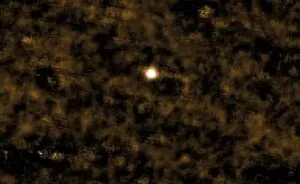
Interstellar visitor 3I/ATLAS is at risk of disintegration as it approaches the Sun

Outer space has just delivered yet another enigma to the global scientific community, and time to study it is quickly running out. Identified as 3I/ATLAS, a comet originating from a distant star system is currently on a dangerous path towards the center of our solar system. Discovered in the year 2023, this celestial body carries valuable information about the formation of the universe, but faces a lethal threat from the extreme temperatures emitted by the Sun. As the object approaches its perihelion, the gravitational pull and relentless heat of our star begin to cause visible structural damage. Experts are already detecting clear signs of instability in the ice and dust core, raising the strong likelihood of complete disintegration over the next few months.
The history of distant visitors and the detection of the new celestial body
The identification of this cosmic traveler was made possible thanks to advanced technology from the Asteroid Terrestrial-impact Last Alert System, a planetary defense program that scans the night sky for anomalies. When the first data was processed, astronomers immediately noticed that the object’s trajectory did not obey local gravitational rules. Its hyperbolic orbit served as the definitive signature that the body did not belong in the Oort cloud, but rather in an unknown region located thousands of light years away.
Historically, the passage of interstellar elements through our cosmic backyard is an extremely rare event, recorded only a few times each century. 3I/ATLAS joins a select group of celestial bodies cataloged by modern science, occupying third position in this exclusive list. Before him, humanity followed with fascination the passage of the mysterious ‘Oumuamua in 2017, which intrigued researchers due to its elongated shape, and comet 2I/Borisov in 2019, which presented characteristics more familiar to local comets.
Unlike its predecessors, the current visitor has a highly volatile composition that makes it particularly susceptible to the adverse conditions of our solar environment. The million-year journey through the frozen vacuum of deep space has preserved its structure intact until now. However, the abrupt transition to a zone of high thermal radiation is forcing the primordial material to react violently, generating an astronomical spectacle that is being monitored by space agencies across the planet.
The physics behind thermal collapse and core fissures
The critical point of this trajectory is scheduled to occur in 2026, when the comet will reach the minimum distance from the solar surface. Long before reaching this mark, the lenses of the world’s largest telescopes are already capturing the consequences of accelerated warming. The process of sublimation, where ice goes directly into a gaseous state without becoming liquid, is occurring at an alarming rate.
Learn more: Destruction of celestial body 3I/ATLAS by solar heat reveals chemistry of distant galaxies
Jets of gas and dust are being ejected from the object’s interior with formidable pressure, functioning as small thrusters that subtly alter its rotation and stability. This constant release of material creates massive internal stresses in the comet’s porous structure. Recent images have revealed the emergence of deep fissures throughout the core, an indication that the material’s cohesion is failing under thermal and gravitational stress.
If the total rupture is confirmed, the event will provide an unprecedented opportunity to investigate the interior of a natural alien artifact. When a comet breaks up, the deepest, oldest layers are exposed to the vacuum, releasing compounds that have remained locked away and frozen since the formation of the parent star system. Scientists are waiting for this moment to carry out detailed spectroscopic analyzes of the newly exposed fragments.
Consequences of fragmentation and the formation of debris trails
The destruction of a celestial body of these proportions does not happen silently or without leaving traces in the space environment. Once the structural integrity gives way, the main object transforms into a chaotic cloud of rocks, ice and dust that continues traveling in the same original orbit. This phenomenon raises questions about the secondary impacts that the visitor’s remains could cause when crossing the routes of the inner planets.
To understand the magnitude of this event, the researchers mapped the likely scenarios if the collapse occurs before perihelion:
More on this story: Interstellar comet 3I/ATLAS travels at 58 km/s and will have its route altered by Jupiter
See Also

Electrical discharge knocks man off roof in Jaguaruana after contact with power lines

Global auction raises US$11.9 million and Brazil’s historic currency reaches record value

Former fighter Prichard Colón dies at age 33 after decade in a vegetative state
- The debris cloud will expand rapidly, creating a diffuse tail that will reflect sunlight unevenly.
- The larger fragments will continue their hyperbolic trajectory, eventually being expelled back into interstellar space.
- Smaller dust particles could cross Earth’s orbit, generating unprecedented and visually stunning meteor showers.
- The sudden release of gases will form a giant temporary coma, which may be captured by amateur telescopes depending on the magnitude reached.
Despite the magnitude of the phenomenon, preliminary orbital calculations guarantee that there is no reason for concern regarding the safety of our planet. The risk of a direct impact of significant fragments against the Earth’s surface is considered statistically null by monitoring agencies. The real impact will be purely scientific, providing a light show in the upper atmosphere if Earth passes through the wake of dust left behind.
The role of organic molecules in understanding other worlds
An international task force has been assembled to extract as much information as possible while the object still exists in its original form. Cutting-edge equipment, including the Hubble Space Telescope, has its lenses fixed on the comet’s coordinates. On the ground, observatories located at strategic high-altitude points in Chile and Hawaii work together with NASA and the European Space Agency to cross-reference data in real time.
On the same topic: Radio emissions from comet 3I/ATLAS make NASA activate planetary defense system
The most intriguing aspect of the spectroscopic readings obtained so far is the detection of rare chemical compounds mixed with water ice and carbon monoxide. The presence of complex organic molecules in the visitor’s coma suggests that the building blocks of prebiotic chemistry are not unique to our solar system. These volatile elements bear the signature of the protoplanetary disk where the comet formed billions of years ago.
Comparing the ratio of isotopes and variety of carbon found in 3I/ATLAS with local comets helps piece together the puzzle of galactic evolution. If chemical processes occurring in distant stars produce the same organic materials found in the early Earth, the theory that the fundamental ingredients for life are spread throughout the Milky Way gains weighty observational reinforcement.
The future of astronomical monitoring and preparations for perihelion
The observation schedule will enter its most critical phase in the months leading up to the closest approach to the Sun. Astronomers from several institutions are adjusting their instruments to operate at different wavelengths, from infrared to ultraviolet, ensuring that no changes in the structure of the celestial body go unnoticed. The expectation is to record the exact moment when tidal forces and heat overcome the core’s resistance.
Regardless of the outcome, this traveler’s passage will leave a lasting legacy for contemporary astrophysics. The massive data collection will serve to calibrate theoretical models on the formation and migration of small bodies in exoplanetary systems. The comet’s imminent sacrifice in the flames of our star will provide the answers humanity needs to understand a little more about the vast and complex cosmic neighborhood that surrounds us.
More on this story: Study reveals that interstellar comet 3I/ATLAS is twice the age of the Sun