
Configurator of the new Audi Q9 2027 is released in the USA with price and optional details

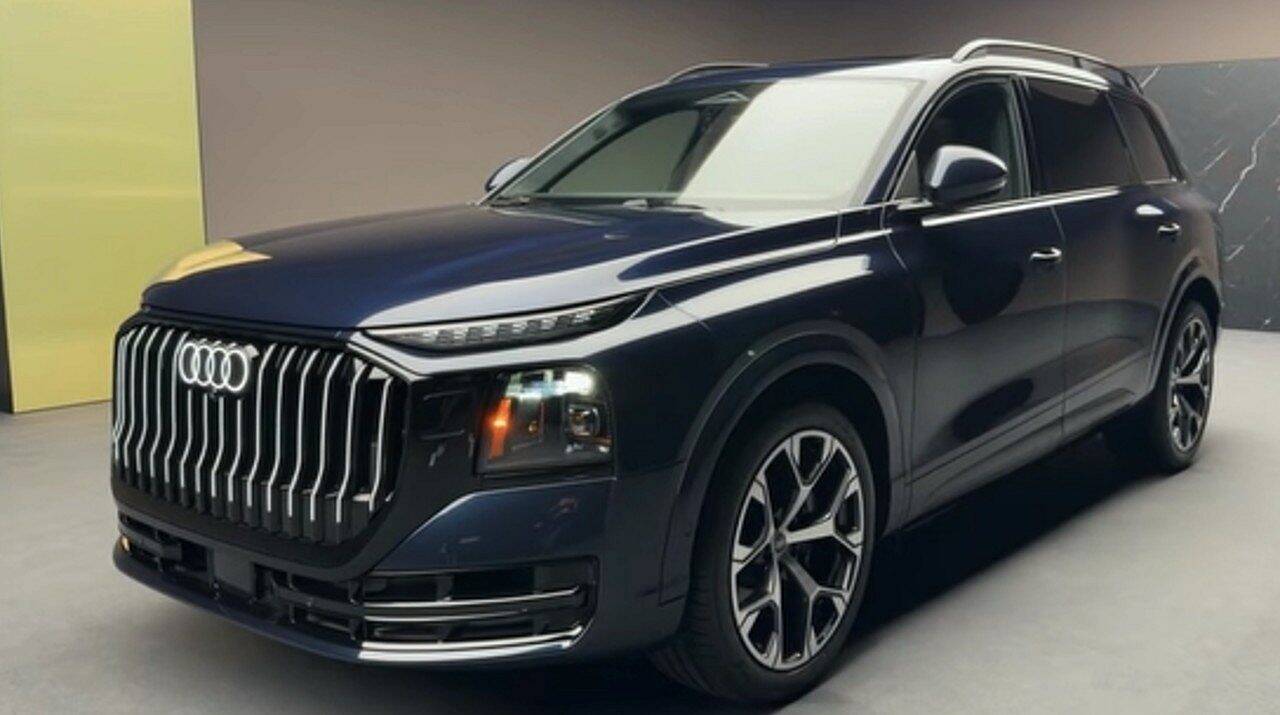
Audi surprised the automotive market by releasing the online configurator of its latest SUV, the Q9 2027, just a few days after its world premiere. Typically, German luxury brands take months to make this feature available on their websites in the United States, but the rapid launch of the Q9 represents a break from that pattern.
This agility has a strategic reason: the Audi Q9 is a vehicle strongly aimed at the American market. It arrives as a late competitor to models like the BMW X7 and Mercedes GLS, demonstrating the brand’s focus on the United States.
North America is projected to be the Q9’s main market, as interest in large SUVs is not as strong in Europe. There is a lower demand for models such as the GLS or the X7 on the European continent. In addition to the USA, the expectation is that the Q9 will also be successful in the Middle East, a region where SUVs with three rows of seats continue to be in high demand.
In the United States, the price variation between the basic Q9 model and the fully equipped SQ9 V8 reaches US$41,150, an amount equivalent to the cost of an Audi A3, the automaker’s entry-level car. The Q9 starts at $89,095, while the V8-powered SQ9 starts at $119,395. When including all available options in the configurator, the total cost of the vehicle can reach US$130,245, including shipping and taxes.
Regardless of the version, Q9 or SQ9, Audi does not add extra costs for exterior paint options. Colors such as Carrara White, Mythos Black, Alopias Blue, Glacier White, Agave Green, Waitomo Blue, Midnight Green and Daytona Gray (with pearlescent effect) are offered at no additional cost. The same policy applies to leather upholstery, with black, red and white interiors available at no extra cost.
The SQ9 model is factory equipped with 22-inch wheels, but it is possible to opt for a 23-inch set, which costs US$2,500 more. These larger wheels can be purchased in a two-tone or all-black finish. The dark versions are part of the Black Optic package, which costs $1,000 and also adds black roof rails, dark chrome exhaust tips and anthracite gray Audi rings.

For another $1,200, the S Sport Package adds red brake calipers and an adaptive sport suspension. Among the options, the Luxury Package stands out as the most expensive, costing US$4,750. It offers self-closing doors, an illuminated front grille, eight-level customizable daytime running lights, curved OLED taillights, a tinted roof and an advanced air quality system.
For an additional $450, Audi provides individual seats for the second row, converting the SQ9 into a six-seater vehicle, with separate seats and armrests. To complement this, a Bang & Olufsen audio system, with 22 speakers and two actuators for the seats, can be added for US$950.
With the online configuration tool now accessible, the ordering phase for the Audi Q9 and SQ9 is now open. Audi expects vehicle deliveries to begin in the fourth quarter of this year. Interestingly, while the German version of the configurator offers more options, European consumers will stick with the V6 diesel engine until new engines are launched in 2027.
Configuring the new 2027 Audi SQ9
Audi’s launch of the Q9, which took a long time to reach the market, faces strong competition. Models such as the Mercedes GLS, which received a recent update, and the second generation of the BMW X7, scheduled for next year, promise challenges for the new SUV. The Q9, alongside the soon-to-be-launched A2, represents one of the last Audi vehicles to incorporate the current design language, characterized by an interior with many screens.
The brand, based in Ingolstadt, is preparing a new design phase, inspired by the Concept C and Nuvolari sports concepts, which will bring a radically different exterior style. Audi is also implementing an improvement in interior quality, including the return of physical buttons and a reduction in the number of screens. However, the first series production line with this new approach, such as the A4 E-Tron, should only reach the market in 2028.





