
Dark phenomenon divides the Milky Way and is visible to the naked eye during the month of August

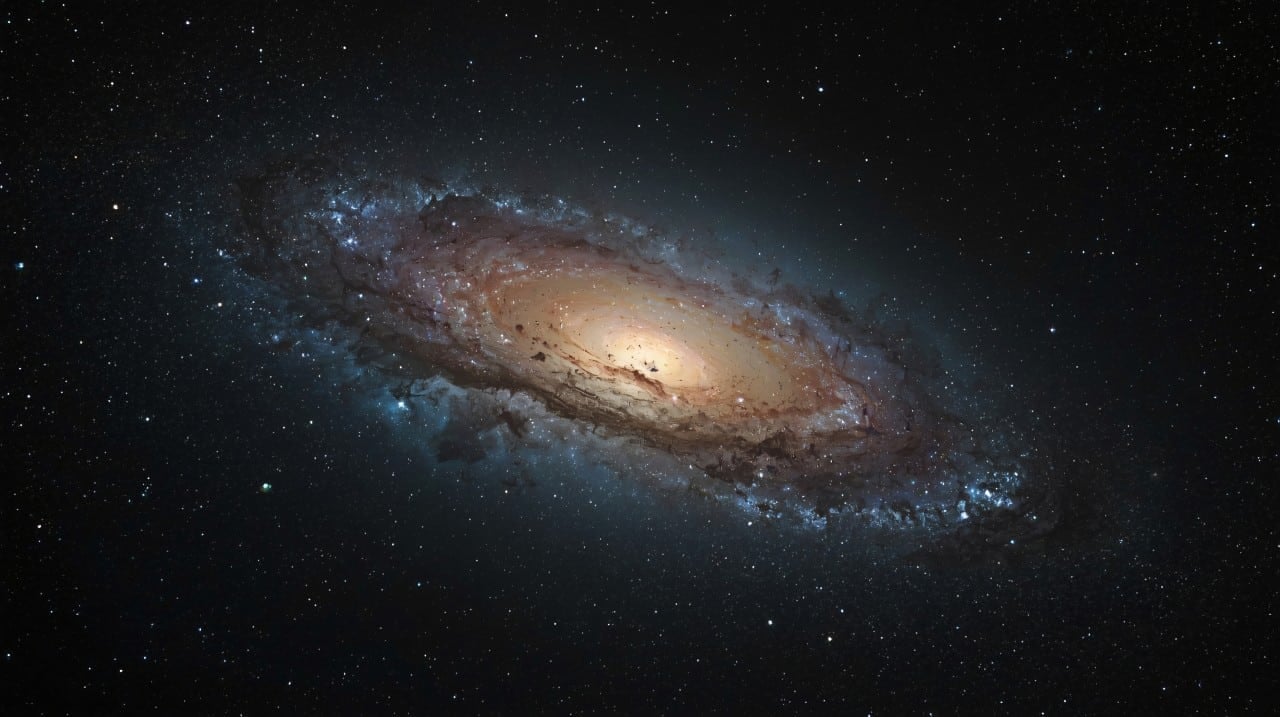
Residents and visitors from the Northern Hemisphere have a privileged window to contemplate the Milky Way during the month of August, with emphasis on the nights from the 6th onwards. The lunar calendar enters its waning phase, delaying the emergence of the natural satellite and guaranteeing around ten dawns of deep darkness. This astronomical scenario gains extra attraction between the 12th and 13th, when the peak of the Perseid meteor shower crosses the celestial vault, multiplying the luminous trails in the night sky.
Determining factors for the success of galactic viewing
- The appropriate period of the year, concentrated between March and October, the phase in which the galactic nucleus reaches its maximum brightness.
- The favorable lunar cycle, preferably between the last quarter and the first days of the new moon.
- Choosing an isolated observation point, free from the light pollution of large urban centers.
- The ocular acclimatization time, which requires at least 25 minutes of staying in total darkness to dilate the pupils.
- Prior knowledge of the star map to direct the gaze to the exact point of the phenomenon.
Step by step to locate the dark division in space
The starting point for mapping the galaxy requires the observer to turn south and look for a famous star grouping. The so-called Summer Triangle, made up of the supergiants Vega, Deneb and Altair, functions as a natural compass in the firmament. By tracing the space strip that connects Deneb to Altair, on the left edge of this triangle, the dense concentration of stars in our galaxy begins to take shape. In this exact sector, a counterintuitive visual element stands out amid the glare: the Great Rift.
The core of the Milky Way, characterized by a thick halo of gases and celestial bodies, is present just below the Summer Triangle, housed in the constellation of Sagittarius. The geographic position of the viewer dictates the quality of the image. The closer the viewer is positioned to the equator, the higher and more intense this galactic center will appear on the horizon.
As you keep your attention fixed on the stellar corridor between Deneb and Altair, patches of deep black interrupt the luminosity. This structure goes by the name of the Great Rift, a colossal concentration of cosmic dust and interstellar gas. The mass acts as a physical barrier that absorbs and scatters light from the background stars and nebulae, creating the illusion that a trail of dark paint has split the galaxy into two halves.
Advanced technology and natural observation reveal cosmic dust
The scientific community uses cutting-edge equipment to overcome the visual barrier imposed by this dark cloud. Radio telescopes and instruments like the James Webb Space Telescope operate with infrared light sensors, like the NIRCam camera, capable of piercing interstellar dust and recording billions of stars hidden in the galactic center. In parallel, ground-based facilities like the Vera C. Rubin Observatory continuously map the sky in visible light, providing essential data on the architecture and structural evolution of our cosmic neighborhood.
The analog alternative consists of contemplating the phenomenon with the naked eye, accepting the darkness as part of the landscape. The visible stretch between Deneb and Altair is called the Cygnus Rift, or Northern Coalsack, and floats at a distance ranging from 1,000 to 3,000 light-years from Earth, in the constellation of Cygnus. Positioned above the Cygnus Star Cloud, this black spot spans six degrees across the sky. The luminous blockage generated by it represents only the northern end of a much larger complex, often nicknamed by amateur astronomers the Dark River.
Historical interpretations of the dark spots in the firmament
The total length of the Great Rift covers around 120 degrees of the celestial vault, rising between Cygnus and Sagittarius, in the Northern Hemisphere, and descending to the constellation of Centauri, in the Southern Hemisphere, the region that houses the Southern Cross. Over the centuries, different civilizations have given their own meanings to this luminous void. Aboriginal Australian people, such as the Wiradjuri ethnic group, saw the outline of a giant emu in the dark dust, using the celestial animal’s position to guide their crops. The Inca communities, in the Andes mountain range, interpreted the same silhouette as a llama accompanied by its offspring.
The visual study of these light blocking areas reinforces the immensity of our address in the universe. When the observer raises his head on a clear night and faces the bright arc cut by shadows, he experiences the unique experience of analyzing the structure of the Milky Way while positioned exactly inside it.
Applications and equipment that enhance visualization
Planning an amateur astronomy night requires mathematical precision and digital tools. Cell phone software, such as “Milky Way Tonight”, delivers real-time reports on the path of the galactic nucleus, the lunar cycle and cloud density. The system also cross-references the user’s location with the Bortle Scale — a nine-level metric created in 2001 to classify the degree of light pollution in a region —, indicating the darkest and most suitable refuges for activity.
Although the grandeur of the scenery does not require magnifying glasses, the use of binoculars transforms the dynamics of observation. The basic equipment allows the enthusiast to dive into the densest star clusters and clearly delineate the exact edges where the light ends and the Great Rift begins.
Astronomical itinerary for the first week of August 2026
The interval between the end of July and the first seven days of August 2026 offers a varied menu, but requires attention to the residual glow of the full moon, which can obscure fainter targets. This excessive clarity tends to disrupt meteor counts from the South Aquarid and Perseid Delta showers. To compensate, the planets guarantee the spectacle: Saturn dominates the dawn before sunrise, while Venus shines brightly in the early evening. Photographers equipped with telescopes and anti-pollution filters find the perfect moment to capture the Lagoon Nebula, the Trifid Nebula, the Small Sagittarius Star Cloud and the dense Wild Duck cluster.
The optical illusion that forms a hanger in deep space
One of the most curious targets in this celestial region is the Brocchi Cluster, popularly called The Hanger, located in the constellation Vulpecula. The design is made up of ten stars: six aligned on a straight base and four curved forming a perfect hook. The figure is positioned almost halfway between Vega and Altair, just above the constellation Sagitta. Under extreme dark conditions, the shape appears to the naked eye, but binoculars reveal the outline perfectly. For decades, science believed that it was a group of stars born in the same cloud, but modern measurements have proven that The Hanger is just an optical illusion generated by the random alignment of stars that are at completely different distances from Earth.





