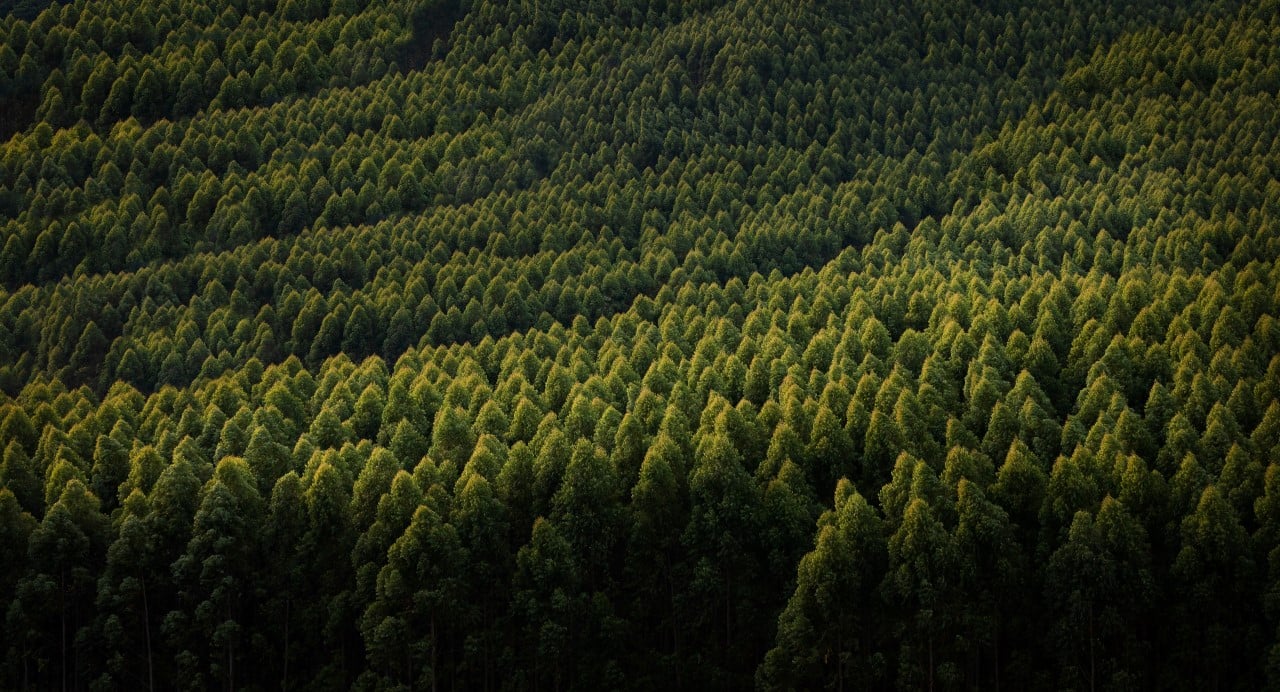
An ambitious project started in Portugal in the 1950s, which aimed to protect the soil and strengthen the economy, ended up permanently altering the fire dynamics in the country. At that time, much of Europe implemented large reforestation programs to combat erosion and provide timber for their recovering economies. Portugal, specifically, chose eucalyptus, an Australian tree that seemed ideal for stabilizing land and supplying the paper industry. Eight decades later, this choice still influences the landscape and the way fire advances through the territory.
To understand the current fire scenario, it is essential to revisit the context of Portugal in the 1950s. At that time, the Iberian nation was dealing with serious challenges of soil erosion, the depopulation of vast rural regions and the Salazar regime that sought to develop the forestry industry as a source of prosperity.
Given this scenario, eucalyptus appeared to be the perfect solution, growing quickly, contributing to the stabilization of degraded areas and offering a high-quality raw material for the paper sector. However, this decision, which then seemed unquestionable, would provoke changes in fire behavior for many future generations.
The strategy was not limited to planting trees, but culminated in the complete transformation of the landscape. The real change lay in the reconfiguration of the territory, and not just the introduction of a new species. Regions that once boasted a variety of distinct crops, pastures and forests were replaced by large, continuous expanses of pine trees and, above all, eucalyptus trees. This highly flammable and fast-growing monoculture made Portugal one of the European countries most vulnerable to large forest fires in the following decades, a challenge that persists to this day.
Although this new landscape configuration proved to be more economically advantageous, it also removed several natural barriers that, in the past, helped control the spread of fire, creating an environment conducive to large fires.