
Millisecond advantage of Trump posts sold to investors by Truth Social

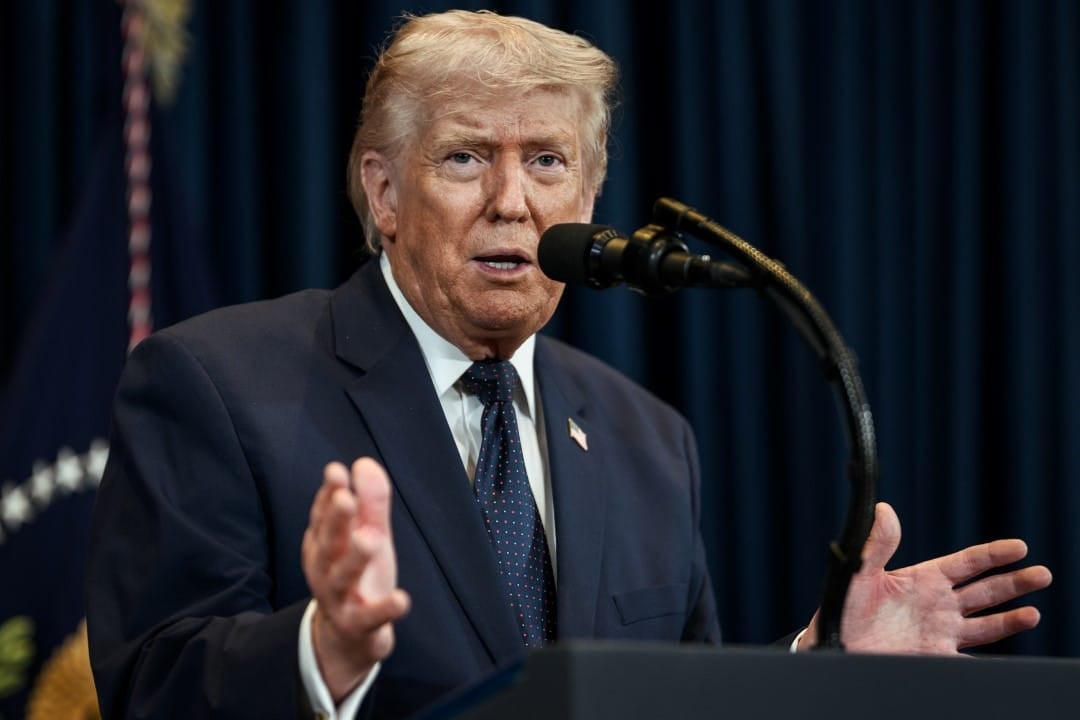
Truth Social, a social network created by Donald Trump, began selling early access to the former president of the United States’ publications for institutional investors and companies that employ automated systems in financial negotiations. The initiative, announced on August 4, 2026, is seen as a new level in the monetization of political communication, transforming potential advertisements into valuable assets.
The initiative raises a fundamental question in the financial sector: what is the real value of receiving, milliseconds in advance, a message capable of changing the prices of shares, currencies, interest rates and commodities?
According to Trump Media & Technology Group (TMTG), the company that controls the platform, the Truth API was developed to provide these posts in real time to organizations that are significantly impacted by delays in accessing crucial information.
The service is expected to operate uninterruptedly, seven days a week, including an archive with all messages published since 2022. The tool uses an application programming interface (API), which allows computer programs to automatically receive publications. Reports indicate that TMTG considered charging up to US$100,000 per month for access.
In the statement about Truth API, Kevin McGurn, interim CEO of TMTG, defended the creation of the service, stating that “markets already react based on Truth Social publications”, justifying the demand for quick access.
Experts interviewed indicate that this small temporal advantage can benefit investors who use software to carry out automatic financial transactions, raising questions about fair access to data that can influence market values.
Pedro Teberga, digital business specialist and professor at Faculdade Einstein, details that, in this brief period, some investors are able to negotiate before the majority of the market has the opportunity to process the information.
“When a restricted group receives information capable of affecting prices, they are able to buy or sell against participants who still operate at prices prior to the news”, explained Teberga.
The importance of milliseconds in financial operations
For ordinary investors, a lapse of milliseconds would hardly make an impact. However, in the automated trading environment, this fraction of time is enough for systems to identify relevant data and execute buy and sell orders before prices stabilize.
This dynamic helps to understand why announcements made by Donald Trump on Truth Social often trigger rapid responses in the markets.
Marcos Praça, director of analysis at ZERO Markets Brasil, observes that the economic value of this anticipation depends on the relevance of the message, the volume traded and the agility with which the market assimilates the information. He illustrates the potential with a clear example:
Imagine that a post causes a 0.5% change in the price of an asset. If an institution manages to trade US$50 million before this change takes place in prices, the potential gross profit would reach US$250,000.
“The relevance is not just in knowing beforehand, but in being able to automatically transform the information into orders before the market reorganizes prices”, stated Praça.
The expert, however, emphasizes that this calculation does not guarantee profit, as it involves execution costs, the impact of the orders themselves on prices and even the possibility of the system interpreting the message incorrectly.
The distinction between Truth API and traditional news agencies
The main difference compared to financial information services, in the experts’ view, does not lie in the speed of information delivery, but rather in its origin.
“The comparison is not sustainable, and the difference is not in speed, which has always been a product sold in the financial market,” said Teberga.
According to him, information companies sell agility in the distribution of data that they monitor, organize or report, but they are not the producers of the decisions that effectively move the markets.
Teberga recalled that, in a previous situation, when a company approached this border, the authorities intervened. In 2013, Thomson Reuters shut down a service that provided a two-second consumer confidence index following an investigation by the New York attorney general.
“In the case of Truth API, whoever produces the information is the same person who decides the policy capable of moving prices”, highlighted Teberga, highlighting the uniqueness of the situation.
Despite this, Marcelo Cabral, investment manager and founding partner of Stratton Capital, based in New York, makes an observation: based on the information disclosed, the Truth API does not offer early access to publications, but rather greater agility in the distribution of content that has already become public.
“Truth API will not be able to sell early access to Donald Trump’s posts, as this would be illegal. According to the news released, the company will sell speed of delivery and formatting of information that is already public”, explained Cabral.
Presidential communication as a driver of market influence
The debate is not just restricted to the United States. As Donald Trump usually publishes his economic and commercial policy decisions first on Truth Social, the platform’s publications can also provoke immediate reactions in assets from other nations, including Brazil.
For Cabral, this type of repercussion is a reflection of a broader transformation in the way government decisions began to be communicated globally.
In his analysis, economic policy measures began to be announced initially on the president’s social networks, even before being released through official government channels.
“The most interesting point of the debate is not the legality or the undemocratic nature of the Truth API, but rather the unusual pattern of communication, in which very important economic policy decisions are announced on the president’s social network before being announced on the government’s official channels”, highlighted Cabral.
It is precisely in this scenario that, according to Praça, Brazilian investors can also feel the effects.
“A message about tariffs against Brazil could trigger simultaneous orders in dollars against real, Ibovespa, exporter shares, Brazilian assets traded in New York, future interest rates and exchange rate hedging instruments”, illustrated Praça.
According to him, the risk is amplified because a considerable portion of negotiations involving Brazilian assets occur in international markets and outside B3’s opening hours.
“The price may begin to adjust in ADRs, offshore exchange rates, ETFs and futures markets before the opening of the Brazilian market”, explained Praça, highlighting the need for informational agility.



