
New Jovi X300 Ultra arrives in Brazil for R$20,000 with a focus on photographers

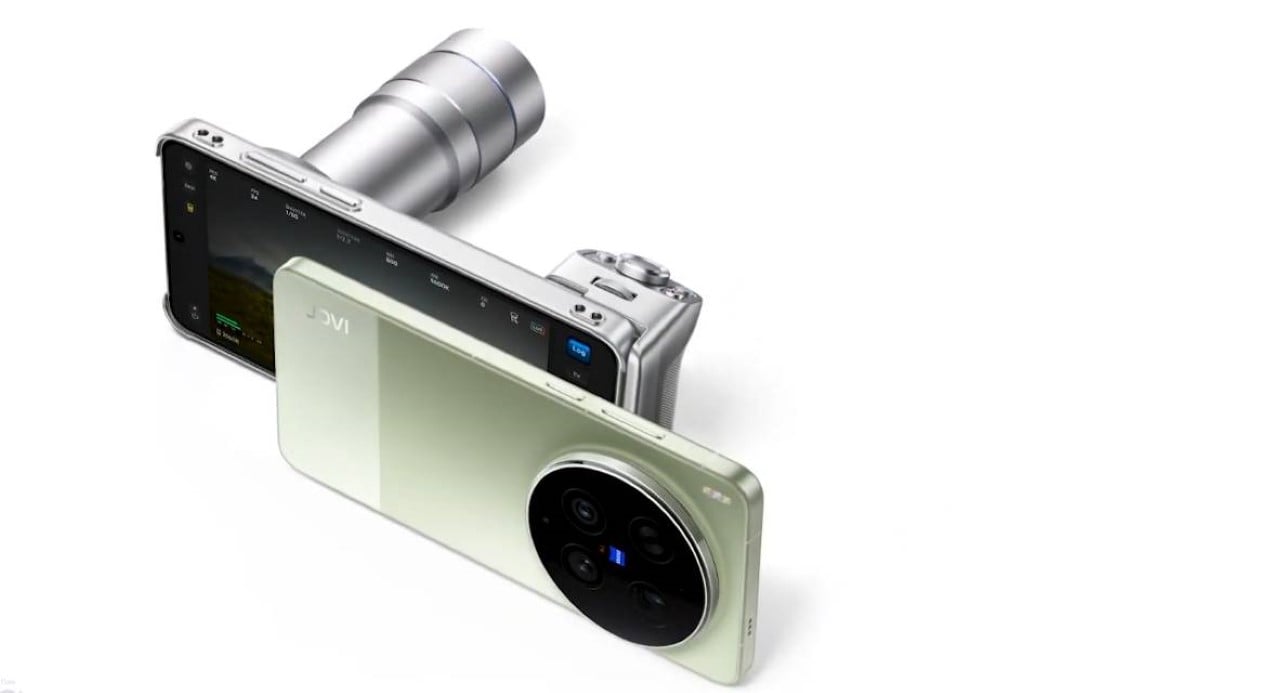
The Asian brand Jovi made official, on August 4, 2026, the arrival of its most powerful cell phone in the national territory, called X300 Ultra. The equipment’s main objective is to transform the way we capture images on the phone, arriving on Brazilian shelves along with a case full of accessories worthy of photography studios. This bet on extremely high performance for visual captures puts the price tag at around R$20,000, placing the product in a market niche focused on luxury and exclusivity.
Charging such a significant amount puts the manufacturer in a curious position in the current dispute between the most expensive devices in the world. While strong rivals, such as the iPhone 17 Pro, Samsung Galaxy S26 Ultra and Oppo Find X9 Pro, fluctuate in a price range ranging from R$9,000 to R$14,000, the recently announced X300 Ultra targets a highly segmented consumer. This is the user who does not give up absolute excellence in pocket visual records and has the financial strength to support this requirement.

Exclusive accessories transform your cell phone into a true studio camera
The main attraction of this Asian release lies precisely in its set of visual accessories, meticulously designed to emulate the possibilities of a professional machine. In addition to the powerful cameras already built into the phone’s housing, the box features extra elements that convert the mobile device into a true workstation for those who live for images.
- Two telephoto extension lenses: the first 200 mm ensuring 2.35x optical zoom, and the second 400 mm reaching 4.7x zoom. These pieces deliver results very close to those of lenses sold separately on the specialized market.
- A forged aluminum protective structure: created specifically to house rails that facilitate the quick attachment of filters and the external lenses themselves.
- An anatomical hand support with capture button: popularly called “grip”, this module hides an extra 2,300 mAh power cell, ensuring that the cell phone does not turn off during long coverages.
- Safety cord: designed to provide firmness and prevent accidental falls while the user manipulates the machinery.
- Circular adapters for installing light filters and standard thread for fixing to tripods.
- 100W wired power supply: capable of filling the device’s energy tank in a few minutes.
Making this entire arsenal available in the same packaging represents a huge competitive advantage in national commerce. If we look at the direct competition, the Oppo Find
Processing power and high-density battery dictate the pace of the hardware
Leaving aside its vocation for the visual arts, the interior of the device houses top-of-the-line components, ensuring extreme fluidity in any type of use. The brain of the operation is Qualcomm’s Snapdragon 8 Elite Gen 5 chip, currently recognized as one of the fastest and most efficient engines ever built for the telecommunications industry.
- Internal space of 512 GB, ensuring space to store thousands of files in very high resolution and dozens of heavy applications.
- 16 GB RAM memory, responsible for keeping multiple programs open simultaneously without any sign of slowness or freezing.
- 6,600 mAh power tank made with silicon-carbon technology. This innovative material makes it possible to place a gigantic charging capacity in a smaller physical space, in addition to better withstanding extreme temperature variations compared to old traditional lithium batteries.
The rear visual capture module is made up of an impressive quartet of sensors. Two of these cameras boast the 200 megapixel mark, the primary lens and a telephoto lens with a 3.7x zoom. The set is completed with a 50 MP ultrawide option and an auxiliary chip called VS1+, whose sole function is to process the colorimetry of the scenes, delivering much more accurate and faithful tones to reality.
Ergonomics and adaptation to extra weight during daily use
Putting this device in your pocket, especially when assembled with all its gadgets, generates a completely different feeling than what we have with ordinary smartphones. The pure phone is already considered a “heavyweight” in the category, weighing 237 grams on the scale. Just to illustrate the difference, a traditional model like the iPhone 17 weighs around 177 grams.
When the user decides to attach the metal structure, the battery support and the huge 400 mm lens, the whole thing jumps to an expressive 638 grams. This total mass makes the tactile experience much more reminiscent of operating a DSLR camera than that of a simple cell phone. Precisely for this reason, the manufacturer sends the neck strap, relieving the tension in your hands during photographic walks. The assembly system for the parts, in fact, follows the logic of the professional market: a quick rotating movement is enough to lock or release the optical extenders.
Thanks to this modular architecture, owners of the device are able to search for details very far away on the horizon using only the physical approximation of the lenses, avoiding the loss of quality typical of digital zoom. It is clear that the manufacturer designed the product to seduce content creators and photography enthusiasts who seek studio results in the palm of their hands, accepting to pay the price of carrying a considerably larger volume in their backpacks.





