


The Mediterranean Sea, which for generations sustained coastal communities and inspired civilizations, today faces an unprecedented crisis, marked by the proliferation of invasive species. The current situation has led scientists to warn that the ecosystem known to the ancestors is being irreversibly lost, with rising water temperatures acting as a main catalyst for this transformation, as observed on July 30, 2026.
Scientists indicate that climate change, fueled by the burning of fossil fuels such as oil, coal and gas, is mainly responsible for the warming of the Mediterranean. This phenomenon has attracted hundreds of new species of invasive fish, which, in turn, are decimating native populations, profoundly altering the region’s marine biodiversity.
The decrease in biological variety directly threatens the subsistence of coastal communities, which have depended on the sea for their lives and economies for centuries. The loss of traditional species puts at risk the way these populations have survived for generations, requiring drastic adaptations.
Ernesto Azzuro, marine biologist at the Institute of Marine Biological Resources and Biotechnology of the Italian National Research Council, expressed that “the Mediterranean of our grandparents, of our ancestors and of the Greeks, of ancient Greece, is lost forever. Many of these changes are irreversible”, reflecting the gravity of the current situation.
Factors that hinder heat dissipation in the Mediterranean Sea
Considered a “hot spot” for climate change, the Mediterranean could see its waters warm by between 2 and 6 degrees Celsius by 2100. Experts from the Independent Network of Mediterranean Experts on Climate and Environmental Change warn that heat waves will become more frequent and severe in the region.
Ronan McAdam, oceanographer at the Euro-Mediterranean Center on Climate Change, explains that a crucial factor in accelerated warming is the fact that the sea is a closed basin. This characteristic prevents heat from dissipating effectively, unlike what happens in vast, open oceans.
Warmer waters have created an environment ripe for the arrival of invasive species, such as the spotted pufferfish, described by Azzuro as a voracious predator and the “worst invader.” These species, which entered the Mediterranean through the Suez Canal, are now advancing towards France and Spain.
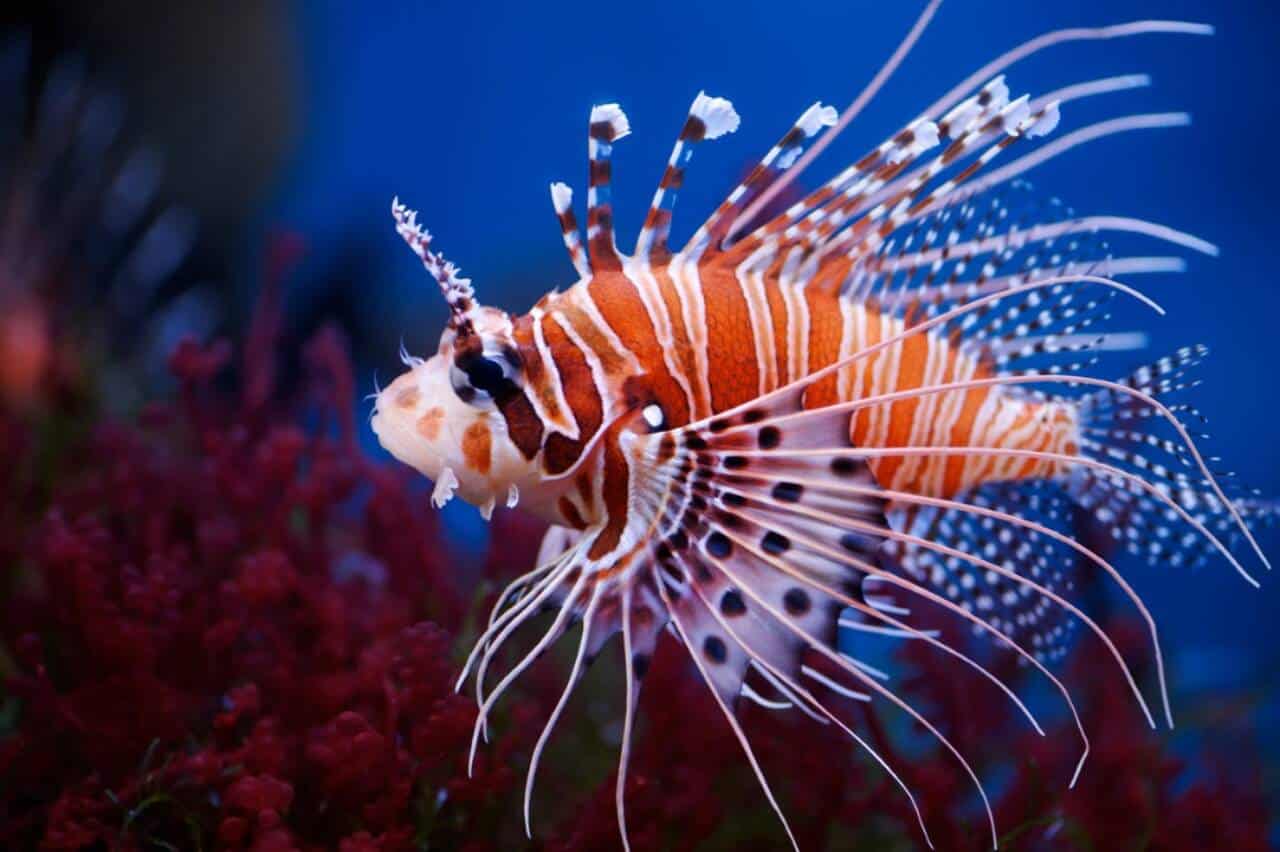
The General Fisheries Commission for the Mediterranean, a body of the Food and Agriculture Organization of the United Nations (FAO), reveals that although these exotic species have been present for decades, their expansion has intensified since the 2000s. This acceleration coincides with rising seawater temperatures, exemplified by the rapid spread of lionfish, which was first recorded in the eastern Mediterranean in 2012.
Azzuro also warns that “the Mediterranean will become even poorer, with fewer species, simply because climate change is making this part of the Mediterranean, especially the eastern part, really unsuitable for native species.”
Cyprus, due to its proximity to the Suez Canal, was one of the first to feel the impact of invasive fish. Lionfish, for example, have supplanted native populations such as red mullet, harming fishermen who have seen their traditional catches decline drastically.
Another worrisome invader is the rabbitfish, which feeds on deep-sea algae, destroying essential habitat for many local species. This loss of algae directly affects the food chain and ecological balance.
For Piero Genovesi Papik, a zoologist at the Higher Institute for Environmental Protection and Research in Italy, “we know what must be done. We must reduce the use of fossil fuels.” He emphasizes the urgency of the issue for humanity, highlighting that known solutions require a global vision and joint actions.
Identification of almost a thousand invasive species in the local ecosystem
Around 1,000 invasive species have been identified in the Mediterranean, 800 of which are already established, according to data from Azzuro. The ecological changes are drastic, with the shallow waters of the eastern Mediterranean losing 93% of its shellfish population.
On the Adriatic coast, once rich in mussels, most specimens died due to water temperatures, which occasionally exceeded 30 degrees Celsius. The situation represents a significant challenge for the recovery of these populations.
The mussel die-off, which Azzuro described as “spectacular” from Venice to Bari, suggests an uncertain future for the species in the Adriatic Sea unless populations more resistant to these harsh climate conditions are found.
In response to the dangers, Azzuro’s institute and its partners launched an awareness campaign, titled “Beware of These Four,” to inform about the threats that invasive species pose to human health.
The initiative warns that pufferfish are toxic and can be lethal if consumed. Furthermore, the lionfish’s poisonous spines can cause serious injuries to anyone bitten, requiring caution from fishermen and swimmers.
Spread of exotic species is considered irreversible by scientists
Scientists are looking for strategies so that coastal communities can live with the situation. Suggestions include the commercialization of edible invasive species and paying fishermen to capture inedible species, such as pufferfish, for incineration.
Azzuro notes that some invasive species, such as lionfish, can generate “clear economic benefits” and are sold at high prices in some countries. However, the economic potential of other species, such as the dark spiny sea urchin, which has proliferated in Italian waters, has not yet been fully exploited by fishermen.
For zoologist Papik, although it is “too late” to completely reverse the spread of invasive species in the Mediterranean, there are still practical ways to mitigate their negative impacts.
One of the first measures proposed is to prevent the migration of these species, through the application of an international treaty. This treaty requires national authorities to treat the ballast water of ships, which could carry invaders, before their arrival.
Papik assures that this measure is “technically viable and can reduce the number of new exotic species by 95 to 99%.” Another effective tactic includes treating ships’ hulls with a special paint to prevent unwanted organisms from attaching.
Fishing policies are also being adapted, according to Papik, to help native populations recover. One example is the cultivation of shellfish that are less susceptible to the blue crab, an exotic species.
Looking to the future, Papik concludes that “in the coming years, I believe the challenge will be to restore, to find new ways to restore the environment”, emphasizing the continued need for innovation and effort towards ecological recovery.





