
Spectacle in the sky in August 2026: find out how to admire the peak of the Perseids

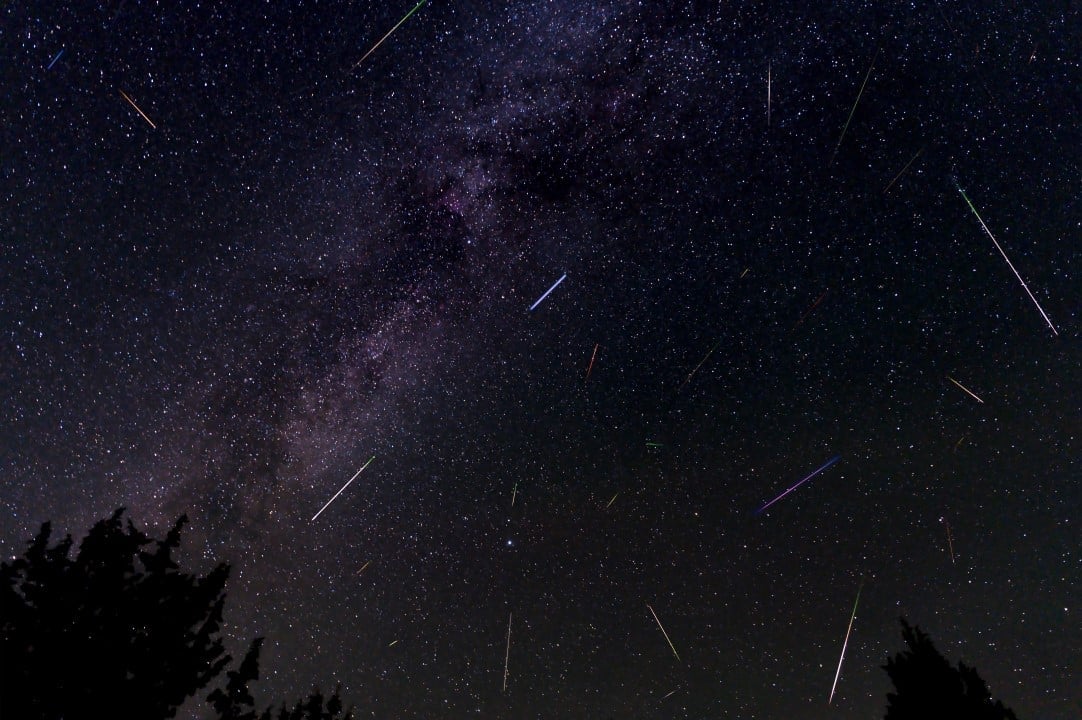
The month of August 2026 holds one of the greatest shows on the world astronomical calendar with the return of the Perseids. During this period, our planet passes through the cloud of fragments abandoned by comet 109P/Swift-Tuttle, generating luminous streaks that cut through the darkness. Famous for producing intense and fast shooting stars, the event does not require the use of expensive optical instruments, offering a democratic opportunity for curious and studious people to admire the celestial vault with the naked eye.
Cosmic origin: the role of the gigantic comet Swift-Tuttle in the phenomenon
All the brightness seen from the Earth’s surface comes from a colossal celestial body, a frozen core that measures about 26 kilometers from end to end. Independently identified in 1862 by researchers Lewis Swift and Horace Parnell Tuttle, this giant travels on an elliptical path that brings it closer to our Sun every 133 years. As the space rock receives the star’s intense heat, the surface ice rapidly evaporates, ejecting a massive trail of dust and boulders across outer space.
Every year, Earth’s path intersects this cosmic debris highway, causing tiny debris—many the size of a bean—to reach the upper layer of our atmosphere. The extreme friction generated by speeds exceeding 200,000 kilometers per hour ignites these particles, resulting in the traces of light that we call meteors, including the famous bolides, which are larger, brighter and more colorful explosions that last longer in the sky. The baptism of the event pays homage to the constellation of Perseus, the point from which the flashes seem to emerge, and this direct connection with the dust cloud gives astronomers a valuable chance to investigate the chemistry of ancient comets.
Guidelines from the American space agency to ensure the best viewing
The United States government agency classifies this period as one of the most productive of the year, as the rate of meteors can exceed the 50 to 100 flashes per hour mark during peak activity. To ensure that the public makes the most of the August 2026 sky, the institution’s experts recommend searching for rural refuges or parks far from urban centers. The main objective is to escape the light pollution of metropolises, which acts like a veil and hides the faintest shooting stars.
Getting the vision used to total darkness is a mandatory step, requiring the observer to wait between 20 and 30 minutes in the dim light for the pupils to dilate completely. Turning on your smartphone screen, using white flashlights or being close to streetlights destroys this adaptation instantly, drastically reducing the amount of light captured by the human eye. The use of binoculars or telescopes ends up hindering the experience, as the narrow field of view of these devices prevents the visualization of the fast tracks that cross large expanses of the sky, although photographers are able to record the spectacle using cameras configured for long exposure.
Strategic Preparation: What to Do Before Looking at the Night Sky
Planning the night watch makes all the difference for those who want to capture the essence of the phenomenon, whose peak traditionally occurs between the 11th and 13th of August. The success of the venture will depend on a combination of uncontrollable factors, such as the absence of heavy clouds and the current lunar phase, added to the choice of an environment free from the artificial glare of cities.
Inland regions, wide pastures and natural viewpoints emerge as ideal settings for contemplation. Having a clear horizon with no buildings around multiplies the probability of catching meteors streaking across different quadrants of the celestial vault. The period before dawn usually delivers the largest volume of shooting stars, the exact moment when the face of our planet is facing directly towards the flow of space debris.
- Position yourself in an isolated area, where public lighting cannot reach your eyes.
- Start waking early, ensuring the necessary time for your eyes to adapt to the dark.
- Use mats, mats or reclining chairs to avoid neck pain during observation.
- Dress appropriately, as temperatures tend to plummet during winter mornings in the Southern Hemisphere.
- Stay calm and view the activity as an exercise in prolonged contemplation.
- Keep electronic devices in your pocket to preserve the sensitivity of your retina.
The scientific value behind the light show in Earth’s atmosphere
Far beyond the visual appeal that attracts crowds, the annual crossing with the remains of the Swift-Tuttle provides rich study material for the academic community. Analyzing the behavior of these fragments helps to map the mechanics of formation of our own planetary system. By measuring the entry velocity, the color palette of the brightness and the rate of fall, astrophysicists can deduce which chemical elements formed the nucleus of the original comet.
This continuous monitoring reveals the disintegration process of celestial bodies and the way stardust travels through the vacuum. Every pebble that burns above our heads functions as an intact fossil, holding secrets about the solar system’s infancy billions of years ago. Data extracted from peak nights helps calibrate theories about the creation of planets and explains how water and other essential compounds could have reached Earth, transforming a simple visual event into a true open-air research laboratory.



