
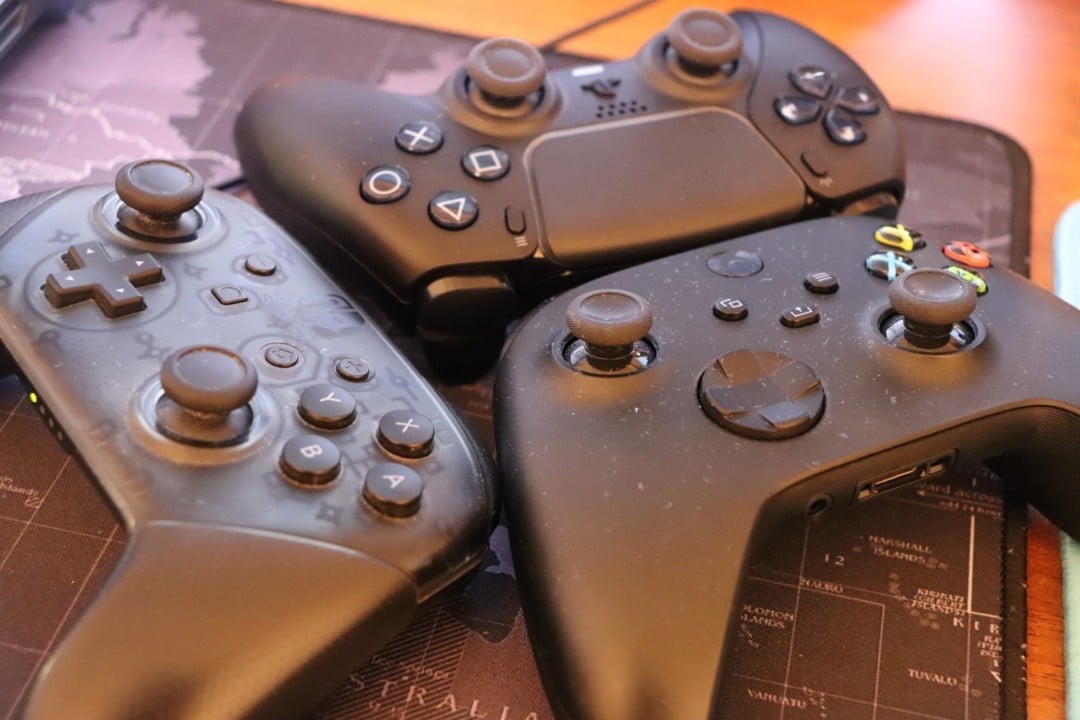
For many gaming enthusiasts, the PC’s flexibility has always been an attraction. The ability to customize graphics, install modifications, and choose from multiple digital stores offers unparalleled freedom. However, this same freedom often translates into high costs, possible incompatibilities and the constant need for technical adjustments, which can be exhausting for those just looking for an uncomplicated gaming experience.
In this scenario, consoles emerge as an increasingly seductive alternative. On August 4, 2026, with models like the PlayStation 5, Xbox Series X|S and the recently released Nintendo Switch 2, players will find platforms that promise simplicity and immediate fun. These systems arrive ready to use, with integrated hardware and optimization for the titles developed, eliminating several concerns that accompany the world of computers. The choice between PC and console does not need to be a dispute, but rather a decision based on the profile and priorities of each player.
Simplifying hardware selection and system assembly
Assembling a gaming computer requires considerable technical knowledge. It is necessary to ensure compatibility between the processor and the motherboard, check whether the power supply supports the video card, and analyze the available space in the case, in addition to the adequacy of the cooling system. All these previous decisions can be a barrier for those who are not familiar with electronic components or do not want to turn assembly into a hobby.
On consoles, this complexity is eliminated. The equipment is purchased already assembled, with all components designed to work in harmony, which simplifies the process for the consumer. There is only the need to choose between digital models or those with a disc reader, a much more direct decision than comparing dozens of video cards, processors and RAM memory modules.
End worrying about technical requirements and optimization
With each new game released on the PC, lists of minimum and recommended requirements appear, forcing the player to check whether their machine is capable of running the title. A game may run perfectly one month, but a later release may require a more advanced graphics card, more memory, or specific resources. This constant need to update and check can be a stress factor.
On consoles, compatibility is much simpler: if a game is released for PlayStation 5, it was developed to run on PlayStation 5. The same applies to Xbox Series X|S or Nintendo Switch 2 titles, which are already optimized for their specific hardware. While there may still be quality and performance modes, the player does not have to worry about whether their particular hardware and operating system configuration will be sufficient, making the experience more predictable and less demanding.
Agility to connect and dive straight into games
A PC’s routine often includes operating system updates, video drivers and game launchers, as well as programs that start together with Windows. Although consoles also receive updates, much of this process occurs automatically and in the background, even when the device is at rest. The PlayStation 5, for example, allows you to download games and system updates while the console is in rest mode.
The Xbox Series also offers the innovative Quick Resume feature, which keeps multiple games suspended, allowing the player to resume the game exactly where they left off in a matter of seconds. This functionality, updated in 2026 to allow individual control in specific games, is especially useful for those who have little free time and want to enjoy quick sessions without the need to prepare the system in advance.
Experience optimized for televisions and the portability of Switch 2
While it is possible to connect any computer to a television and use a controller, consoles are designed from the ground up for this purpose. The interface is navigable entirely by control, applications are adapted for remote viewing, and features such as HDR and variable refresh rates are configured in a simplified way with compatible televisions.
This makes it easy to use in the living room or bedroom, allowing the player to access games and streaming services directly from the sofa, without relying on a keyboard or mouse. The PlayStation 5’s DualSense, with its advanced haptic feedback and adaptive triggers, also offers a different immersion.
Nintendo Switch 2 goes further, providing unique flexibility. It can be used as a laptop, resting on a surface or connected to the television via its base. With a 7.9-inch screen, 1080p resolution, HDR and support for up to 120 frames per second in compatible games, it becomes an ideal option for those who need mobility, whether to play in another room in the house or while traveling.
The value of physical games and the unique experiences of each platform
Although the digital market dominates, consoles still offer the possibility of purchasing games in physical format on compatible models. PlayStation 5 with player supports PS5 discs and PS4 titles. The Xbox Series X has a UHD Blu-ray player and is backwards compatible with previous generation discs. The Nintendo Switch 2, in turn, accepts its own physical cards and is compatible with part of the first Switch’s library.
- Price research in different stores;
- Buying and selling used games;
- Exchange titles with friends and other players.
Furthermore, each platform maintains its own characteristics, even with the reduction of absolute exclusives that do not reach the PC. The PS5 has games that fully utilize the DualSense and a vast PS4 library. The Xbox Series X|S stands out for its backwards compatibility with thousands of titles from four generations, in addition to the Quick Resume system. The Nintendo Switch 2 is home to iconic Nintendo franchises, such as Mario Kart World, and offers the aforementioned gaming versatility.
Extensive libraries with subscription services
Subscription services, despite representing an additional cost, have transformed the way many gamers access new titles. They offer vast, ready-to-play libraries, reducing the need to purchase each game individually, especially for those who like to try different genres and releases.
- Xbox Game Pass:It offers different plans with catalogs for consoles, PC and cloud games, including selected releases on the first day and access to online multiplayer.
- PlayStation Plus:It offers game catalogs at various subscription levels, as well as access to online features.
- Nintendo Switch Online:Essential for online multiplayer, it also provides benefits and catalogs of classic games, varying depending on the plan chosen.
The flexibility of these services allows you to explore hundreds of titles, although access may be limited to the duration of the subscription or the game’s stay in the catalog. For gamers who frequently switch between multiple games, it’s a convenient and cost-effective gateway.
Hardware longevity and preservation of your library
One of the biggest differences between consoles is the longevity of the hardware. The device purchased at the beginning of a generation will continue to receive games developed for that platform throughout its commercial cycle. This eliminates the pressure of needing to replace your processor, memory, or graphics card every few years to keep up with the latest releases.
Even with the emergence of more powerful models within the same generation, developers still consider the original base of the consoles. Backwards compatibility is also a strong argument. The PlayStation 5 runs thousands of PS4 titles, the Xbox Series X|S is compatible with games from different generations, and the Nintendo Switch 2 accepts physical and digital versions of many titles from the first Switch, preserving a large part of the player’s library. Storage, when necessary, can be expanded with compatible M.2 SSDs on the PS5 or dedicated expansion cards on the Xbox Series X|S.
When is switching to a console the best option?
The decision to exchange the PC for a console in 2026 depends fundamentally on the player’s profile and their priorities. The PC remains unbeatable for those seeking maximum graphics performance, freedom from mods, promotions across a variety of digital stores, online multiplayer with no platform subscription costs, and versatility for professional use and competitive games that require keyboard and mouse precision.
However, if you are a gamer who has grown tired of the constant maintenance, constantly changing system requirements, and complex configurations before each match, a console may be the ideal solution. The standardized experience, agility to play, optimization for televisions, the possibility of physical games and subscription libraries offer a more direct path to fun. Keeping a PC for specific work and gaming, while the console becomes the entertainment center in the room, is a popular combination that suits many gamer profiles.





