
Asus RTX 5080 graphics card reaches a higher price than the RTX 5090 version at Best Buy


The computer components market has just registered a worrying milestone for technology enthusiasts. On July 30, 2026, the North American retailer Best Buy started selling the Asus ROG Astral RTX 5080 OC graphics card for a significant US$2,099. This amount draws attention as it surpasses the US$1,999 barrier, which represents the official reference value for purchasing the RTX 5090, a superior equipment category. The situation highlights a lack of control in retail tables, directly affecting those looking to assemble or update high-performance machines.
Difference in values between graphics card lines impresses consumers
The version customized by the Taiwanese manufacturer has undergone a considerable financial leap since its arrival on shelves. Currently, the cost required by the American store is equivalent to a 40% increase over the original launch price, which was US$1,499. When we put this number next to the base edition developed by the creator of the graphics chip itself, the scenario becomes even more disproportionate for the buyer’s pocket.
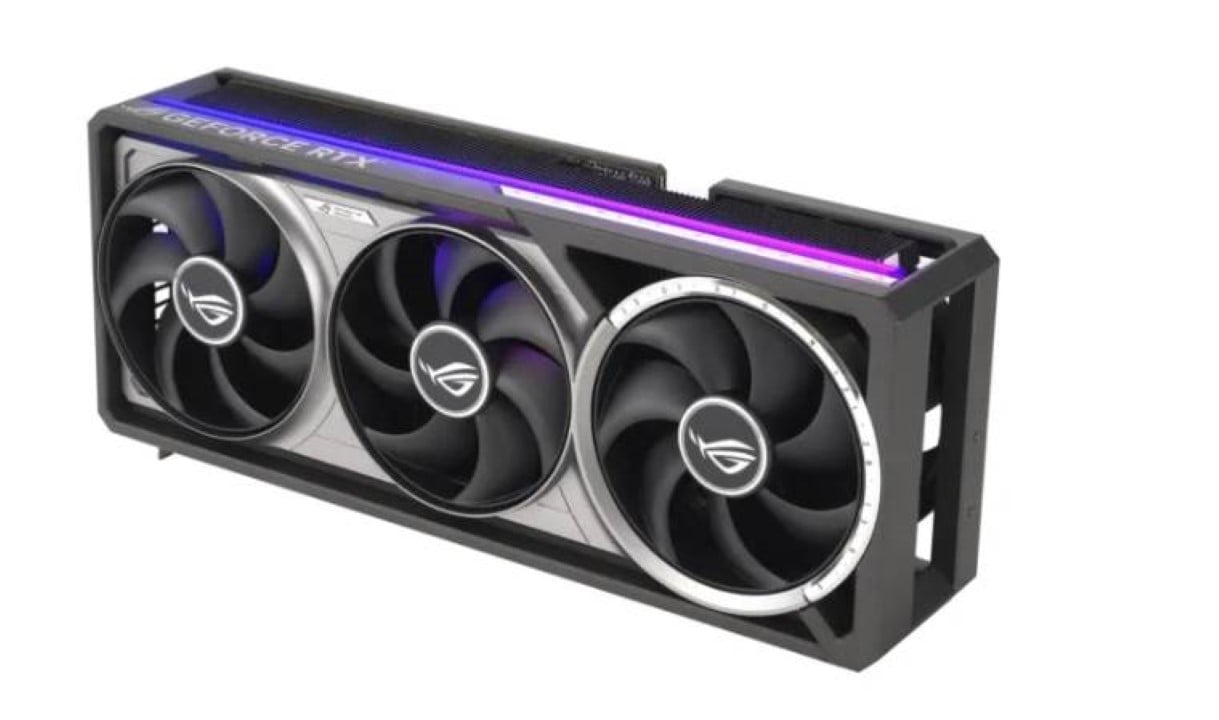
The reference model, known as the RTX 5080 Founders Edition, has a suggested price set at US$999. In other words, the factory overclocked ROG Astral variant is costing more than double the standard version. This gigantic disparity creates an almost insurmountable obstacle for users who want to take advantage of new rendering and artificial intelligence technologies without completely compromising their household budget.
Component crisis and global shortages drive readjustments in the technology sector
The behind-the-scenes of the semiconductor industry help explain this rampant escalation in labels. Recent reports from the manufacturing sector indicate that Nvidia is considering applying a new generalized increase across its entire line of graphics processors, with rates varying between 20% and 30%. If this measure comes to fruition, it will be the third time this year alone that the company has revised its tables upwards, putting pressure on the entire production chain.
The main villain of this technological inflation is the abrupt increase in the price of RAM memory modules, essential for the operation of modern GPUs. The difficulty in obtaining raw materials and continuous logistical bottlenecks force automakers to pass on extra costs to the end customer. Hardware experts estimate that other manufacturers will also follow this path, making the acquisition of premium parts a luxury that is increasingly distant from the reality of the majority.
Purchasing alternatives and variation in offers on different retail platforms
Despite the scare on the shelves at Best Buy, detailed research reveals that behavior is not uniform across e-commerce. Surveys indicate that this specific chain is the only major retailer charging a higher price than the RTX 5090 for this exact model. On other platforms, it is possible to find the same equipment for slightly less aggressive amounts, although still far from ideal.
The official Asus store itself offers the ROG Astral RTX 5080 OC for US$1,899, a high amount, but which saves a few hundred dollars compared to the competitor. This difference in pricing reinforces the importance of monitoring multiple sources before making a high-value transaction, as profit margins vary drastically depending on the distributor chosen.
Direct impact on entry models and the return of hardware with old specifications
The most curious consequence of this financial restructuring of the market is the ripple effect on the cheapest segments. With high-end pieces reaching astronomical figures, companies needed to find ways to maintain sales to the public on a restricted budget. The solution found by the brands was to resurrect configurations that seemed extinct, bringing video cards with limited capabilities back to stores.
- The ROG Astral RTX 5080 OC version costs US$2,099 at Best Buy, surpassing the top model of the generation.
- The RTX 5090 benchmark remains set at $1,999.
- The standard Founders Edition of the RTX 5080 originally launched for $999.
- The ASRock AMD Radeon RX 9050 Challenger appears as a basic option with just 4 GB of VRAM memory.
The launch of products like the ASRock AMD Radeon RX 9050 Challenger perfectly illustrates the forced adaptation of the industry. While enthusiasts deal with the hyperinflation of premium lines, the common consumer has to be content with hardware that offers technical capabilities similar to those of past generations, showing a decline in access to cutting-edge technology.
Recent history shows how inflation affects the development of new computers
The escalation in assembly costs is not an isolated phenomenon this year, but rather the accumulation of instabilities that began in previous generations of semiconductors. When the previous lines reached the public, the market was already facing unfair competition from cryptocurrency miners and exchangers. Now, in 2026, the focus has shifted to the massive demand for artificial intelligence processing, which consumes a large part of global chip production.
Given this reality, assembling a high-performance machine requires different strategies from buyers. Purchasing separate parts over months, monitoring daily promotions, and accepting models with slightly lower specifications became common practice. The case of Best Buy charging an exorbitant amount for a customized sign serves as a clear warning about the need for caution when finalizing the virtual shopping cart.





