
Intense winds in Rio Grande do Sul cause death, five injuries and damage in 118 municipalities

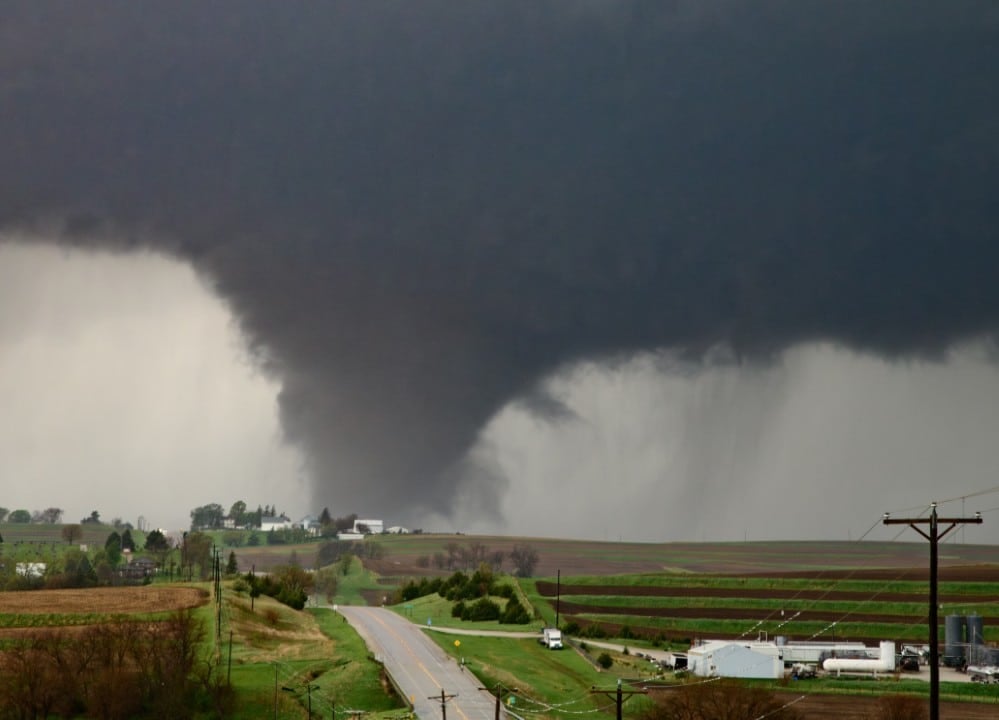
The strong winds recorded in the state of Rio Grande do Sul, resulting from the passage of a bomb cyclone on August 6, 2026, caused one fatality, left five people injured and caused damage in 118 cities in Rio Grande do Sul.
The state Civil Defense clarified that the losses are the result of the combination of a bomb cyclone and a cold front that acts in the region, characterizing itself as a complex meteorological event.
The death occurred in the city of Montenegro, where a motorcyclist was hit by a falling tree while traveling along the RS-124 highway.
The civil defense agency correlated the fatal incident with meteorological alert number 12, issued on August 4, 2026, which predicted storms with wind gusts exceeding 90 km/h and the occurrence of hail.
In Montenegro, three individuals were injured as a result of roofing. In Novo Hamburgo, the city recorded the highest number of incidents of this type, with 120 documented roofings.
Still in Novo Hamburgo, a motorcyclist suffered injuries after getting entangled in wires. In Pedro Osório, a soldier was hit by a shattered windshield, also as a result of the weather phenomena.
In total, 118 municipalities reported incidents, mostly caused by winds and hail. The average wind speed reached 120 km/h.
This information was detailed by Civil Defense in a press conference held on the morning of August 7, 2026.
The agency reported that alerts were issued for the affected areas, with a maximum severity warning for Porto Alegre and its surroundings. Furthermore, it was highlighted that the tornado seen in Pedro Osório may not be an isolated case, as the state is considered a “tornado corridor”.
Weather forecast for the next few days
Climatempo indicated that the withdrawal of the intense extratropical cyclone, formed between Uruguay and Rio Grande do Sul, occurred on the night of August 6, 2026. From August 7, 2026, atmospheric pressure should continue to decrease, but with an impact restricted to the high seas.
The cold front, however, continues to advance over the southern region of the country. There are forecasts of rain showers, isolated thunderstorms, lightning and gusts of wind in Paraná, Santa Catarina and areas of the North, Southeast and coast of Rio Grande do Sul. Gusts can vary between 50 and 70 km/h.
Over the course of the day, weather conditions are expected to stabilize and remain firm across most of the region.
What is the bomb cyclone phenomenon?
Popularly known as a bomb cyclone, the phenomenon is technically described as the formation of a high-intensity extratropical cyclone.
Called explosive cyclogenesis or bombogenesis, a bomb cyclone occurs when a low atmospheric pressure system intensifies extremely quickly. The name “bomb” is due to its explosive origin.
To be classified this way, the central pressure of the atmospheric system must drop by at least 24 millibars over a 24-hour period. This process is more common in regions of high latitudes, where very cold air masses meet warmer air masses.



