Residents of practically all of Brazil will have the opportunity to watch a partial lunar eclipse on the night of August 27th and in the early hours of August 28th, 2026. The astronomical spectacle, popularly known as the “blood moon”, will be visible in several regions, as long as the weather conditions allow a clear view of the sky.
Observation details and timings in different cities
Viewing the eclipse will be possible in all Brazilian regions, depending on the absence of clouds at the time the Moon crosses the Earth’s shadow. For a complete experience, the tip is to look for places with little light pollution and a wide view of the horizon.
Cities that operate on Brasilia time, such as São Paulo, Rio de Janeiro and the federal capital itself, will see the maximum point of the eclipse at around 1:12 am on August 28th. In locations with different time zones, such as Campo Grande and Manaus, the peak will occur earlier, at approximately 0:12 am. It is essential to check the specific local time for each city before observing.
No special equipment is needed to observe the phenomenon, which can be seen with the naked eye. However, binoculars or telescopes can enrich the experience for those looking for details of the lunar surface.
Why does the moon take on reddish tones during eclipse?
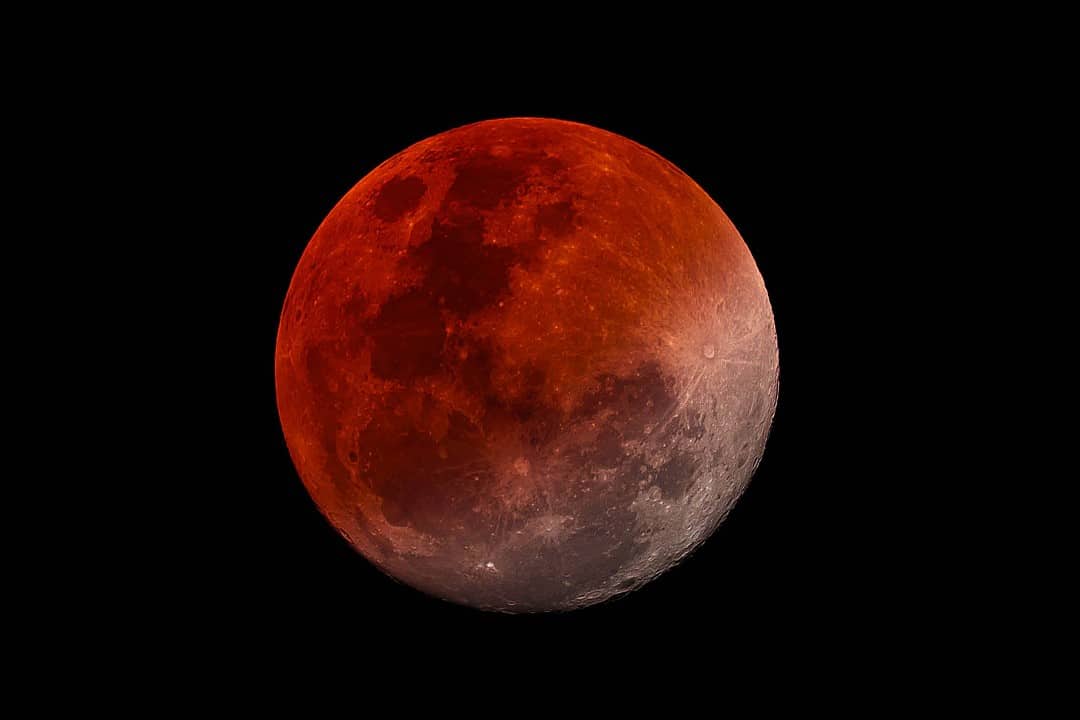
The term “blood moon” is a popular expression that describes the reddish color that the natural satellite can present during a lunar eclipse. This visual characteristic is the result of an atmospheric effect on Earth.
When sunlight passes through the Earth’s atmosphere, the blue components of the light spectrum are dispersed more easily. On the other hand, the portions of red and orange light are able to overcome this barrier and reach the surface of the Moon.
This phenomenon causes the Moon to acquire shades that can vary between reddish, orange and coppery, reminiscent of the vibrant colors seen during sunrise or sunset.
Difference between partial and total lunar eclipse
Despite the catchy moniker, the August 2026 event will officially be classified as a partial lunar eclipse. This means that only a portion of the Moon will enter the umbra, the darkest part of the shadow cast by the Earth.
In a total eclipse, on the other hand, the entire lunar disk passes through the umbra, which generally intensifies the reddish coloration and makes it more uniform across the entire visible surface of the satellite.
Recommendations for a good visualization of the phenomenon
For those who want to follow the eclipse, some recommendations can optimize the experience:
- Look for a location away from urban lighting to minimize interference.
- Choose a spot that offers a clear view of the sky.
- Avoid areas where buildings or trees may block the view of the Moon.
- Check the weather forecast in advance to ensure clear skies.
- Use binoculars or a telescope if your goal is to observe finer details of the lunar landscape.
Observing a lunar eclipse is completely safe for the eyes, unlike a solar eclipse, which requires specific protection.
The cosmic alignment behind the event
A lunar eclipse happens when the Sun, Earth and Moon align so that the Earth is positioned exactly between the Sun and the natural satellite. At that moment, the full Moon crosses the shadow that our planet casts in space.
Before and after the partial phase, the Moon also passes through the penumbra, a fainter region of the Earth’s shadow. This step, however, causes a subtle change in the lunar brightness, which may be difficult for most observers to notice with the naked eye.
The night of August 27th to 28th, 2026 offers an excellent opportunity for Brazilians to appreciate this celestial movement and witness the reddish effect that inspires the popular name “blood moon”.