
Tragedy in Rio de Janeiro leaves four dead after helicopter crashes in the forest


The morning of August 8, 2026 was marked by a fatality in Rio de Janeiro’s airspace, resulting in the loss of four lives. A rotary-wing aircraft crashed into an area of dense vegetation on the outskirts of Vista Chinesa, Alto da Boa Vista neighborhood, in the South Zone of the capital. The violent impact on the ground generated immediate flames, requiring a complex operation due to the hostile topography of the site.
Mobilization of emergency teams to locate the wreckage of the aircraft
The distress call reached the Rio de Janeiro Fire Department headquarters at exactly 11:11 am, triggering a quick response from the authorities. Professionals from the Air Operations Group were dispatched to fly over the region and were able to visually identify the remains of the device. The exact area of the impact is on a steep slope, very close to the famous oriental-style monument.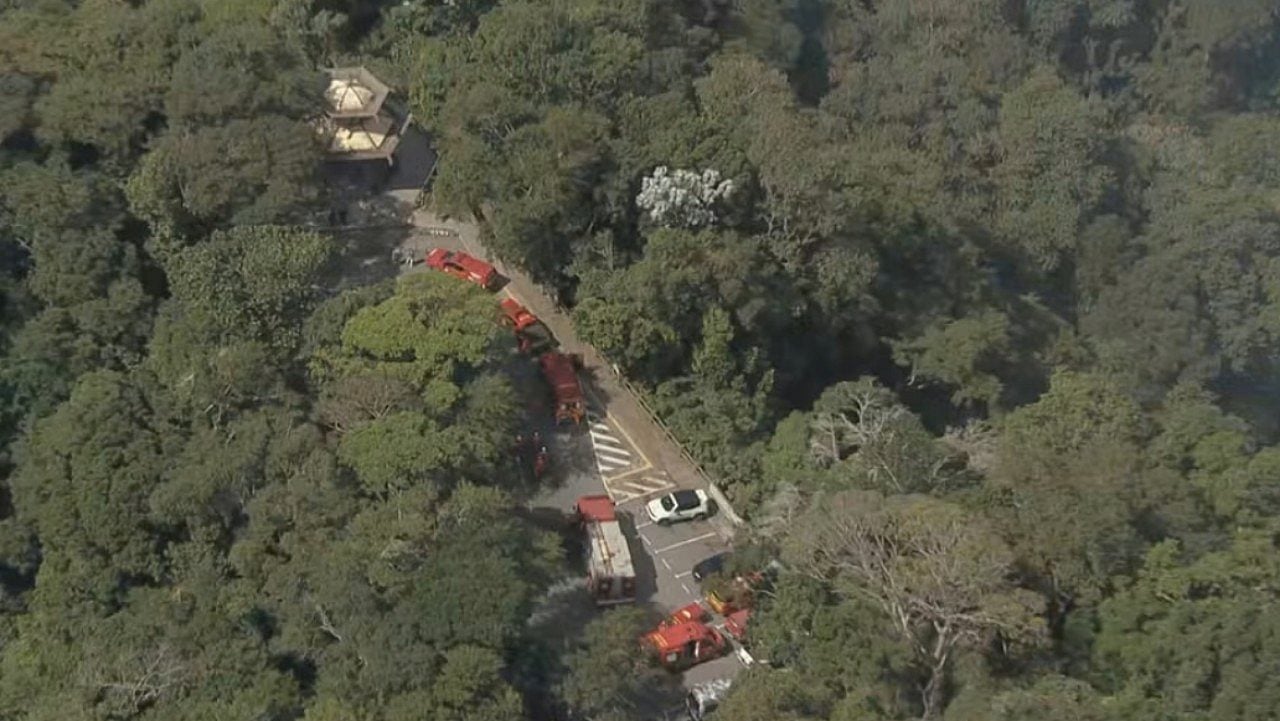
Immediately after visual confirmation, the focus became on containing the flames that threatened to spread throughout the forest. Military personnel with specific training in forest fires had to clear a path through the forest to avoid an even greater environmental disaster, while rescue teams tried to access the destroyed fuselage.
Geographical obstacles make it difficult for rescuers to work in the national park
The topography of the Tijuca National Park, recognized as one of the largest replanted urban forests in the world, imposes severe barriers to any type of rescue. The thick tree canopy and steep slopes forced professionals to use advanced rappelling and jungle progression techniques. In addition to the immediate rescue, the isolation of the area is essential to preserve the evidence that will be analyzed by the Center for Investigation and Prevention of Aeronautical Accidents (CENIPA), the body responsible for uncovering the causes of air tragedies in Brazil.
Contrast between the tourist scenario and the complexity of the air disaster
Traditionally, the viewpoint attracts thousands of visitors in search of a privileged panoramic view of the capital of Rio de Janeiro. The transit of panoramic and private aircraft is common on this route, but occurrences of this magnitude are uncommon and raise a warning about the safety of flights over areas with rugged terrain. The presence of ecological trails nearby also required increased attention from authorities to ensure that no civilians were hit by the cabin fragments or the fire.
Unanswered questions and the next steps for technical expertise
The identities of the occupants who lost their lives remain confidential, awaiting recognition work by the Legal Medical Institute. Likewise, the equipment registration, exact model and name of the owner or flight operator have not been officially confirmed by security forces. The absence of preliminary data makes the forensic work even more delicate.
- Official recognition of the bodies found at the impact site.
- Confirmation of the prefix and manufacturer of the aerial equipment.
- Verification of documentation and the company operating the flight.
- Analysis of meteorological and visibility conditions at the time of the collision.
- Survey of possible mechanical failures or human error by specialized expertise.
The Civil Police of the State of Rio de Janeiro has already opened an investigation to monitor the case in parallel with the aeronautical investigations. In the coming days, collecting statements from possible witnesses and analyzing the pieces collected in the forest will be crucial to putting together the puzzle of this tragedy.





