BYD’s new hybrid sedan achieves 2,110 km of total range in China


Chinese automaker BYD made official the arrival of the 2026 Qin Plus DM-i sedan line to the Asian market on January 8, bringing profound updates to its electrified powertrain and energy management. The highlight of the plug-in hybrid vehicle is its ability to travel up to 210 kilometers using only battery power, a number measured according to the rigorous standards of the Chinese CLTC test cycle. When the fuel tank works together with the electrical system optimally, the maximum range exceeds the impressive mark of 2,110 kilometers without any need for refueling. Prices charged in the country of origin start at 79,800 yuan and reach 99,800 yuan in the most equipped configuration, consolidating the car as one of the cheapest and most efficient alternatives within the competitive family car segment.
Advances in power capacity and thruster efficiency
The secret behind the significant increase in pure electric driving is the adoption of a new high-density battery pack, which now reaches a capacity of 25.28 kWh in the top variants. This technical change transforms the daily use experience, allowing drivers to carry out their routine urban journeys for several days without even activating the combustion engine, drastically reducing gas station costs. Even when the electrical component is completely discharged and the car starts to depend on fossil fuel, the manufacturer’s engineering guarantees extremely low consumption, recording just 2.79 liters for every 100 kilometers traveled on urban and highway roads.
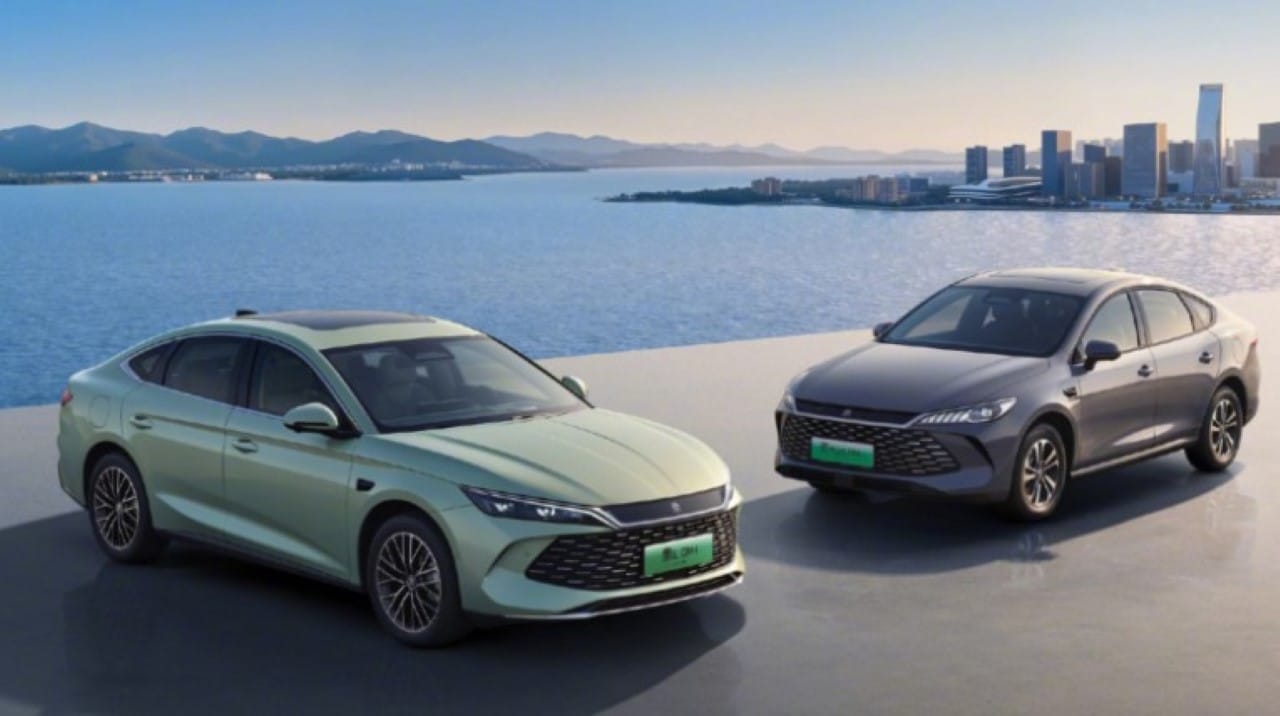
All of this low-consumption dynamics are intelligently managed by the fifth generation of the DM-i system, a proprietary technology that combines a 1.5 gasoline engine with a high-performance electric powertrain. For most of the time of use, the thermal engine acts exclusively as an energy generator to feed the batteries in real time, leaving the main wheel traction to electricity to ensure smooth acceleration. This mechanical architecture has been extensively tested in the laboratory and on the streets, proving that the combination of a full tank with the maximum charge at the socket results in long-distance intercity trips without the anxiety of searching for charging points.
- Driving exclusively on electricity reaches 210 kilometers according to the Asian test standard.
- Maximum distance traveled reaches 2,110 kilometers combining both engines in operation.
- Gasoline consumption with an empty accumulator is around 2.79 liters per 100 kilometers.
- Energy accumulator reaches 25.28 kWh of volume in the most expensive editions of the catalogue.
- Blade line lithium-iron-phosphate cells guarantee greater protection against fires and degradation.
Aggressive pricing aims to dominate the electrified vehicle sector
To maintain its isolated leadership in global sales of new energy cars, the brand structured the Qin Plus DM-i 2026 portfolio into three distinct levels of finishing and mechanical performance. The access model, focused on extreme cost-benefit for app drivers and fleet owners, delivers 128 kilometers of electric range for exactly 79,800 yuan. Consumers looking for a maximum emission-free range of 210 kilometers can opt for the intermediate Progressive variant, priced at 89,800 yuan, or the complete Superior edition, which requires a disbursement of 99,800 yuan at local dealerships.
Historically, the Qin family represents one of the automaker’s greatest commercial successes, accumulating hundreds of thousands of registrations in recent years and helping to popularize hybrid technology in Asia. The strategic decision to expand battery capacity meets a direct demand from the public, which seeks to take advantage of government tax incentives linked to vehicles with a greater electric range. Total control over the production chain, from lithium mining to the final assembly of semiconductors, is the crucial factor that allows the company to offer such competitive values compared to traditional automakers that depend on third-party suppliers.
Technological package raises the standard of safety on the streets
From the intermediate versions onwards, the sedan leaves the assembly line equipped with the advanced DiPilot level C vehicle assistance package, an important differentiator in its price range. It is a complex ecosystem of radars, ultrasonic sensors and high-fidelity cameras that enables semi-autonomous driving at L2+ level, taking control of driving on highways and alleviating driver fatigue. One of the innovations most praised by experts is the navigation system with urban memory, capable of learning the owner’s frequent routes and parking the car in a fully automated way in tight spaces in condominiums.
The commitment to the physical integrity of occupants and pedestrians is reflected in the presence of the autonomous emergency braking system and the active lane keeping assistant, which subtly corrects the steering if the driver becomes distracted. The introduction of these protective features in a high-volume car represents a paradigm shift in the Chinese automotive industry, popularizing technologies that not long ago were exclusive to European luxury sedans. This strategy of democratizing active safety makes the new generation much more attractive for families who have a strict budget, but do not give up on protection in traffic.
Smart cabin delivers silence and advanced connectivity
The interior environment has been completely redesigned to house the latest generation DiLink multimedia center, which displays its interactive menus on a floating screen measuring up to 12.8 inches positioned in the center of the dashboard. The updated software processes natural voice commands extremely quickly, allowing you to adjust the temperature of the digital air conditioning, open windows or select routes on the GPS without the driver having to look away from the road. The most expensive configurations in the catalog add extra comfort treats, such as multi-point electric adjustments for the front seats and a premium sound system that transforms the cabin into a true private concert hall.
Acoustic comfort received special attention from engineers during project development, resulting in insulation that keeps internal noise below the 53 decibel mark during cruising speeds. This absolute silence in the cabin is guaranteed by the use of double laminated front windows and an electronic system that actively cancels noise emitted by the tires rubbing against the asphalt. Additionally, the clever relocation of the gear selector to the steering column has freed up valuable space in the center console, creating new storage compartments and improving overall ergonomics for those traveling in the front seats.
Preserved visual identity and immediate availability in stores
The launch’s external aesthetics preserve the acclaimed design language known as Dragon Face, characterized by striking creases on the hood and an imposing front grille that conveys an aggressive stance on the streets. The customization catalog offered to customers has been expanded to seven different body tones, with absolute emphasis on an unprecedented gray finish that changes its brightness and depth depending on the angle of sunlight. Despite the relatively compact external dimensions, which favor aerodynamics and reduce wind drag at high speeds, the cabin was designed to accommodate five adults with plenty of leg and head room.
Official marketing of the vehicle began shortly after the unveiling ceremony held in the first week of January, with the first units already being shipped en masse to the extensive dealership network in China. The quick transition between the press announcement and actual availability in store windows reinforces the manufacturer’s enormous logistical capacity to meet the high demand in the domestic market without generating queues. With this profound update in autonomy and technology, the automaker consolidates its shelf of electrified products, delivering an enviable range for an acquisition cost that puts direct pressure on its direct competitors.
Luís Henrique Costa é jornalista formado pela FMU, editor-chefe e fundador do Mix Vale, portal de notícias em atividade desde 2013. Responde pela direção editorial do veículo, que cobre Brasil e mundo em economia, benefícios sociais, esportes, tecnologia, ciência e entretenimento. Atua na área há mais de 15 anos e lidera uma equipe de cerca de 15 colaboradores.