Artificial intelligence commands autonomous fighter in aerial combat tests
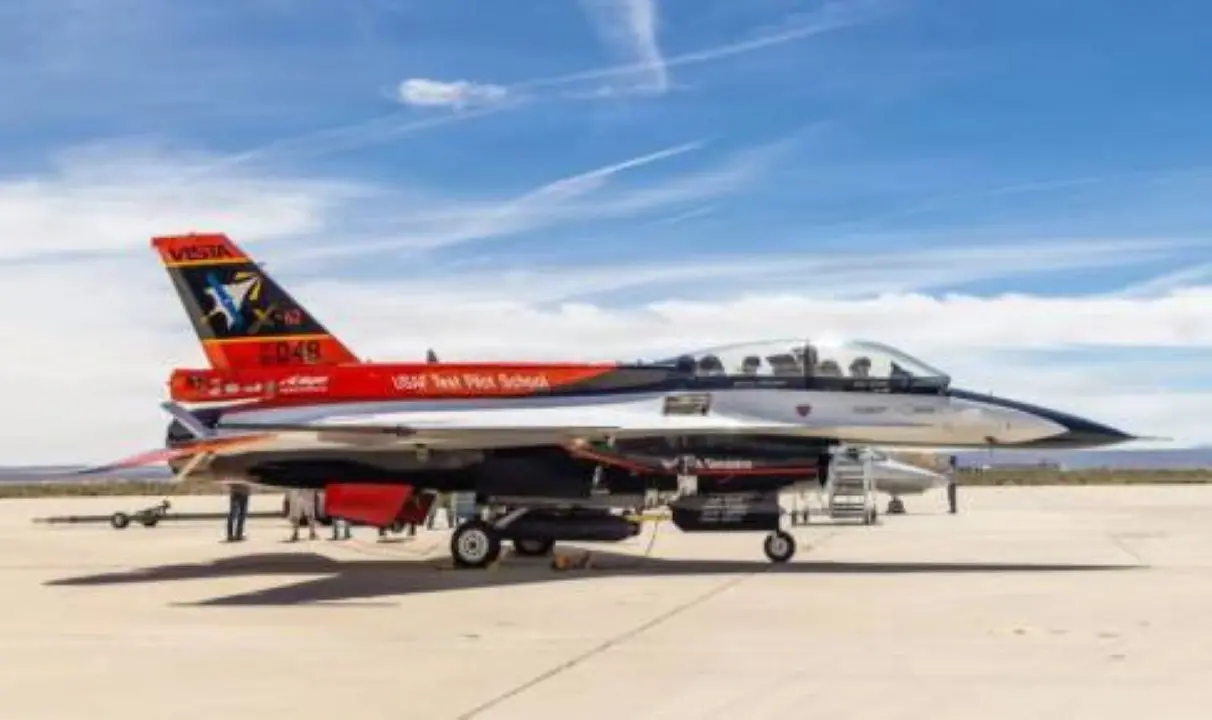
The X-62A VISTA military aircraft reached a significant milestone in autonomous air combat testing at Edwards Air Force Base, California, on August 12, 2026. The aircraft, equipped with artificial intelligence, performed 27 interceptions against a T-38 Talon in eight flights, demonstrating the ability to react in real time to sensor data and execute maneuvers without relying on prior simulations. This advancement represents a leap from automated navigation to dynamic action in a scenario that approaches a real combat threat.
The “Supermassive” artificial intelligence system in action
Success in the tests was driven by the artificial intelligence system called “Supermassive”, developed by Lockheed Martin’s Skunk Works division. This technology was integrated into the X-62A over a period of three months and allowed the aircraft to process information captured by infrared sensors. Based on these readings, the system made autonomous decisions about the necessary maneuvers during missions.
The ability to interpret and act on real-time infrared data is a differentiator. Previous autonomous aircraft systems often relied on idealized digital scenarios where the information was perfect. The transition to an environment with data that is effectively captured and subject to failure or ambiguity raises the level of autonomy in military aircraft.
More on this story: ‘Wandering’ supermassive black hole discovered far from galactic center after devouring star
Infrared sensors optimize the reaction in real time
The tests, part of the HAVE HEAT series, employed the Legion Pod IRST infrared system to provide real-time tracking data. This device, which uses optical sensors to detect and follow targets by their thermal signature, was crucial for the new stage. The X-62A was thus able to interpret this information and act dynamically, without the need for an active radar to locate and track the target.
The Legion Pod IRST allows the aircraft to perceive threats passively, which is a tactical advantage in aerial combat. By not emitting radar signals, the autonomous fighter can operate more discreetly, increasing its chances of success and reducing the risk of being detected by the adversary.
Overcoming the challenges of the real battlefield
Testing an aircraft that operates alone in combat requires more than following a programmed route. The system needs to manage several variables simultaneously, such as flight dynamics, assigned tasks and an extensive volume of information from multiple sensors. This scenario becomes even more complicated when real-world data presents imperfections, such as flaws, ambiguities and interference.
See Also

Treasure hunter finds England’s largest gold nugget with antique metal detector

Singapore leads 20th global ranking of most powerful passports of 2026

T. rex skeleton fetches record price of US$50.1 million at auction in New York
Learn more: Accident with B-52 Stratofortress at Edwards Base, California, mobilizes emergency teams
In the past, experiments with autonomous aircraft have often resorted to simulated digital environments. In these controlled scenarios, radar signals, information from ground stations, obstacles and even the presence of enemy aircraft were artificially reproduced. The HAVE HEAT project took the X-62A beyond this protected environment, forcing artificial intelligence to deal with the complexity and inaccuracy of data captured in practice. Key complexities overcome include:
- Processing raw and imperfect data from optical sensors.
- Quick decision making in a dynamic and unpredictable environment.
- Simultaneous coordination of flight and combat tasks without human intervention.
- Reaction to threats based on thermal signatures, without the use of active radar.
Implications for the future of military aviation and the integration of AI
The X-62A’s ability to process and react to sensor data in real time without relying on simulated environments or pre-programmed human commands marks an evolution. This technology has the potential to transform air defense strategies. The integration of advanced artificial intelligence allows aircraft to execute complex missions autonomously, potentially reducing pilots’ exposure to high-risk combat situations.
Advances like this pave the way for a new generation of combat aircraft. Using AI to interpret data and make strategic decisions can lead to greater agility and precision in military operations. The continued development of these systems raises discussions about the future roles of human pilots and how technology can complement or replace certain tasks in war scenarios.