
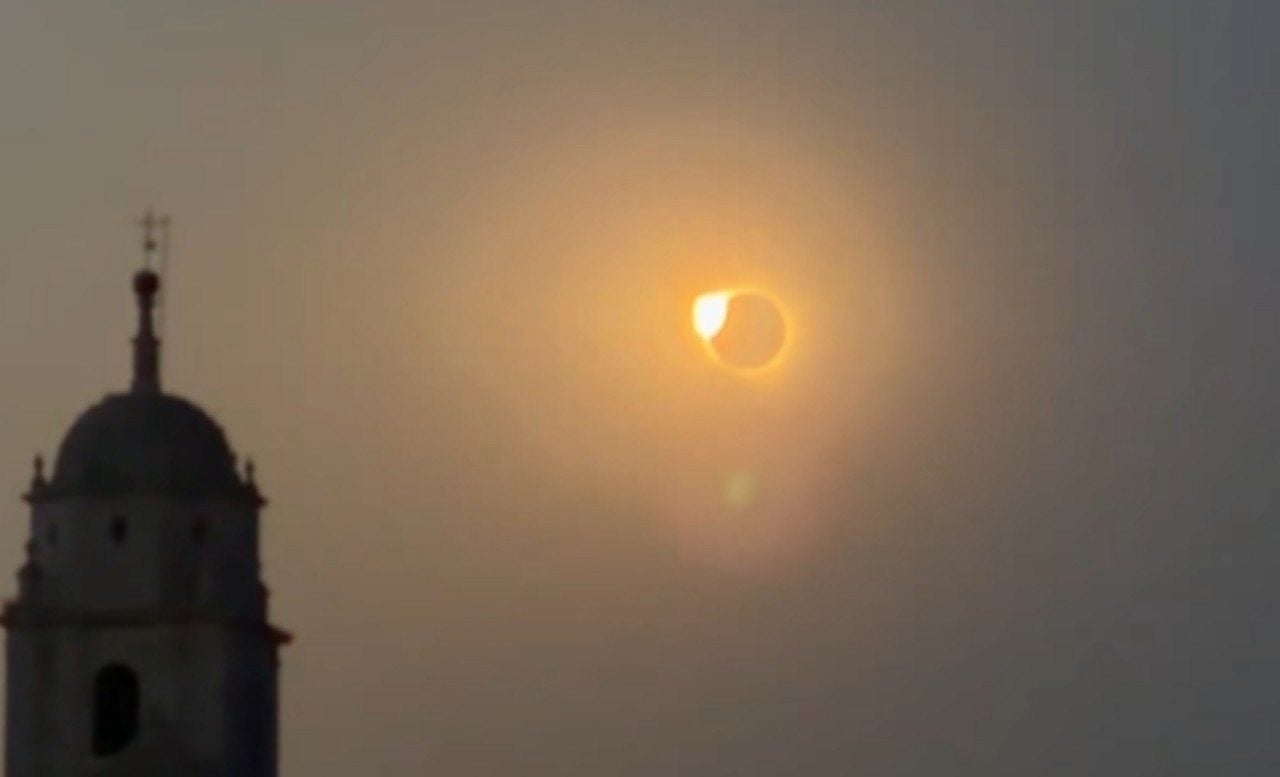
Millions of people across Europe, from Iceland to Spain, flocked to their favorite viewing spots on August 12, 2026 to witness the moment the Moon entirely blocked out the Sun.
This was the first total solar eclipse to cross the European continent in decades, plunging several nations into momentary darkness during the day. Vast crowds gathered on hills, coasts and other open areas to watch the phenomenon.
The precise alignment between the Earth, Moon and Sun, known as totality, generated remarkable excitement throughout the region. There were reports of high hotel room rates, as many sought to position themselves in the umbra, the darkest part of the lunar shadow. In these areas of clear sky, the Sun appeared as a dark circle, flanked by planets and stars, surrounded by an ethereal halo.
In the city of Ourense, located in northwest Spain, 87 inmates had the opportunity to observe the eclipse from the prison yard. The information was confirmed by the Spanish prison service.
An official statement highlighted: “There are moments that remind us that, regardless of our circumstances, we all share something as simple and powerful as the ability to wonder.”
The celestial wonders did not end with the eclipse. After the solar phenomenon, a post-eclipse spectacle awaited observers: the Perseid meteor shower would reach its maximum point between the night of August 12th and the morning of August 13th, 2026.
Considered the most intense meteor shower of the summer, the Perseids offer bright, fast trails with long tails, always a delight for anyone looking at the sky. Unlike the solar eclipse, which had visibility restricted to a specific range of Earth, the Perseids can be observed at night by anyone in the Northern Hemisphere. The fact that solar eclipses occur during the new moon phase means that the absence of moonlight during this period contributes to better visibility of the annual meteor shower.





