

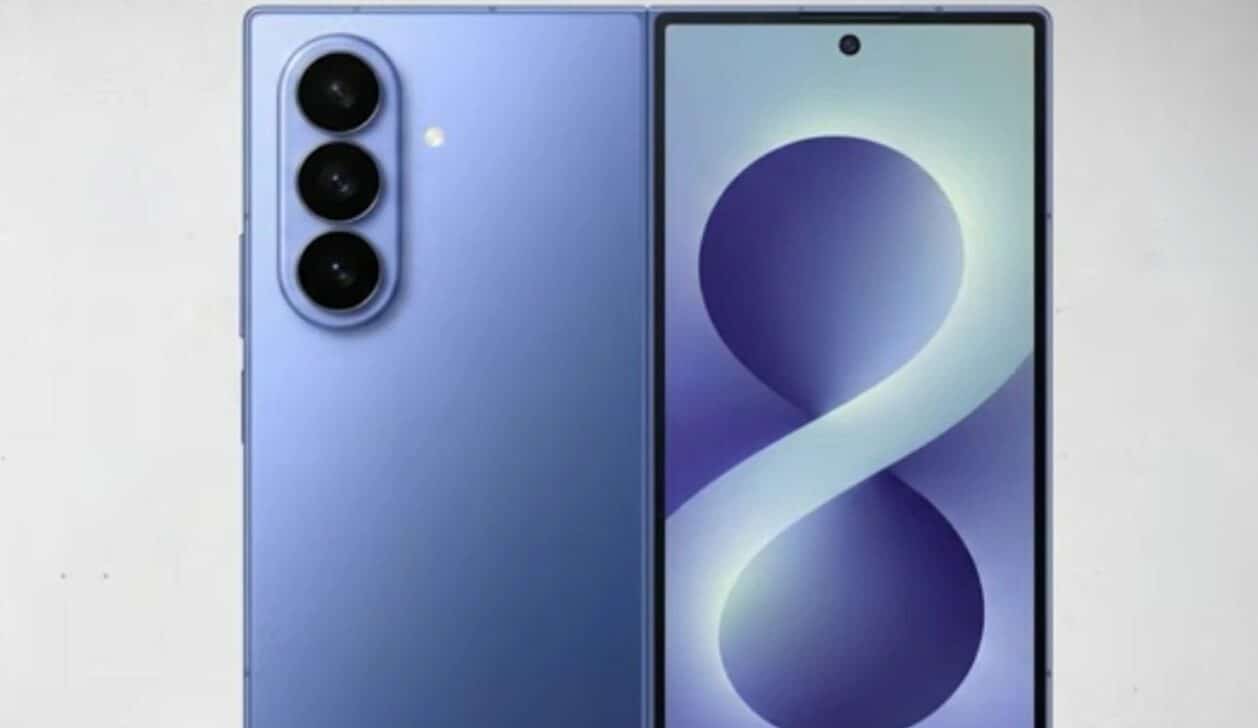
The South Korean giant began to move the global technology market with cryptic publications on its official profiles, preparing the ground for the arrival of its next line of mobile devices. Recent posts confirm the suspicions circulating behind the scenes in the industry, pointing out that the long-awaited Galaxy Z Fold 8 will abandon the elongated profile of its predecessors to adopt significantly wider proportions. This structural change responds to a long-standing request from consumers, who often reported difficulties typing and navigating the narrow external display of past generations, marking one of the biggest design revisions since the creation of the category.
Everyday elements reveal the new proportions of the device
To illustrate the physical transformation of the equipment, the company’s marketing team used creative animations involving foods known to the general public. In advertising pieces published on social media, items such as chocolate bars, slices of pizza and the traditional South Korean sweet Dalgona suffer a virtual flattening. They no longer display a vertical silhouette and start to boast an expanded horizontal outline. The visual play makes it clear that the successor to the Galaxy Z Fold 7 will bring completely reformulated ergonomics to users’ hands, prioritizing usability in closed mode.
On the same topic: OnePlus’ withdrawal from the American market raises alarm for the Nothing brand
Behind-the-scenes information indicates that the device’s front panel will be 5.4 inches, while the internal flexible display will reach 7.6 inches. Although the absolute number seems smaller than the 8 inches of the previous model, the new width-focused space distribution promises to revolutionize daily use. The gain in the horizontal area makes it immensely easier to consume videos without annoying black bands and optimizes productivity. The interface will allow the fluid execution of up to three simultaneous applications with a much more natural view, resembling the experience of a traditional tablet.
Strategic move against rivals in the luxury segment
The smartphone’s redesign brings the brand’s aesthetics closer to the path initially taken by the Google Pixel Fold, going against the grain of other Asian manufacturers that continue to focus on longer and thinner looks. Far from being an accidental step, the company’s decision carries a strong commercial weight and anticipates future trends. Industry experts believe that the change aims to prepare the ground for a direct clash with the supposed Ultra foldable iPhone, an Apple project that, according to supply chain analysts, will also prioritize a wider format when it finally hits the shelves.
In a note associated with the advertising campaign, the manufacturer highlighted that the previews function as a demonstration of the brand’s commitment to the continuous innovation of its products. The company highlighted that the evolution of its portfolio of flexible screens aims to offer improved support for the different ways in which customers work, produce creative materials, interact on digital platforms and consume entertainment on a daily basis, adapting the hardware to the real needs of the public.
More on this story: Smartphone launches at the end of 2026 rely on flexible screens and advanced chips
Details about the global announcement event and full portfolio
To date, the internal components that will give life to the equipment are kept under strict secrecy, with no official confirmations regarding the chosen processor, battery capacity or amount of RAM memory. The exact presentation date also requires a formal announcement from the head office, but the traditional industry calendar points to the famous Unpacked event being held on July 22nd, based in the city of London. The expectation is that the British ceremony will serve as a stage for a complete ecosystem of innovations, going beyond the unveiling of a single cell phone.
To organize the news expected for the mid-year conference, the market is betting on the following list of hardware introductions:
- The standard version of the Galaxy Z Fold 8 with the new design focused on horizontal expansion.
- A new variant called Galaxy Z Fold 8 Ultra, aimed at technology enthusiasts.
- The eighth generation of the compact clamshell model, the popular Galaxy Z Flip 8.
- Significant updates to the smartwatch lineup, including the Galaxy Watch 9 and the rugged Watch Ultra 2.
Recent certifications reveal the existence of a superior version
The theory of an expanded portfolio gained undeniable traction after official records emerged in the Wireless Power Consortium (WPC) database earlier this month. The technical documentation, necessary for the approval of wireless charging technologies, strongly suggests that the “Ultra” edition will share the spotlight with the conventional model. Interestingly, preliminary data indicates that the more expensive variant will be physically thinner, preserving the reduced thickness seen in the Z Fold 7, which represents a considerable engineering challenge for assembly and heat dissipation.
Learn more: Colossal leak in India exposes unprecedented design and chip of the future iPhone 18 Pro
The great mystery that hangs over the technology community is how the manufacturer will justify the “Ultra” seal in the product’s commercial name, in addition to the reduced thickness. The leakers’ main bet is the integration of a very high-level photographic system, possibly inheriting the set of advanced lenses and sensors that equip the brand’s current flagship, the Galaxy S26 Ultra. If this integration is confirmed, the device would resolve one of the biggest historical criticisms of foldable devices: the lag in camera quality in relation to traditional premium category cell phones.
The inclusion of new smart watches at the same event reinforces the brand’s integrated ecosystem strategy. The Galaxy Watch 9 and Watch Ultra 2 should feature improved health sensors and greater battery life, communicating directly with the new foldable smartphones to offer a unified user experience. This synergy between wrist devices and flexible screen cell phones has been one of the main drivers of customer loyalty in the competitive mobile technology market.