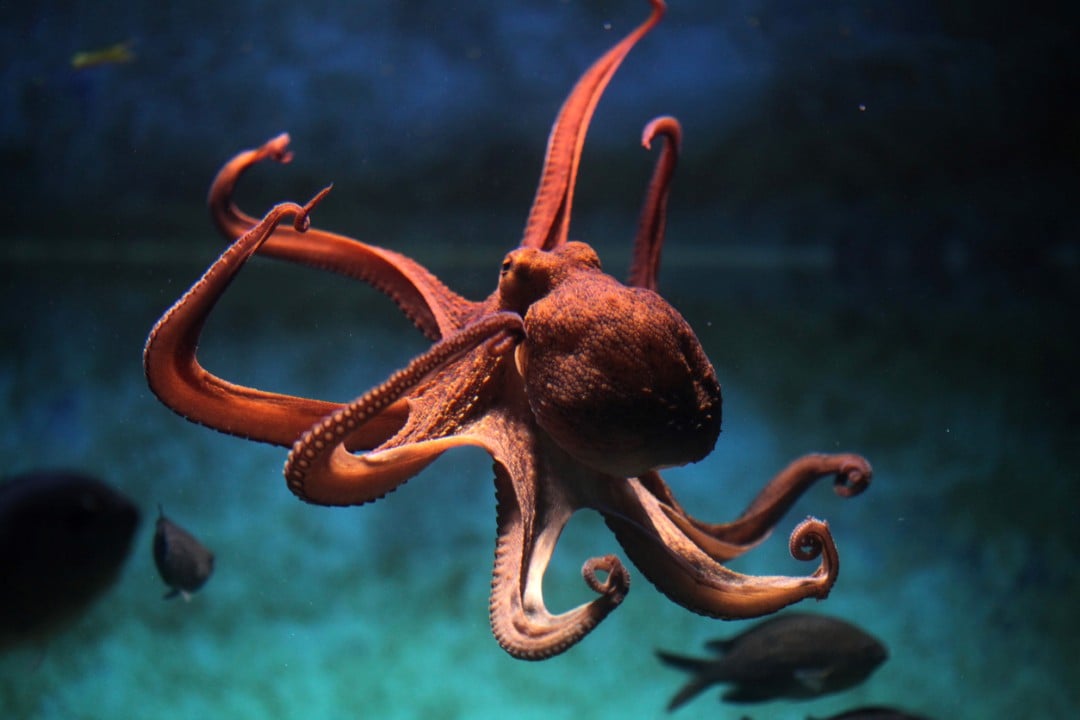
Octopuses’ remarkable ability to manipulate objects and find solutions to complex challenges has long intrigued scientists. These marine invertebrates demonstrate surprising intelligence, evidenced by behaviors such as the ability to open closed jars and navigate mazes.
Understanding the neural anatomy of octopuses
The basis for octopuses’ cognitive dexterity lies in their distinctive nervous system. Unlike many animals, their intelligence is not just concentrated in the central brain. A large portion of the neurons are distributed across its eight tentacles, allowing each arm to operate with a remarkable degree of autonomy.
This decentralized neural architecture means that the tentacles can process sensory information and initiate independent movements, even without direct instructions from the main brain. This arrangement allows for exceptional flexibility and adaptability, rarely seen in other invertebrates and which challenges traditional notions about the centralization of intelligence.
Problem-solving and learning skills
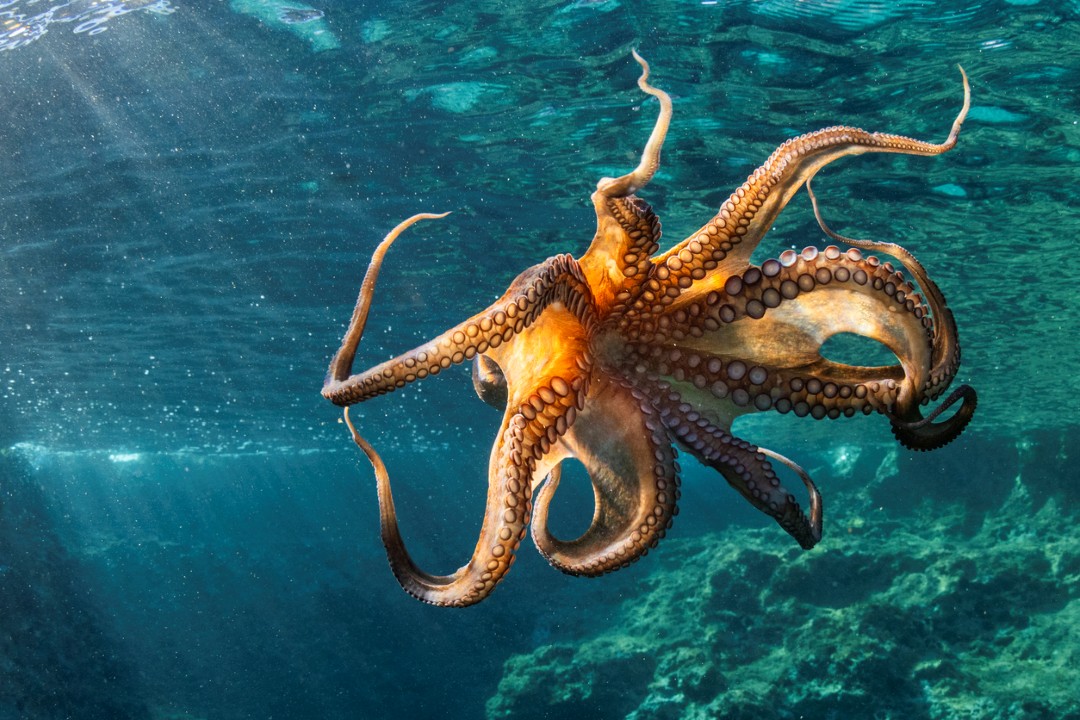
The clearest demonstration of octopuses’ intelligence is their consistent ability at problem-solving tasks. Observations show that they can not only open jars with screw lids to access food, but also escape from secure aquariums and use tools to achieve their goals.
These cephalopods are capable of long-term learning and retention of information. They can learn by observation and adapt their strategies based on past experiences. This capacity for complex learning and memory suggests a form of cognition that goes beyond basic instinct, positioning them as one of the most intelligent invertebrates on the planet.
The ongoing study of octopus intelligence offers valuable insights into the evolution of cognition in different animal lineages. Understanding how a distributed nervous system can generate such sophisticated behaviors expands our knowledge about the diversity of brain architectures and the multiple ways in which intelligence can manifest itself in nature.