A large asteroid will hit our planet at some point in the future. Although it is not possible to predict the exact date, modern science has already achieved an unprecedented feat: the ability to change the route of a space object before it collides with Earth, something that dinosaurs could never do.
This reality was highlighted by Humberto Campins, renowned asteroid expert and member of NASA’s OSIRIS-REx mission, on August 13, 2026. He reinforces that collisions are an intrinsic part of Earth’s history and will occur again. The crucial difference now is the ability to identify these risks in advance and, potentially, intervene in their trajectories.
66 million years ago, an asteroid approximately ten kilometers in diameter impacted Earth unexpectedly. At that time, there were no tracking instruments, orbital calculations or spacecraft capable of deflecting the threat. If a similar event were repeated thousands or millions of years from now, the condition of humanity would be radically different.
In his participation in the conference “The Many Paths to Space”, in Oviedo, astronomer Campins emphasized that, over long time scales, large impacts are “inevitable”. Therefore, a civilization that aims for long survival needs to prepare to face such events.
It is essential to clarify that Campins works as a professor of Physics and Astronomy at the University of Central Florida and is part of the OSIRIS-REx scientific team, which brought samples from the asteroid Bennu. Your alert does not indicate an imminent threat of collision with a giant rock.
Currently, there are no known asteroids on a direct collision course with Earth. The concern lies in another aspect.
NASA itself guarantees that there are no significant impact threats for the next hundred years or more. The space agency’s Sentry system continually recalculates the orbits of near-Earth objects to identify possible future encounters.
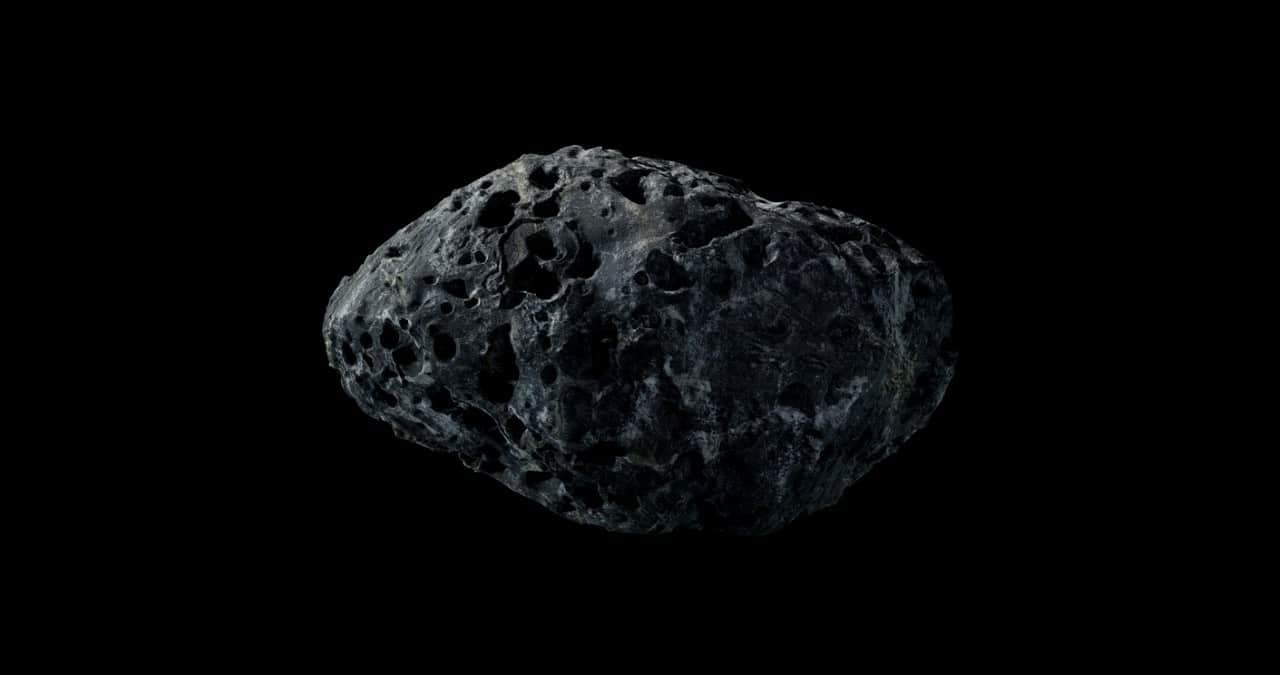
The European Space Agency (ESA) takes a similar approach, maintaining a Risk List of objects likely to impact, which includes around 2,000 asteroids. However, presence on this list does not mean a confirmed collision; Many of these probabilities are minimal and disappear with new, more precise observations.
The critical factor is discovery time. A dangerous asteroid identified decades in advance becomes an engineering challenge. However, if it is detected just a few weeks earlier, the problem may be practically unsolvable.
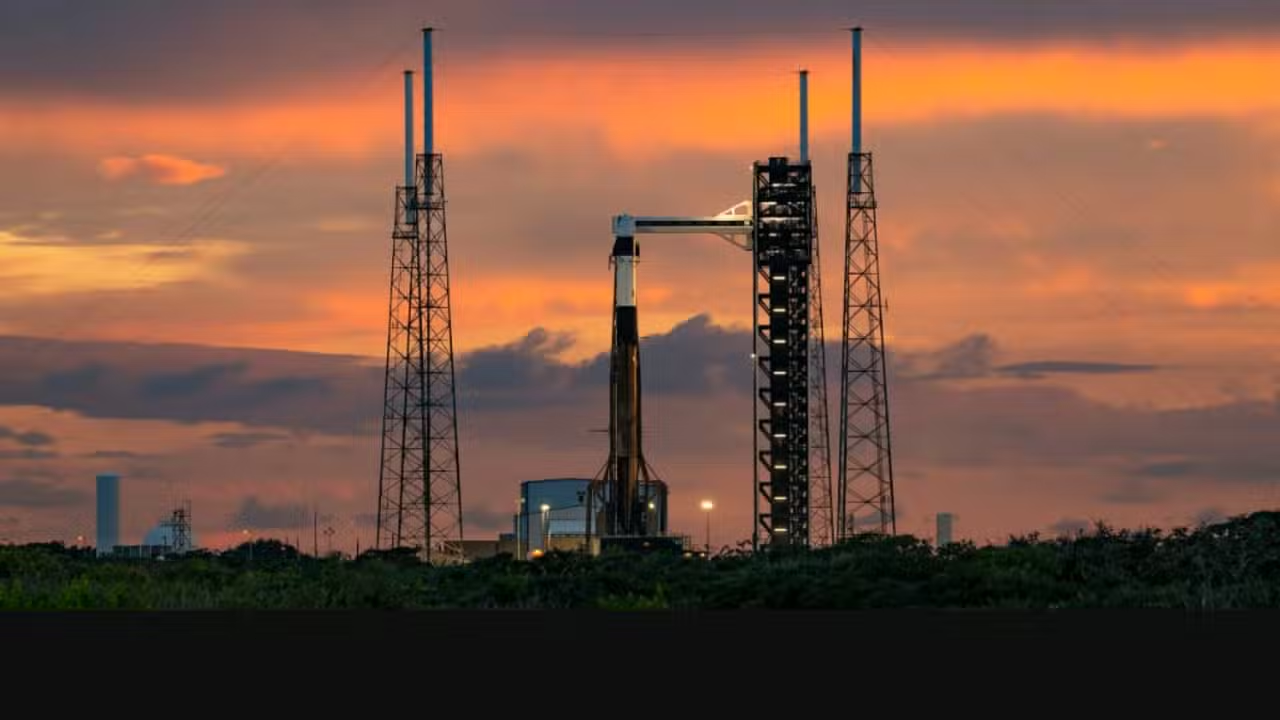
Launch of the NEO Surveyor telescope to detect space threats
For this reason, NASA is developing the NEO Surveyor, an infrared space telescope designed specifically to find potentially dangerous objects. It will be able to detect dark asteroids, which are difficult to view with conventional telescopes. The launch is scheduled to take place in September 2027.
In the year 2022, humanity accomplished something that, decades ago, was considered pure science fiction: it modified the orbit of an asteroid.
Identifying a threat on a collision course is just one part of planetary defense. The other and more challenging question is: what to do after discovering that an asteroid is heading our way?
In September 2022, NASA intentionally launched the DART probe against Dimorphos, a small moon of the asteroid Didymos that posed no risk to Earth.
The probe’s objective was not to destroy Dimorphos, but rather to push it to alter its trajectory. The mission was successful.
Before impact, Dimorphos completed an orbit around Didymos in 11 hours and 55 minutes. After the collision with DART, this period was reduced by around 32 minutes, proving on a real scale the ability of a kinetic impactor to change the movement of an asteroid.
To save the Earth, the necessary diversion need not be drastic. With enough advance warning, a minute change in an asteroid’s speed can accumulate over the years, ensuring that by the time it reaches the point where our planet would be, the Earth will have already moved.
Humanity develops strategies to deflect asteroids, unlike dinosaurs
In 2016, NASA established the Planetary Defense Coordination Office to organize the detection, tracking and characterization of potentially hazardous asteroids and comets. In addition, international agencies and organizations regularly conduct simulated threat exercises to test the response of governments, scientists and emergency services to a real impact.
All of this does not mean that one should live in constant expectation of a catastrophe. On the contrary, it represents something much more encouraging.
Asteroid impacts are one of the few major natural disasters that humanity can not only predict years in advance, but also potentially prevent. Earth will continue to encounter asteroids as long as the solar system exists. In this sense, Campins is right: sooner or later, someone else will approach.
The big difference is that, for the first time in the 4.5 billion year history of this planet, a species is learning to anticipate what is coming and to push it away.