
Astronomical phenomenon dyes the Moon red in the skies of Brazil in August 2026

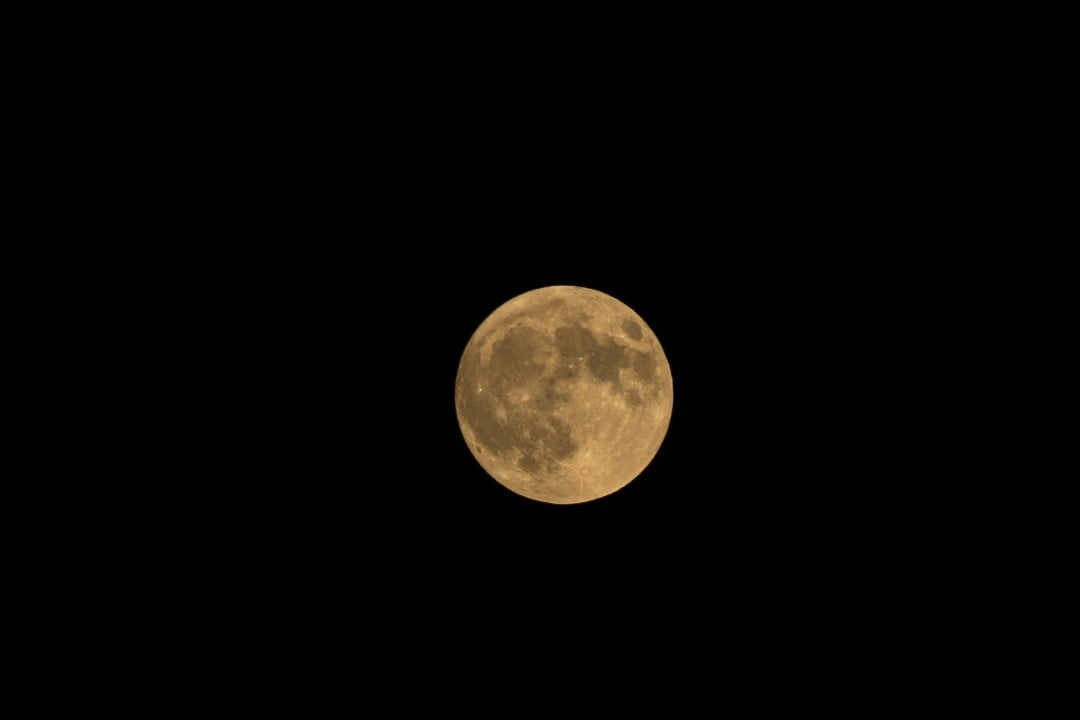
Astronomy lovers and curious people across the country will have a special reason to look up on the night of August 27, 2026, advancing into the early hours of the 28th. A cosmic spectacle will completely transform the appearance of our natural satellite, which will have around 95% of its surface obscured by the Earth’s shadow. During this transition period, the celestial body will not disappear completely, but will gain an intense reddish tone, creating a perfect setting for photographs and moments of outdoor contemplation.
The detailed schedule of the astronomical event indicates that the visual changes will begin to be noticed in a subtle way around 11:30 pm, considering Brasília’s official time zone. The peak of the darkening, the moment when the color reaches its maximum point, is calculated to occur around 1 am on Friday, August 28, 2026. This is the majestic end of a duo of space phenomena that mark that month’s scientific calendar, requiring only those interested to set their alarm clocks.
The science behind the natural satellite’s dimming and color change
The celestial mechanics that make this spectacular view possible require a precise mathematical alignment between the Sun, our planet and the Moon. The shadow generated by the Earth acts as a shield, blocking the direct sunlight that normally reflects on the lunar surface, a geometric configuration that is only possible when we experience the Full Moon phase. Interestingly, this does not happen every month because the lunar orbit has a slight inclination of around five degrees in relation to the Earth’s plane, meaning that the stars rarely intersect in such an exact way.
Astrophysics experts divide these light blocks into three main categories: total, partial and penumbral, depending on the degree of immersion in the darkest area of the shadow, called the umbra. The copper or red hue that appears on the lunar surface results from a fascinating optical effect known as Rayleigh Scattering, the same physical phenomenon that turns sunsets orange. Earth’s atmosphere filters the blue wavelengths of sunlight, allowing only the warmest colors to pass through the air and illuminate outer space.
Practical tips for watching the night show safely
Unlike other space events that require extreme caution and expensive equipment, admiring the Earth’s shadow covering the lunar surface is a completely harmless and democratic activity. Anyone, of any age, can gaze at the night sky for hours on end without the need for telescopes, binoculars or eye protection filters. Naked-eye viewing is perfectly safe and offers a broad perspective of the changing luminosity of the surrounding environment.
The only real requirement to guarantee a memorable experience is to hope for favorable weather conditions, preferably looking for areas away from large urban centers to escape light pollution. The celestial body will be positioned very high in the sky, making it easier to see not only for Brazilians in all states, but also for residents of several countries spread across the Americas, the African continent and much of Europe.
Total blocking of sunlight at the beginning of the month will be restricted to the Northern Hemisphere
Weeks before the night show, specifically on August 12, 2026, the universe will provide an even more dramatic event: a total blockage of sunlight. However, residents of Brazil and all of South America will be left out of this direct visual experience, as the shadow’s path will not cross our region at any time of the day.
The justification for this geographic exclusion is purely based on the orbital inclination and the positioning of the stars at that exact moment of the year. The band of darkness projected by the lunar passage, known as the path of totality, is extremely narrow and will exclusively reach territories located in the northern half of the globe.
Countries such as Portugal, Spain, Russia, Iceland and Greenland are on the privileged route to watch the day turn to night for a few minutes on August 12, 2026. As the Brazilian territory will not register even a light shadow, the alternative for enthusiasts will be to follow the live digital broadcasts, which should be started by international research institutes from noon, Brasília time.
Essential precautions and prohibited materials during stargazing
When it comes to looking at our main star, ophthalmologists and astronomers are adamant about the severe risks involved in the practice. Facing direct sunlight without certified barriers can cause a condition called solar retinopathy, which causes irreversible burns to the retina and can lead to permanent loss of central vision in a matter of seconds.
For those in solar blocking visibility zones, experts recommend the use of highly specific barriers to avoid ultraviolet and infrared radiation. The official recommendation includes:
- Welding mask glass with tint 14 or higher, which ensures adequate filtration of extreme light and protects eye health.
On the other hand, the list of dangerous improvisations that must be immediately discarded by the population involves:
- Touring sunglasses, regardless of price, lens color or brand;
- Old x-ray films, CDs or negatives of developed photographs;
- Smoked glass with fire or automotive insulation of any thickness;
- Any other homemade filter that does not have international astronomical safety certification.
Therefore, while the dawn of August 27th and 28th invites the public to contemplate the night sky freely and without fear, any attempt to observe the central star of our system requires scientific rigor and absolute protection.



