

A recent study revealed that nature holds surprises in its vast biodiversity, and one of them is linked to the record for the largest brain among all animals, with an organ that is up to five times larger than that of a human being.
A colossal 15-pound brain intrigues scientists and onlookers alike, raising the question of which colossal creature possesses it.
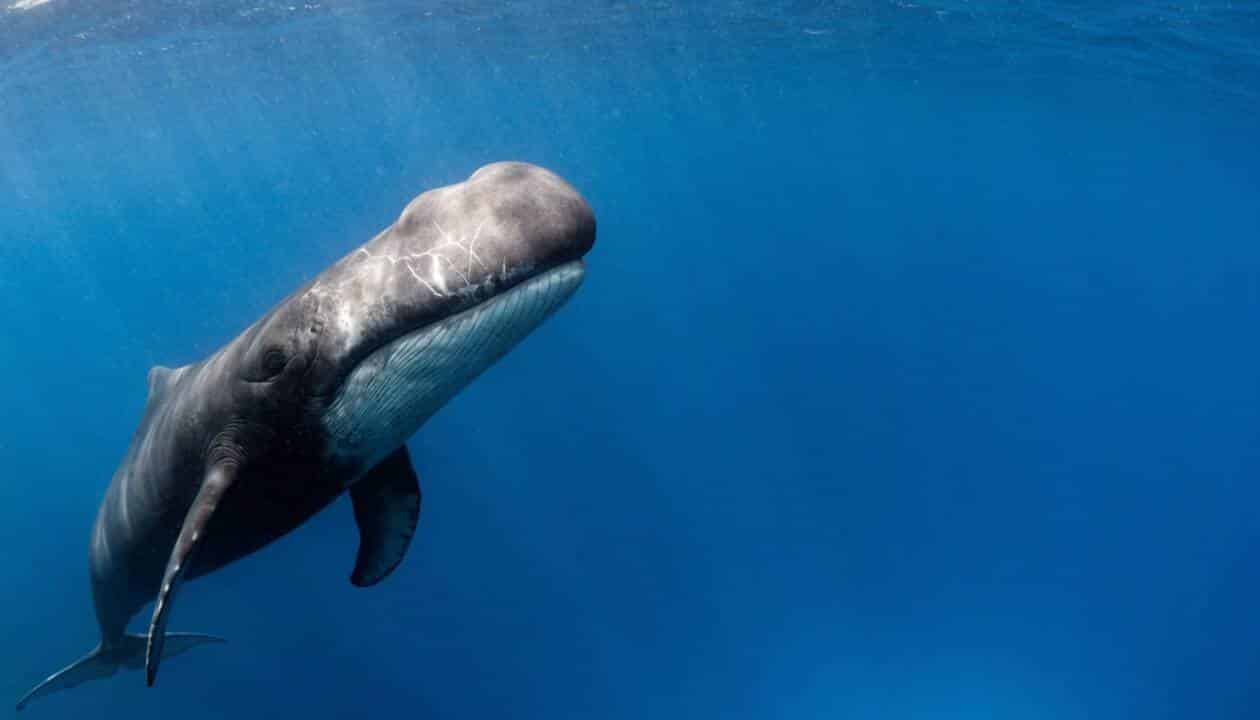
The sperm whale, one of the most impressive whale species on the planet, holds this remarkable title. Its brain weighs an average of 7.8 kg in adult males, in contrast to the 1.4 kg of the human brain.
Physical and adaptive characteristics of the sperm whale
The sperm whale’s striking silhouette makes it easily identifiable, especially due to its square-shaped head that stands out disproportionately, occupying around a third of the animal’s total body length.
Little brains: insects and the evolution of the animal head
The discussion about brains is not restricted to large marine mammals; Many people wonder about the cognitive capacity and presence of brains in insects.
Another fascinating question that permeates evolutionary biology is which was the first animal to develop a head, a fundamental structure for perception and interaction with the environment.
The structure of the sperm whale’s head and the spermaceti organ
The sperm whale’s robust head has specific functions that go beyond its size, being adapted for activities such as battering ram, as indicated by scientific studies.
However, a crucial part of its large skull played a historic and, unfortunately, tragic role in making the sperm whale a valuable target for whaling in the past.
This component, known as the spermaceti organ, is filled with a light-colored waxy liquid that was highly coveted by whale hunters. Research suggests it plays vital roles in buoyancy control and a complex acoustic sensory system, allowing these social cetaceans to orient themselves in their three-dimensional habitat and establish intricate social bonds.





