
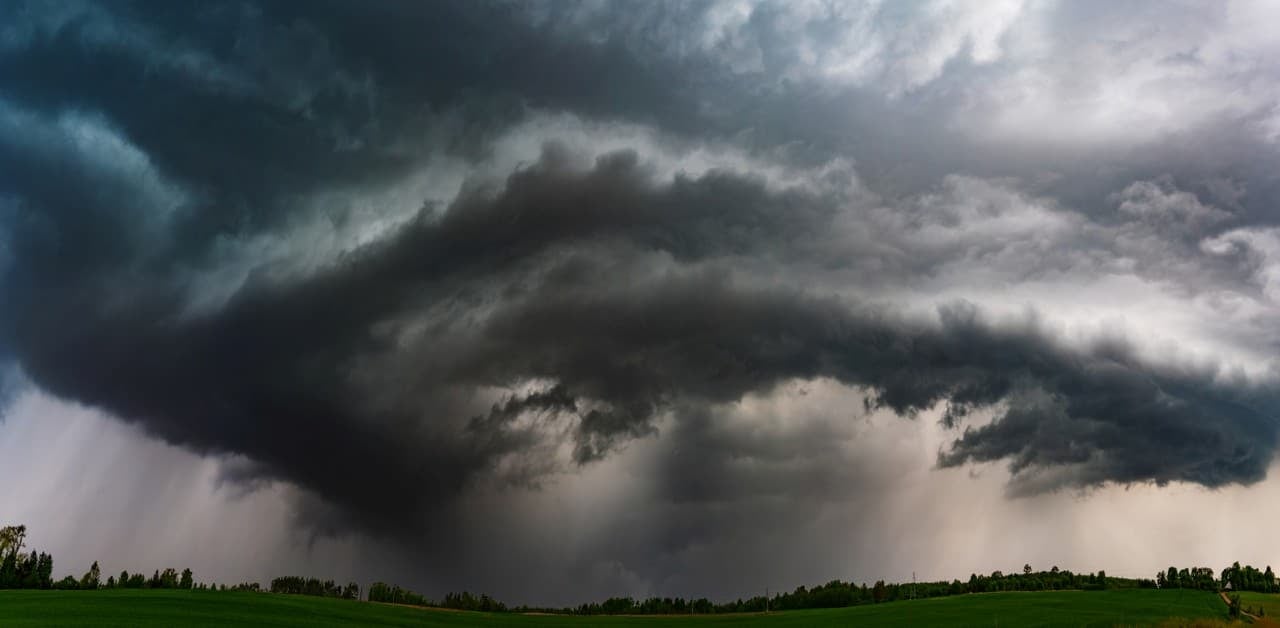
The passage of tropical storm Lala caused significant damage in Hawaii on August 18, 2026, leaving more than 100,000 consumers without electricity and causing the death of a 90-year-old woman. The fury of the storm, which weakened from a hurricane to a tropical storm on Sunday, resulted in intense flooding and strong winds, isolating communities and causing widespread devastation, especially on the Big Island.
Widespread damage and interruption of services in the archipelago
Hawaiian Electric, a local power company, reported that approximately 104,000 customers were without electricity on the afternoon of August 18, 2026, with the Big Island’s transmission system suffering extensive damage. Fallen trees, utility poles and transmission towers were toppled by winds, which reached 60 mph at lower elevations and 145 mph at the top of the Mauna Kea volcano. Furthermore, the 911 emergency service on Ilha Grande was temporarily interrupted due to communication problems, but was reestablished in the afternoon.
One confirmed death and the isolation of rural communities
A 90-year-old woman, who was missing in Naalehu, was found dead on August 18, 2026, the only fatality attributed to Storm Lala to date. Governor Josh Green, after flying over and walking through the southern part of the Big Island, said the flooding and mud were more destructive than the winds. He described that the communities of Naalehu, Pahala and Waiohinu will need a lot of support for cleanup and recovery. State representative Jeanné Kapela, who represents the district of Kau, highlighted the isolation of areas like Punaluu, with about 100 homes and known for its black sand beach, which was trapped by blocked roads.
Concern about cemeteries and efforts to reestablish communication
Among the most sensitive impacts of the storm, two cemeteries in Naalehu were “washed away”, as reported by Jeanné Kapela. Gov. Josh Green called for respect for the “iwi kupuna,” the sacred ancestral skeletal remains of Native Hawaiians, who were dispersed. Tom Callis, Hawaii County spokesman, said the affected areas were cordoned off to prevent further damage. Faced with lack of power and cell service in several communities, Kapela is working to install satellite internet connections, noting that unlike tourist areas like Lahaina or Waikiki, the southern tip of Hawaii, one of the most rural regions in the country, has been hit hardest and is often forgotten.
Data from the devastation and the path to recovery
Despite the destruction, Governor Green expressed hope that recovery will be “relatively quick.” While acknowledging the loss of life, he stated that the situation could have been much worse, with many houses and bridges resisting the damage. Previously, authorities had reported that around 100 homes were swept from their foundations on Ilha Grande.
See some of the most impactful data recorded during the storm:
- Rain:Laupahoehoe, on the northeast coast of the Big Island, recorded the most rainfall, with 1.1 meters (43.54 inches).
- Winds:Gusts of 225 km/h (140 mph) were recorded at the top of the Mauna Kea volcano.
- Achieved:Around 104 thousand customers were left without electricity.
Public schools and some state offices remained closed on August 18, 2026, with the closure extended to August 19, 2026 on Ilha Grande. Cleanup crews began repairing bridges and removing fallen trees. The National Weather Service indicated that, although Lala is moving westward and could become a high seas hurricane again by August 20, 2026, risks such as landslides due to soil saturation and strong sea currents still persist. Senator Brian Schatz has already spoken out about federal support, speaking with Transportation Secretary Sean Duffy about emergency funds for road cleaning and repair.





