
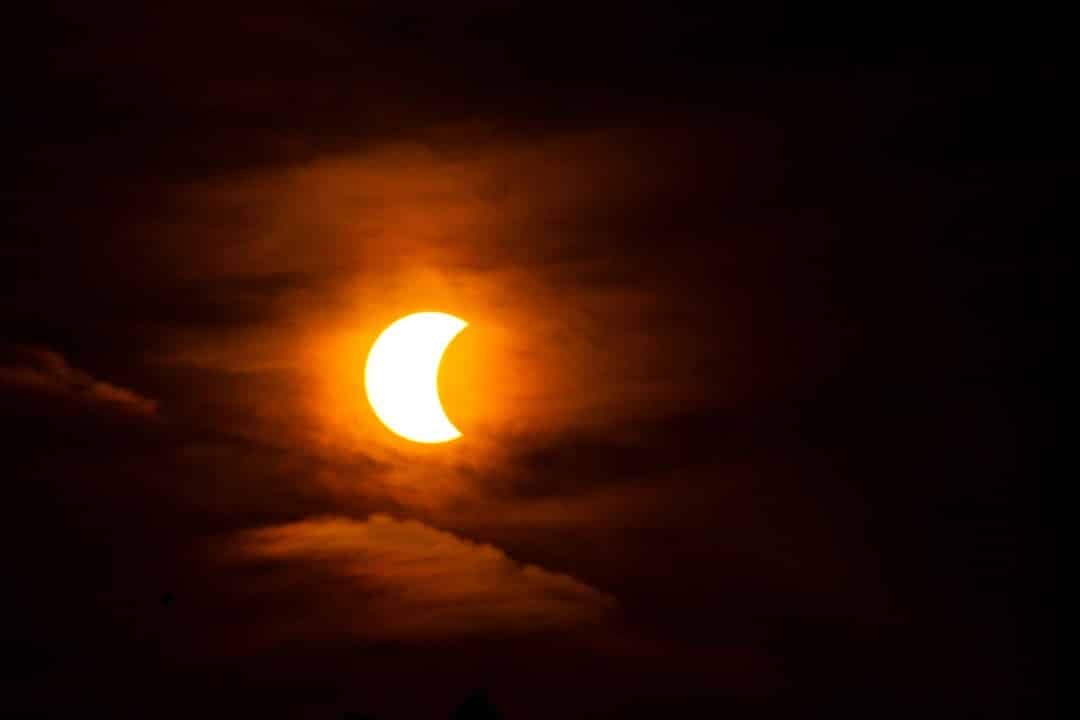
August promises a true spectacle for astronomy lovers in Brazil, offering a variety of celestial phenomena that can be seen with the naked eye or with simple equipment. The month will be marked by eclipses, meteor showers and the brilliant presence of planets, transforming the night sky into a stage for cosmic events accessible to everyone. Get ready to discover the wonders of the universe from home.
August’s great opportunities to observe the sky
During the month of August 2024, the Brazilian sky will become a privileged point for observing multiple astronomical phenomena. Not only will the traditional planets make their appearance, but we will also have the chance to follow rarer events, such as a penumbral lunar eclipse, and the passage of meteor showers. The opportunity to see these events creates an invitation for the public to connect with the cosmos.
Celestial calendar: astronomical phenomena and how to observe each one
For those who want to plan the observation of celestial events, having a detailed guide is essential. Below, a calendar with the main phenomena of August 2024, indicating the best dates and visibility conditions for Brazil.
- August 4: New Moon
- * The New Moon phase represents the best time to observe deep-sky objects, such as galaxies and nebulae, as the absence of lunar light provides a darker, starry sky. Enjoy the nights before and after this date.
- August 12 and 13: Peak of the Perseid meteor shower
- * Although the Perseids are most intense in the Northern Hemisphere, observers in the far north of Brazil may have a chance of spotting some meteors. The ideal is to look for places with little light pollution, especially after midnight, and look in the northeast direction.
* For the rest of the country, visibility is limited, but other smaller showers may be active. - August 19: Full Moon (Sturgeon Moon)
- * August’s Full Moon, traditionally known as the Sturgeon Moon, offers an intensely bright spectacle. Although it makes observing stars and meteors difficult, it is perfect for contemplating the lunar surface and its details with the naked eye or with binoculars.
- August 19: Penumbral lunar eclipse
- * This eclipse occurs when the Moon passes through the Earth’s penumbra, the outermost and diffuse part of the shadow. The phenomenon will be visible in several regions of Brazil, offering a subtle darkening of the Moon, which can be noticed by attentive observers. The duration and intensity of the darkening vary depending on the geographic location of the observer.
- End of August: Saturn in the spotlight
- * The planet Saturn will be in a privileged position throughout the month, reaching its point of opposition to the Sun at the beginning of September. This means it will be at its closest and brightest point to Earth. It will be easily visible as a point of yellowish light in the night sky, ideal for observing its rings with a small telescope.
How to Prepare for a Night of Stargazing
Observing the night sky requires more than just luck. Good preparation can make all the difference in transforming the experience into something memorable. Planning begins with choosing the location and equipment, adjusting expectations for each type of event.
To begin with, the ideal is to look for a location away from the light pollution of cities. Rural areas or parks far from urban centers offer the best dark conditions, allowing more stars and phenomena to reveal themselves. The phase of the Moon also influences: New Moon nights are great for galaxies and nebulae, while the Full Moon is perfect for the Moon itself.
Most of the events mentioned can be seen with the naked eye, but binoculars can highlight details of the planets and the Moon, as well as revealing star clusters. Simple telescopes are excellent for observing Saturn’s rings or Jupiter’s moons. However, even without equipment, patience is your most valuable tool: allow your eyes to adapt to the darkness for at least 15 to 20 minutes to maximize vision.
Monitor the weather forecast to ensure clear skies. Clouds can ruin the observation of any phenomenon. Cell phone astronomy apps can help identify constellations, planets and the direction to look. Dress appropriately for the cold, even on summer nights, as the temperature can drop. A comfortable beach chair and a snack make the wait more pleasant.
What to expect from the planets visible in the August sky
In addition to eclipses and meteor showers, August presents observers with the appearance of several planets. Although not all of them are visible simultaneously or with the naked eye, some stars in our Solar System stand out with a notable brightness. Observing the trajectory and characteristics of these celestial bodies is a delight for enthusiasts and the curious.
Saturn, for example, will be at its peak of visibility. It shines yellowish in the sky, and even with a small telescope you can make out its famous rings. This is one of the most rewarding spectacles for amateur astronomers.
Jupiter, the gas giant, will also make its presence felt. It will appear before dawn, with an intense glow that makes it easily identifiable on the eastern horizon. With binoculars, its four largest moons, known as the Galilean moons, can be seen as small points of light around them. Mars, with its characteristic reddish hue, will also be visible in the hours before sunrise, adding yet another point of interest to the sky.
Mercury, the closest planet to the Sun, is notoriously difficult to observe due to its proximity to our star. However, on some dates in August, it can be briefly seen just after sunset, or before dawn, as a small bright spot on the horizon. Observation of Venus, usually bright and easy to locate, may be more limited this month depending on its position in relation to the Sun and Earth.
Why August is a special month for amateur astronomy
August stands out on the astronomical calendar as a period of great activity and opportunities for those who like to observe the sky. The combination of intense phenomena and the favorable position of some planets contribute to this month being one of the most anticipated by amateur and curious astronomers. Visibility is a crucial factor, and August generally offers more stable weather conditions in many regions, which makes nighttime observations easier.
The tradition of meteor showers, even those less visible in the Southern Hemisphere, adds a magical touch to the month. Meteors, fragments of space rock that burn up as they enter Earth’s atmosphere, are a reminder of the vastness and dynamics of our universe. With each peak of rain, the expectation of seeing a “shooting star” cheers everyone up. Furthermore, the presence of planets in their best positions offers a unique chance to follow the cosmic dance of our solar system.
The tilt of the Earth’s axis and its orbit around the Sun directly influence the visibility of celestial objects. In August, several constellations become prominent, serving as guides to the location of other bodies. This is also a period of transition between the summer and autumn constellations in the Southern Hemisphere, revealing a new starscape each night. The clarity of the air, in many locations, also favors the observation of subtle details that, at other times of the year, could be obscured. In this way, August is consolidated as a month to discover and appreciate the wonders of the universe.





