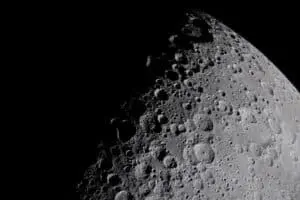
August’s Full Sturgeon Moon passes through Earth’s shadow on August 27, 2026

After the recent solar eclipse, those passionate about astronomical phenomena will have a new event to observe in the sky: the Full Sturgeon Moon, which will occur on August 27, 2026. The forecast indicates that our natural satellite will pass through the Earth’s shadow, culminating in a lunar eclipse.
This month’s full moon, known as the Sturgeon Moon, will reach its brightest point on the night of August 27, 2026, when it will begin its journey through the Earth’s shadow, generating a lunar eclipse.
On the same topic: August will have a partial lunar eclipse visible in Belo Horizonte with almost 96% of the moon covered
The name “Sturgeon Moon” is a designation of indigenous origin, associated with the time of year when giant sturgeon are found in large quantities in the Great Lakes and Lake Champlain, as noted by the Old Farmer’s Almanac.
Additionally, indigenous Cree people call it the Flying Moon, marking the period when young birds begin their first flights. Other native communities name it Maize Moon, Harvest Moon and Rice Moon, in reference to the harvest time of different crops. Among the English, it is sometimes known as the Lightning Moon, due to the strong storms common in the final months of summer, according to information from TimeandDate.com.
More on this story: Millions witness the dazzling 2026 total solar eclipse from around the world
See Also

Performance of the illegal copy of Marvel Tokon Fighting Souls surpasses the official version in stores

Franco Colapinto accelerates at the Dutch GP; see the Formula 1 schedule

Medical reasons keep King Charles III away from Queen Camilla’s bedroom at the palace

The Sturgeon Moon will appear on the eastern horizon at sunset on August 27, 2026. In the first hour after its rise, you’re likely to see a yellow-orange coloration, a phenomenon explained by the scattering of blue wavelengths of its light by Earth’s atmosphere, known as Rayleigh scattering, as detailed by Space.com. Additionally, it may appear slightly larger when close to the horizon, an effect known as the Moon Illusion.
During this period, the natural satellite will also pass through our planet’s shadow. As this happens, its brightness will decrease and, at the height of the partial eclipse, it will take on an orange-red hue. However, there will be no lunar totality, that is, the Moon will not be completely covered by the Earth’s shadow.
This partial lunar eclipse, considered quite deep, will be observable in Europe, Africa, North America and South America. The event is scheduled to begin at 9:23 pm EDT on August 27th, when the Moon enters the penumbra, and end at 3:01 am EDT on August 28th, when it leaves the shadow. The maximum point of the eclipse, when 96.2% of the lunar surface turns red, will occur at 00:12 EDT on August 28. It is recommended to watch the sky about 40 minutes before the apex to see the edge of Earth’s shadow gradually cover the lunar surface.
This phenomenon will be the most impressive of its kind until the next total lunar eclipse, scheduled for December 31, 2028.