
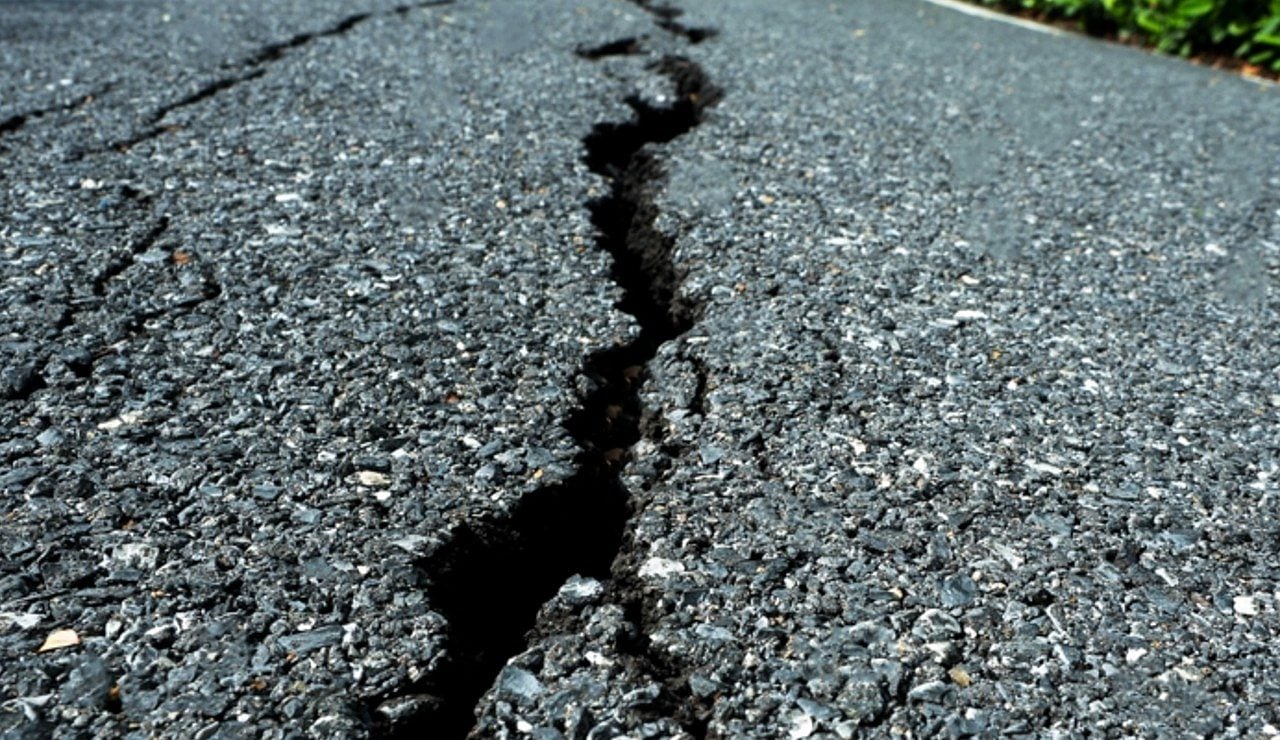
A sequence of tremors in different parts of the planet in the year 2026 has rekindled the debate about a possible increase in the frequency of earthquakes. Recent events have been recorded in places such as Venezuela, Colombia, Spain, Indonesia and the Philippines, raising questions about global seismic activity.
The most recent phenomenon, on August 18, occurred in Granada, Spain. The region is part of the Iberian Peninsula, an area of friction between the Eurasian and African plates. These tremors are the result of geological faults and the movement of tectonic plates, which release accumulated energy.
What science says about the increase in tremors
Despite the public perception of an increase in the number of earthquakes, current scientific data does not confirm this trend. José Alexandre Nogueira, seismologist at the Seismology Center at the University of São Paulo (USP), explained that the number of events is within what is expected annually.
In 2026, for example, approximately 11 earthquakes of magnitude 7 or greater were recorded, according to Nogueira. The historical average for this type of tremor is 14 per year. In comparison, 2010 had 24 earthquakes in the same magnitude range, showing that the variations are normal and do not indicate a pattern of increase.
Brazil and its privileged geological position
Brazil stands out for being located in the center of the South American Plate, a position that distances it from the areas of greatest friction between tectonic plates. This characteristic gives the country one of the lowest global seismic risks.
“Brazil is one of the least seismic countries in the world, so the risk we run is much lower than that of other countries that are on the edge of tectonic plates,” said Nogueira. Although the occurrence of large magnitude earthquakes is very unlikely, the expert emphasizes that it is not impossible.
Minas Gerais and seismic monitoring
Interestingly, the state of Minas Gerais has the highest number of recorded earthquakes in the country. This concentration is due to multiple factors, including the presence of mining companies and dams, structures that require special attention in relation to earthquakes.
The region also has the largest number of seismological monitoring stations. However, Nogueira pointed out the need to expand the monitoring network to other areas, such as the Amazon and Pará, which have little data or information about tremors.
Disclosure and the perception of greater frequency
Data from the United States Geological Survey indicates that, by mid-August 2026, 1,254 tremors with magnitudes between 5 and 7.9 had been recorded. This number, according to the USP seismologist, aligns with expectations.
What may be generating the feeling that earthquakes are increasing is the greater and faster dissemination of information. With the advancement of the press and social networks, news of major catastrophes, such as the one that occurred in Venezuela, spreads globally in real time, expanding the perception of the frequency of these events. Nogueira also stressed that tremors in different regions of the world occur on different tectonic plates and there is no scientific data that suggests a correlation between them.





