People who need to lower their cholesterol will soon have a robust and innovative alternative. The Food and Drug Administration (FDA), the drug regulatory agency in the United States, recently authorized a new drug in tablet form, enlicitida. This drug has been shown to be significantly more effective in reducing cholesterol levels than statins used alone. Developed by MSD and under the trade name Lipfendra, the product should be available on the American market in the coming weeks, starting August 19, 2026.
This new therapeutic option aims to offer greater accessibility and convenience in cholesterol management.
How does the new pill medicine differ from other cholesterol therapies?
Lipfendra expands treatment options for reducing LDL cholesterol, known as low-density lipoprotein. High LDL levels are a crucial factor in the development of heart disease. Several studies over decades confirm that therapies that safely lower LDL are protective against these cardiovascular problems.
Statins, the most commonly prescribed drugs to reduce LDL for decades, act by inhibiting the production of cholesterol in the liver. They are considered safe, low-cost (between US$5 and US$25 per month) and capable of reducing LDL by 30% to 50%, depending on the dose.
Other alternatives include ezetimibe, a pill that blocks the absorption of cholesterol and can reduce LDL by around 20%. Its generic version has a similar cost to statins. There is also bempedoic acid, which also works to block cholesterol production, reducing LDL by approximately 20%. The price of the generic version varies between US$430 (about R$2,182) and US$517 (R$2,632) per month, although the amount paid by patients is generally lower.
The most potent treatments available, such as alirocumab, evolocumab and inclisiran, work by inhibiting a protein called PCSK9. This protein naturally decreases the body’s ability to remove cholesterol. Clinical trials have shown that these medications reduce LDL levels by 60% to 70% and are often used in combination with statins to maximize effectiveness.
Previously, all PCSK9 inhibitors were injectable, with list prices ranging from US$500 (R$2,545) to US$600 (R$3,054) per month. Large studies involving individuals at high risk of heart disease confirmed that these injections reduced the risk of heart attacks, strokes and deaths from cardiovascular causes by 20%.
Lipfendra stands out for being the first PCSK9 inhibitor in tablets. Unlike statins, which can be taken at any time with or without food, Lipfendra must be taken in the morning, on an empty stomach, accompanied by water, black coffee or unsweetened tea.
Clinical research has indicated that Lipfendra has LDL-lowering efficacy comparable to that of injectable medications. A large study is still underway to see whether the tablet version of PCSK9 inhibitors also contributes to a reduced risk of heart attacks and strokes.
The estimated cost for 30 days of treatment will be US$315 (equivalent to R$1,603). Coverage by health plans has not yet been defined.
When is Lipfendra indicated for the treatment of cholesterol?
Statins remain doctors’ first choice because of their proven safety and effectiveness over time, as explained by Erin Michos, associate director of preventive cardiology at the Johns Hopkins University School of Medicine.
However, Michos points out that some patients cannot tolerate statins. And even for those who tolerate it, cholesterol goals are increasingly stringent, especially for high-risk individuals.
Many patients do not achieve their desired goals using statins alone. In these cases, PCSK9 inhibitors become an essential alternative.
Corey Bradley, a preventive cardiologist at Columbia University Irving Medical Center, describes these medications as an excellent way to complement oral therapies in a population that needs a more aggressive approach.
Earlier this year, the American Heart Association published new guidance setting specific LDL goals for patients, considering their risk profiles.
Bradley comments that the decision to use a PCSK9 inhibitor directly depends on how close the patient is to their cholesterol goal.
Michos mentioned that PCSK9 inhibitors also showed an additional benefit in reducing lipoprotein(a), or Lp(a). She described Lp(a) as “LDL’s evil cousin” because it increases the risk of heart disease independently of cholesterol levels, and statins have no effect on it.
Which people need to take measures to control cholesterol?
New guidelines from the American Heart Association (AHA) advise that individuals at high risk for heart disease, such as those who have already had a heart attack or stroke, should use medications to keep their LDL level below 55 mg/dL.
People without a history of heart disease may still be at high risk, whether from conditions such as type 2 diabetes or a high risk score. Doctors employ a risk calculation tool that considers factors such as age, blood pressure, cholesterol and body mass index to estimate short-term (10 years) and long-term (30 years) risk. For patients with an estimated 10-year risk, the goal is a cholesterol level below 70 mg/dL.
Sadiya Khan, a preventative cardiologist at Northwestern University, often advises patients with an intermediate 10-year risk of heart disease to begin drug treatment for cholesterol. She also addresses the topic with healthy patients who have low 10-year risk but high 30-year risk.
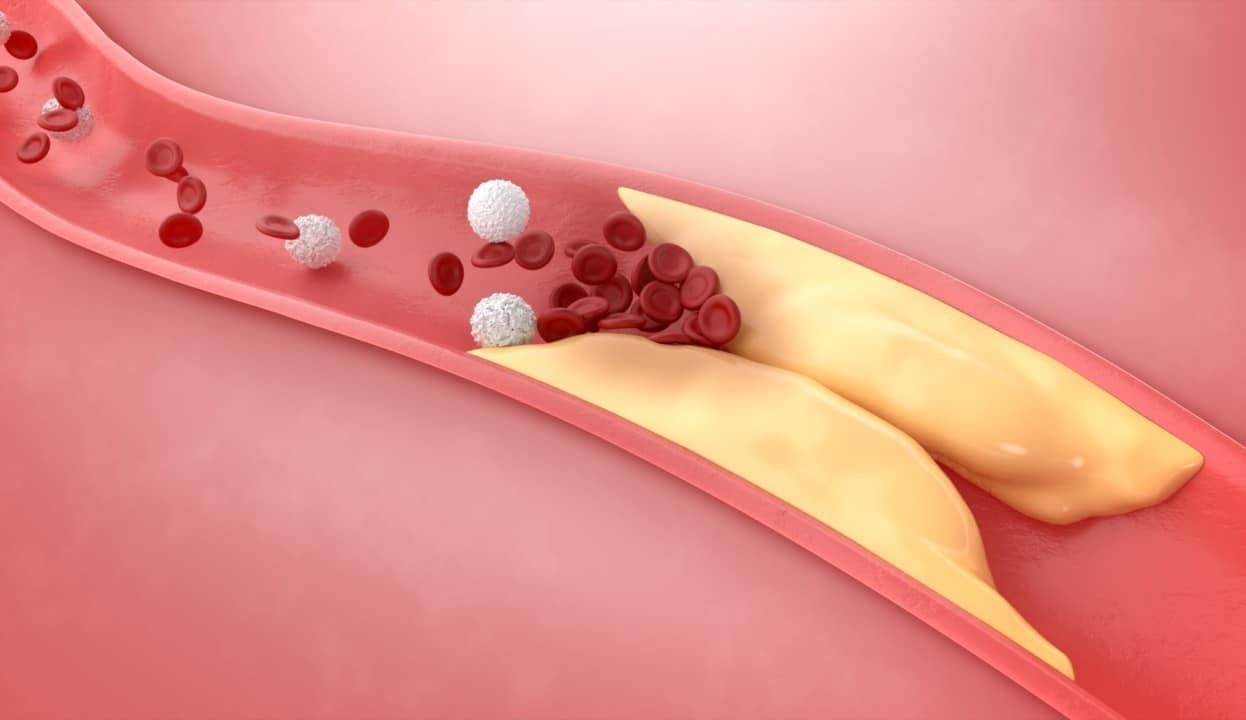
Lowering LDL reduces cumulative exposure to particles that form plaque in the arteries, which can lead to heart attacks or strokes. Research indicates that the lower the LDL, the lower the risk of these cardiovascular events.
The guidelines also suggest treatment for individuals with familial hypercholesterolemia, a genetically inherited high cholesterol condition.
When is the ideal time to take a cholesterol test?
According to AHA guidelines, all adults should have their cholesterol checked at least every five years, starting at age 19. Children should have their cholesterol checked once, between the ages of 9 and 11, to identify possible hereditary hypercholesterolemia.
Your primary care doctor may order a blood test known as a lipid profile, which looks at levels of LDL and other types of cholesterol. The guidelines also recommend that all adults check their Lp(a) levels at least once.