
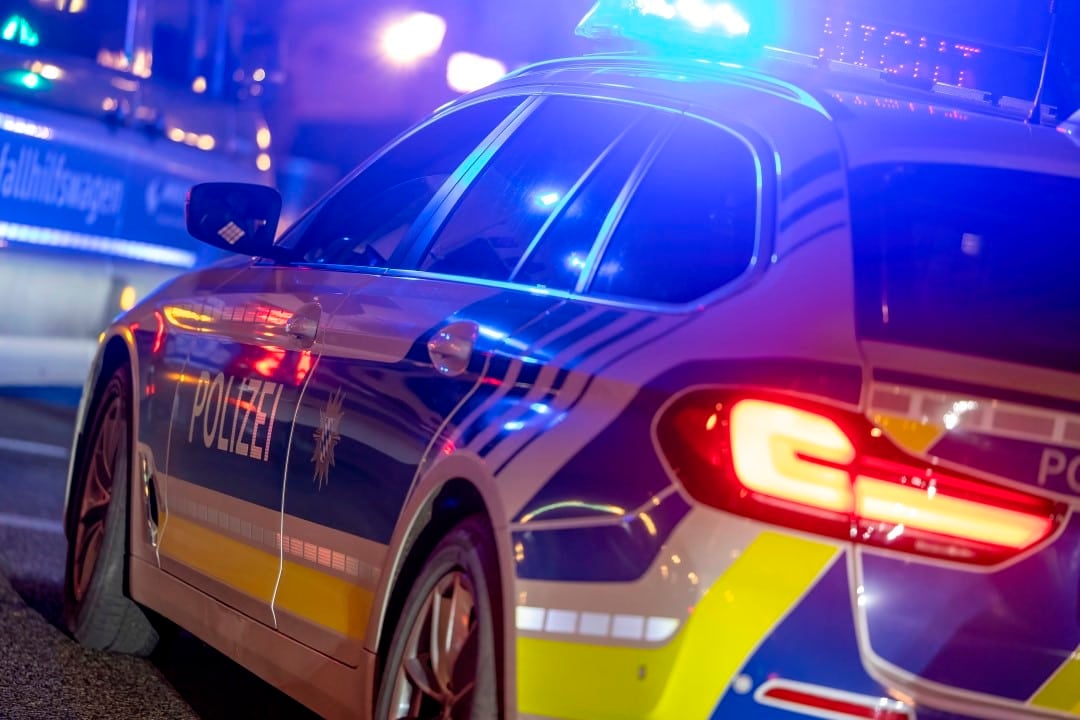
German security forces have begun a major operation to locate Mirjam Ecker, a 29-year-old woman whose whereabouts have been unknown since the morning of May 28, 2026. The case takes place in the municipality of Wirft, located in the state of Rhineland-Palatinate, where investigation teams are focusing their first tracking efforts. Official documents issued by investigators indicate that the citizen may be facing a situation of extreme vulnerability, which increases the level of urgency of the measures. Residents of the region closely monitor the movement of vehicles, while the responsible command organizes ground sweeps to find any valid clues.
Vehicle tracking and escape routes analyzed by investigators
The last confirmed sighting of the young woman took place within the territorial limits of Wirft, a moment before contact was completely lost. The agents are working under the strong hypothesis that she is driving a gray VW Touran car, registered with license plate AW-JE141. This car became the central piece of the puzzle, as identifying the route taken by the driver could reveal the final destination or intermediate stops. Alerts containing the car’s data are already circulating on the internal communication network of all road patrol units in the country.
To cover a larger area in less time, the police contingent expanded its patrols along local roads and rural areas surrounding the municipality. Fieldwork includes collecting video records from gas stations, toll plazas and commercial establishments located on exit routes from the city. The analysis of these images aims to confirm the direction taken by the VW Touran, considering that the German road network allows quick travel to other provinces or even neighboring countries. Different intelligence divisions provide technical support to process the volume of data collected in the last few hours.
More on this story: German police intensify search for missing Mirjam Ecker in the city of Wirft
Body and clothing markings that help with visual identification
Accuracy in disclosing physical traits represents a vital tool for ordinary citizens to assist official search work. The corporation’s communications department released a complete dossier on the woman’s appearance, aiming to avoid false alarms and direct the population’s focus. She has blue eyes, dark blonde hair cut to shoulder length, measures approximately 165 centimeters tall and weighs around 50 kilos. The body structure is described as thin, and the shoe size used is 39 in the European standard.
- Drawing of a curved bird tattooed on the left wrist.
- Illustration of a butterfly tattooed on the right hip and abdomen.
- Usual clothes in size 36 or 38.
- Pink skirt worn on the day of her disappearance.
- Sweater also in pink matching the bottom piece.
- Silver sandals with a glitter finish.
- Gold necklace hanging around the neck.
Each of these visual elements, especially the tattoos and flashy shoes, works as a filter for the complaints received by the call center. The wealth of details provided to the press and local residents speeds up the information screening process. Printed materials containing the photograph and exact description of the items were posted on public bulletin boards, transport stations and centers with large circulation of people.
Search protocols and the impact of local geography on investigations
The municipality of Wirft, nestled in the Eifel mountain region, presents specific geographical challenges for rescuers due to its vast expanse of dense forests and winding roads. The rugged topography requires the use of specialized tactics, including the use of sniffer dogs and aircraft equipped with thermal cameras, common tools in German security protocol for rural areas. Proximity to state borders and rapid transit routes forces investigators to maintain constant contact with neighboring jurisdictions, creating an integrated siege.
In Germany, immediate searches for adults only occur when there are clear signs of imminent danger, health problems or unusual circumstances, criteria that were met in this episode. Transparency in the disclosure of personal and vehicle data follows strict privacy standards, being authorized by higher authorities only when the benefit of location outweighs image protection. Civilian engagement, driven by massive publicity in the media and social networks, demonstrates the effectiveness of the early warning system adopted by European security institutions.
Open communication channels to receive complaints from the population
The command responsible for the operation in Wirft makes a direct appeal for civil society to act as an extension of the police’s eyes on the streets. Any individual who comes across the gray vehicle, recognizes the license plate indicated or sees someone with the physical characteristics described must contact the authorities immediately. The official communication channel for transferring data on this specific case is 0261-10351350, operating uninterruptedly. Vehicles remain on standby to check each call received via this telephone line.
The emergency protocol adopted by security forces reflects the severity of the scenario, since the vulnerability classification indicates potential risks to the physical or psychological integrity of the wanted person. Specialists in disappearances reinforce that fragments of memory, such as remembering a car parked in an unusual location, are often the key to solving complex investigations. Joint mobilization between the state apparatus and the local community continues to be the main strategy to guarantee the safe return of citizens to their family environment. The investigation remains open and further updates depend on the progress of searches on the ground.