
The night sky in the Americas lights up with the arrival of a near-total lunar eclipse

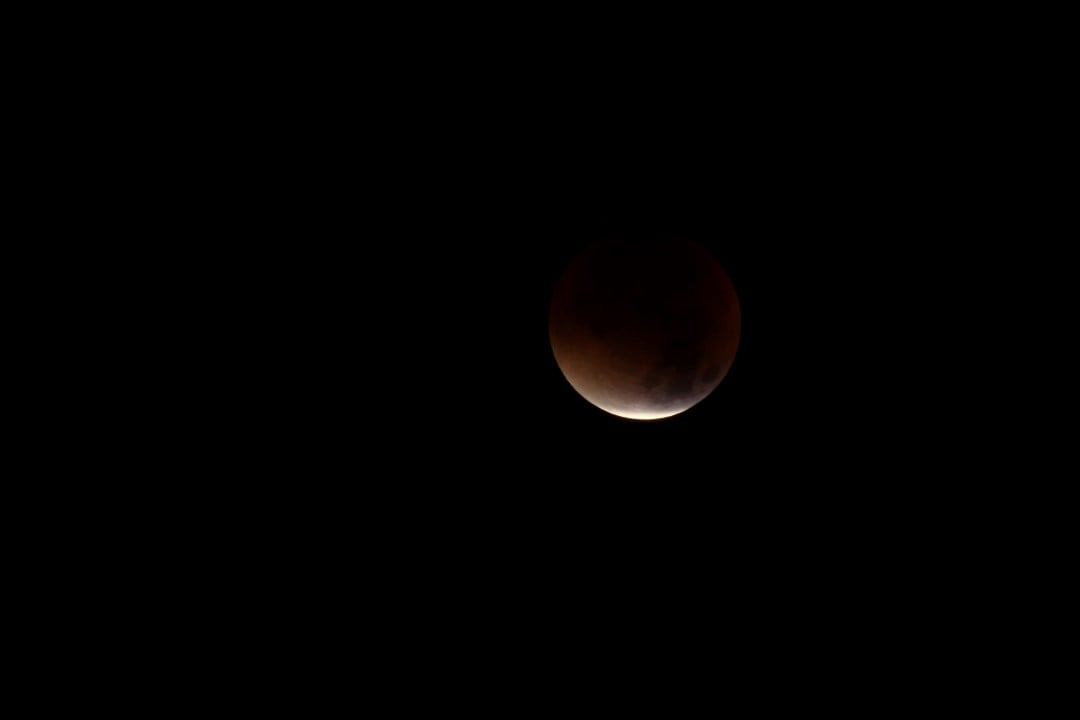
A near-total lunar eclipse, one of the deepest observed recently, is about to offer a celestial spectacle to billions of people. The astronomical phenomenon, which will cover an impressive 96% of the Moon’s surface, is scheduled for the period between the night of August 21st and the morning of August 22nd, 2026, with the Americas in a privileged position for the best viewing.
Rare phenomenon provides a privileged view in the Americas
The event highlights planet Earth’s ability to dramatically obscure the Moon, with the cast shadow making the natural satellite almost completely obscured. In addition to being a remarkable visual experience, this lunar eclipse will reach a much larger global audience compared to the recent solar eclipse.
Connection with the Artemis space mission boosts interest in the Moon
The approach of the lunar eclipse coincides with a time of great attention for the star, especially due to NASA’s Artemis program. In April, the space agency sent astronauts from the Artemis II mission on a record-breaking flight around the Moon, a prelude to future missions that include landing on the surface and building a base for humans and robots in the coming years. “It’s a great time to be part of the space program, isn’t it? We’re not slowing down,” NASA astronaut Jack Hathaway told reporters last week from the International Space Station.
The cosmic alignment behind eclipses
Eclipses, whether solar or lunar, are the result of a precise alignment between the Sun, Moon and Earth. This configuration causes one celestial body to obscure the other. The peculiarity lies in the fact that the Moon, although 400 times smaller than the Sun, is 400 times closer to the Earth, creating the illusion that both are the same size in the sky. This “cosmic coincidence” is what makes eclipses possible and so impactful.
Where the almost total lunar eclipse can be observed
The visibility of the lunar eclipse will be vast, reaching across multiple continents. Billions of people will have the chance to observe the phenomenon, as long as weather conditions allow for clear skies. Regions most likely to view include:
- North America
- South America
- Europe
- Africa
- Middle East
Contrast with the solar eclipse that marked the Atlantic
This lunar eclipse presents itself as the second act of a celestial spectacle, occurring just weeks after a total solar eclipse was visible mainly in Greenland, Iceland and Spain. While the solar event had a more restricted geographic coverage, the almost total lunar eclipse promises a much wider scope, allowing a significant portion of the world’s population to follow the passage of the Earth’s shadow over the Moon’s surface.



