
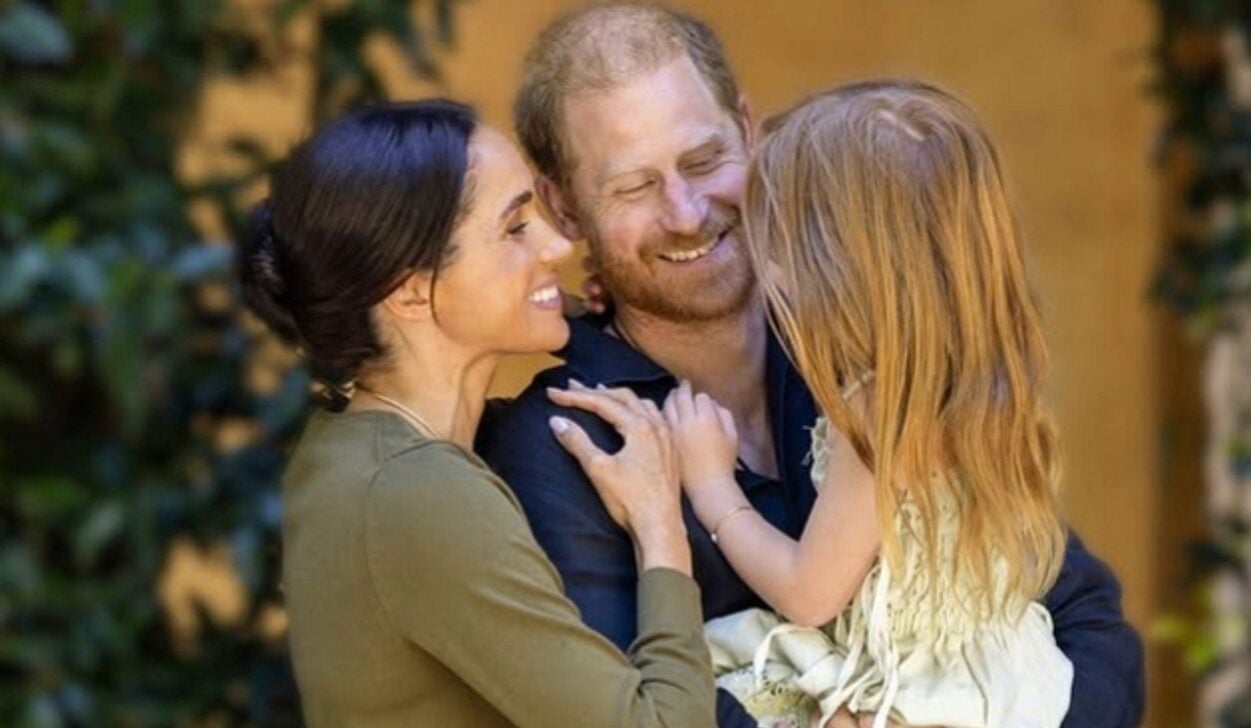
Recent information released by the European press on August 19, 2026 indicates that Prince Harry, aged 41, and his wife Meghan Markle, aged 45, are organizing a permanent move back to the United Kingdom. The couple has spent the last six years living in the United States, far from the obligations of the monarchy. Although Buckingham Palace has not issued any official statement confirming the transition, behind the scenes things point to a complete restructuring of the family’s routine.
The move represents the most significant development since 2020, when the dukes abdicated their roles as senior members of British royalty. After establishing a permanent residence in sunny California, the two children’s adaptation to European culture emerges as the main question mark. The return raises profound debates about how the family will deal with the transition from an American environment to the strict traditions of the Duke’s homeland.
Logistical preparations mark the return of the Sussex family to British territory
Since formally leaving the Crown, Prince Harry and Meghan Markle have directed their efforts towards building their own commercial empire, signing million-dollar contracts and developing independent initiatives. The search for financial autonomy and freedom of expression guided the couple’s steps in North America throughout this period. Now, the imminent repatriation signals a drastic change of course, suggesting that the model of life adopted abroad may be undergoing a profound structural review.
On the same topic: Prince Harry and Meghan Markle prepare definitive return to the United Kingdom with their children
Geographical and institutional distance provided the couple with a different perspective on the role they play on the global stage. The decision to cross the Atlantic again does not occur in isolation, but rather is based on a complex web of personal and professional motivations that have matured over time. Analysts point out that this repatriation represents the duo’s boldest step since the initial rupture, requiring detailed planning to mitigate friction with the monarchical institution.
Defining the children’s school calendar guides the change schedule
One of the central pillars of this transition directly involves the primary education of the couple’s heirs. Archie, currently seven years old, and little Lilibet, five, have already enrolled in British educational institutions, marking the beginning of an unprecedented cultural experience for both of them. The school calendar in the northern hemisphere is scheduled to begin in September, which establishes a strict deadline for all the logistics of transporting and installing the family to be completely completed.
Search for new residence reflects desire to distance itself from Crown properties
To shelter the family in this new stage, the Duchess of Sussex made it a priority to acquire a property that has no links to the royal’s traditional real estate portfolio. The refusal to occupy official residences demonstrates a clear strategy to maintain the autonomy achieved in recent years. This architectural and geographical choice works as a declaration of intentions, reinforcing that returning to the country does not mean automatic submission to the housing rules dictated by the palace.
The high-end real estate market already monitors the movements of the couple’s representatives, who concentrate their searches in two specific and highly exclusive regions. The first option covers the Cotswolds area, close to Oxford, known for being home to celebrities and offering vast rural properties with strong security. The second alternative points to Northampton, a county that carries immense historical weight as it is home to the Althorp estate, ancestral home of the Spencer family and final resting place of Princess Diana, mother of Prince Harry.
Information about logistical planning has already reached the corridors of Buckingham Palace, being passed directly to King Charles III, now 77 years old. Sources linked to the monarchy indicate that the monarch was notified of his youngest son’s intention to return during recent meetings, although the minute details of the script remain restricted to the hard core of the Sussexes. Prior communication attempts to avoid institutional surprises and demonstrates a minimum effort at diplomatic alignment between the parties.
More on this story: Prince Harry and Meghan Markle prepare to permanently move to the United Kingdom with their children
Security obstacles and family relationships test the project’s viability
The wheels of change continue to turn, however, the practical execution of the project comes up against structural issues that still require definitive answers. The reinsertion of such polarizing figures into the British social fabric requires a high risk calculation, considering the history of public clashes with the press and the government structure itself.
- The police protection scheme appears to be the biggest obstacle, especially after Prince Harry suffered defeats in court in 2025 when trying to guarantee an escort financed by British taxpayers, forcing the couple to pay for extremely expensive private security.
- The current state of family relations adds a layer of tension, as the level of dialogue with Prince William and King Charles III remains fragmented following the publication of revealing memoirs and hard-hitting interviews.
- The readjustment of Meghan Markle’s corporate image generates intense debates, as the duchess will need to balance the management of her private companies with the inevitable association with the monarchy that her physical presence in London will bring.
Conflict between private entrepreneurship and public expectations generates uncertainty
Entertainment market observers believe that the decision to cross the ocean may be linked to the fluctuating performance of the commercial initiatives launched by the couple in North America. The difficulty in sustaining the massive engagement of the American public in long-term projects fueled theories that the change would function as a tactical retreat. This reconfiguration of route would allow the dukes to reevaluate their investments from a European base, where the weight of their noble titles still exerts a strong influence.
Learn more: Harry and Meghan’s return to the UK caught Prince William with King Charles in Scotland
The termination of the exclusivity contract valued at US$100 million with the streaming platform Netflix forced a rapid diversification of the portfolio. The attempt to consolidate lifestyle brands and consumer products represented a clear effort to create a source of income unrelated to revelations about royalty. However, the sustainability of these private businesses will face an acid test when operating within the borders of a country that demands extreme discretion from its aristocratic members.
Crown affairs specialist, Natalie Oliver, raises a question that echoes behind the scenes in the London press about the true nature of this repatriation. The analyst asks whether the couple intends to maintain their status as celebrities who monetize their appearances or whether there is a veiled plan to gradually resume representative functions in the name of the State. This uncertainty about the role they will play in the British social fabric constitutes the core of the identity crisis that surrounds the Sussex family.
The attempt to merge the concept of traditional public service with the commercial exploitation of a personal brand proved to be a difficult equation to resolve. Without a clear strategy that separates corporate profits from philanthropic actions, the prince and duchess risk further eroding their credibility. The success of the new phase will depend exclusively on the ability to redefine their priorities, proving that they can add value to modern society without relying on constant scrutiny of their private lives.
Learn more: Royal family: Prince Harry, Meghan and children plan return to the UK after six years in the US
Popular reception and emotional ties dictate the direction of the international transition
The thermometer of British public opinion presents discouraging readings for the Dukes, reflecting years of distance and conflicting narratives. Recent popularity polls show that the couple’s acceptance has reached critical levels, with Meghan Markle registering just 22% approval, while Prince Harry is at 33%. This scenario of widespread skepticism will require monumental public relations work to prevent the family’s arrival from being met with hostility on the streets and in the tabloids.
Historian and author specializing in the monarchy, Ed Owens, argues that the driving force behind this complex logistical operation transcends commercial ambitions and focuses on human development. The need to provide children with a tangible connection to their British roots spoke louder than institutional disagreements. Archie and Lilibet’s prioritization of family life and cultural heritage became the decisive factor that convinced the couple to face the harsh environment of the United Kingdom.
In addition to his desire for cultural reconnection, Prince Harry made a point of keeping active his positions as patron of several British charities during his voluntary exile, ensuring a continued bridge with his home country. As a sign that the institutional ice is beginning to melt, King Charles III and Queen Camilla recently held a private meeting with Harry, Meghan and the two children, marking the group’s first in-person meeting in four years and paving the way for a structured return.