Van Rysel EDR-G gravel bike redefines market with affordable carbon and remarkable versatility By Carolina Costa
6 min read
 |
Lille-based brand Van Rysel is making a significant impact on the carbon gravel bike market with the launch of its new EDR-G. The model promises to revolutionize the perception of value in the mid-range and high-end category, combining an aggressive set of equipment with a competitive price, according to initial tests carried out on August 24, 2026.
This first contact with the bicycle was made on a challenging 60 km route, with more than 1,200 meters of elevation gain, carefully planned to explore its capabilities on different types of terrain. Preliminary analysis suggests that while it’s not the most extreme gravel bike available, the EDR-G could become one of the smartest choices for cyclists.
Modern design and technology in the Van Rysel EDR-G
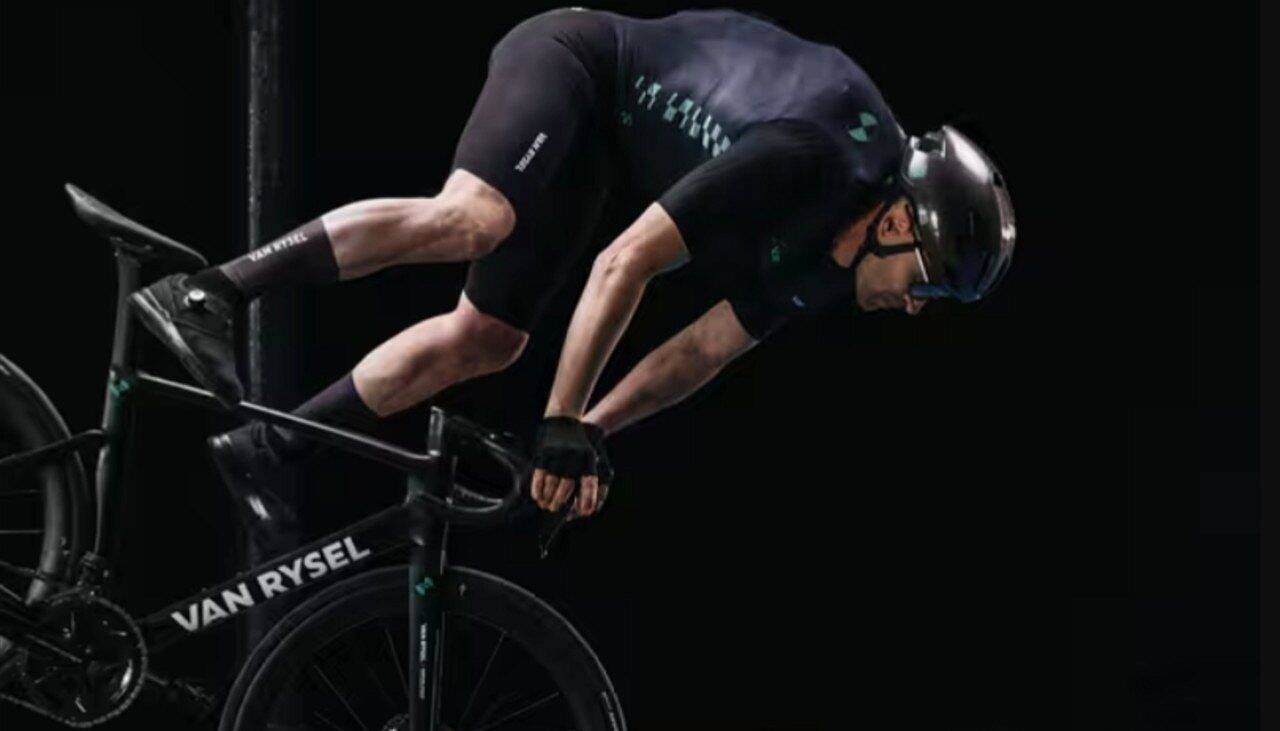
Van Rysel’s new EDR-G incorporates several features expected of contemporary gravel bikes. Equipped with a carbon frame and fork, it offers capacity for tires up to 50 mm, as well as multiple mounting points. The Deda Gera handlebar, with a 24° opening, contributes to adaptable riding.
The bike also includes a frame-integrated storage compartment and comes with 45mm Schwalbe G-One R tires on some versions. These specifications show the brand’s commitment to offering a product aligned with the needs of gravel cyclists.
Aggressive value for money that challenges the competition
- Shimano GRX 610 12-speed version:For €2,199.
- SRAM Force XPLR AXS version:Includes VR32 carbon wheels, for €3,199.
- Version with 40 mm RockShox Rudy XPLR front suspension:For €3,499.
With a Force AXS transmission, carbon wheels and seatpost, plus a carbon frame and high-performance tires for just over 3,000 euros, the EDR-G stands out. In a market where prices often seem detached from reality, Van Rysel’s proposal presents itself as a blunt reminder that price, although not the only factor, is always a crucial component in a cyclist’s purchasing decision.
Geometry focused on resistance and comfort for long distances
The riding position of the EDR-G offers a positive surprise, with the rider feeling more upright compared to other recent gravel bikes, even though it maintains dimensions compatible with the segment. The 57 cm top tube, combined with a 90 mm stem, provides a natural posture, avoiding sensations of tightness or excessive sportiness.
This characteristic defines the bike as a model genuinely focused on resistance. It was designed to allow long-lasting pedaling, with the ability for the cyclist to change position, face different terrains and remain less fatigued. The Deda Gera handlebar reinforces this impression, being shallow, wide and offering different hand positions that are effectively usable.
Smart storage and full accessories
Van Rysel has integrated into the EDR-G a storage concept already present in some of its endurance models. The compartment, positioned on the frame, is practical and easy to access. An important difference is that the brand does not just deliver the empty bike; It comes with a complete kit that includes an inner bag, multi-tool, inner tube, tire spatulas and a mini pump.
This detail, which may seem trivial, is significant at the time of purchase. While many brands offer integrated storage solutions that the cyclist needs to fill themselves, Van Rysel presents a complete, ready-to-use system. This eliminates the need for additional saddle bags, creating a strong perception that the brand has considered the entire use of the bike, not just the frame. The bike also has attachment points on the top tube, under the down tube and on the fork, aligning with its positioning for adventure and long distance riding.
Trail performance: stability and control over diverse terrain
The EDR-G test started with a steep and technical climb, demanding the most from the bike. The evaluated version, equipped with a mechanical Shimano GRX group and DT Swiss aluminum wheels, showed good performance. Gear changes were precise and braking was effective, suitable for long distances on dirt roads.
Although the aluminum wheels don’t provide the most dynamic feel, the frame demonstrated good responsiveness. When increasing the pace, the transmission responds in a controlled manner, without the aggression of a pure racing gravel bike. This feature allows the EDR-G to keep the rider engaged while avoiding unnecessary fatigue, striking an ideal balance between agility and sensibility.
Reliable stability on challenging descents
The EDR-G provided a very positive experience on descents. The front part is responsive enough to allow precise trajectory definition, without conveying a feeling of instability. The relatively long wheelbase inspires confidence, especially when the grade increases or the terrain becomes rougher.
The bike proved to be reliable even on sections that required quick trajectory choices. Van Rysel seems to have found a good balance, avoiding the extremes of versatile gravel bikes that are unstable in rough terrain or excessively heavy in weight transitions.
The versatile EDR-G proposal for different cyclists
It is essential to understand the positioning of EDR-G. This bike was not created for the cyclist looking for a pure, light, aggressive and performance-focused gravel machine, nor to be a mini mountain bike. Its natural environment is long-distance routes on dirt roads, mixed cycling, day trips and routes with variations in altitude, flat sections and rougher trails. In essence, the bicycle represents the essence of dirt road cycling for many riders.
However, it can also be the ideal base for those who want a competitive gravel bike. With a pair of more responsive carbon wheels and a unibody cockpit, the EDR-G can be transformed into a competitive machine for events like The Traka, without the extreme stiffness of a purely race-focused frame.
The Impact of Price on the Carbon Bike Market
Price remains this bike’s strongest selling point. At €2,199 in the carbon GRX version, the offer is already attractive. Reaching €3,199 for the Force AXS version with carbon wheels, the proposal becomes difficult to ignore. With comparable components, many brands charge significantly higher prices, some reaching almost double.
When considering the integrated kit, 50mm tire clearance, mounting points and overall build consistency, the Van Rysel EDR-G emerges as one of the most competitive bikes on the market. This launch is not just good news for Van Rysel; it also puts pressure on the rest of the industry, changing the landscape in which the brand previously did not concern established competitors in the mid- to high-end carbon gravel bike segment.
What the initial test reveals about the future of EDR-G
This initial test provided clear insight into the potential of the Van Rysel EDR-G. The brand isn’t just releasing a well-positioned carbon gravel bike; it is offering a coherent, well-designed, comfortable and stable model on trails, all at a price that promises to generate great repercussions.
Of course, a long-term test will still be needed to confirm the performance under load, the resistance of the protective elements and the comfort after several hours of riding, as well as the real benefit of the suspension version. However, first impressions indicate that the EDR-G is not a rigid carbon gravel bike disguised as an adventure bike, but rather a model that filters out terrain imperfections well, is easy to control and encourages the cyclist to extend the ride.
The EDR-G is not without points for improvement, such as the press-fit bottom bracket, which may not please everyone, and the frame protection that could be improved. Furthermore, the version with DT Swiss aluminum wheels demonstrates less responsiveness compared to the carbon option. Despite these details, the bike is, overall, solid. With a fair price, a coherent proposal and good performance, the Van Rysel EDR-G is likely to find a considerable audience.