
Phenomenon of the ‘blood moon’ prepares a spectacle in the sky; see how to follow the almost total lunar eclipse

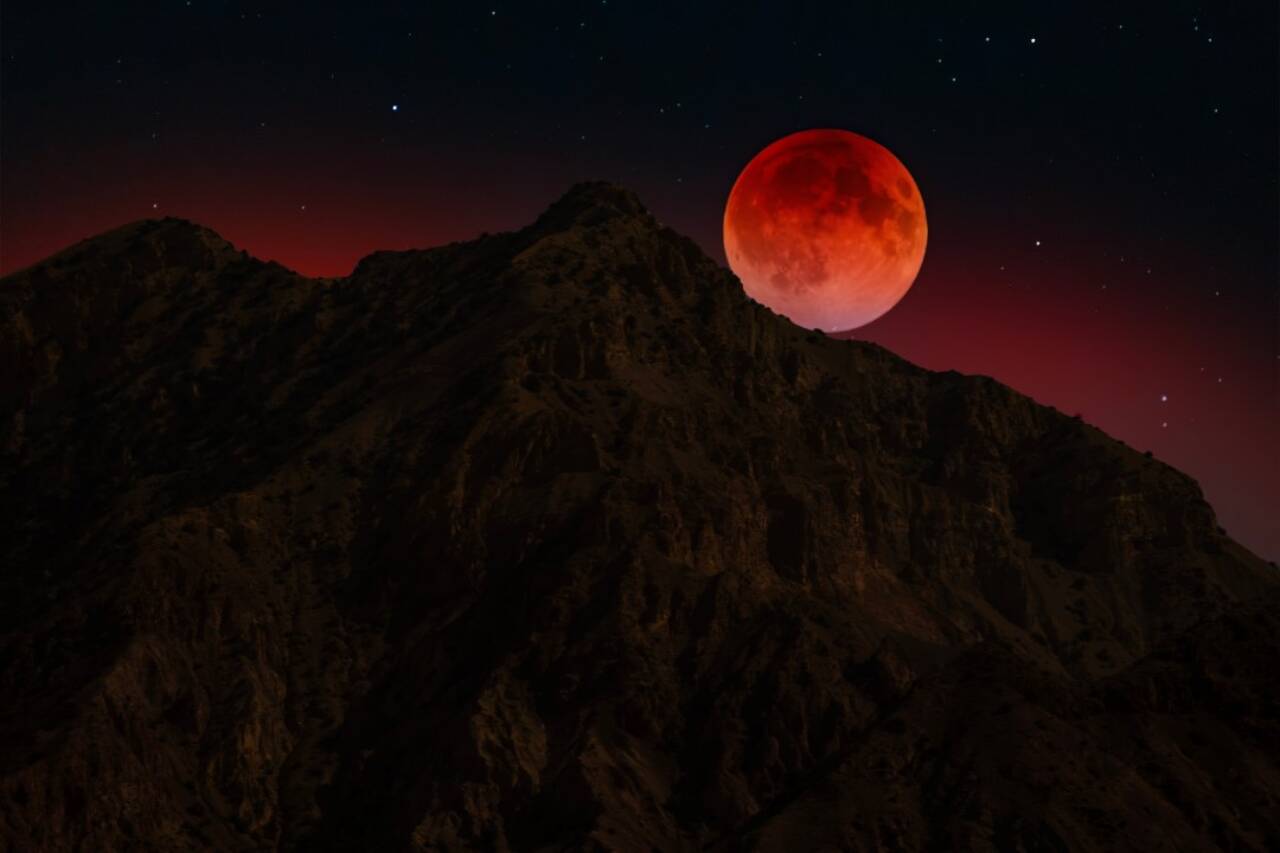
A near-total lunar eclipse is expected to occur on the night of August 26, 2026, promising a spectacle for much of North and South America. This astronomical event comes about two weeks after a total solar eclipse fascinated observers in southern Europe.
Lunar eclipses happen when the Earth is positioned between the Sun and the Moon, casting a shadow on the lunar surface. In this event, almost the entire Moon, precisely 96.2% at its peak, will be covered by the Earth’s shadow.
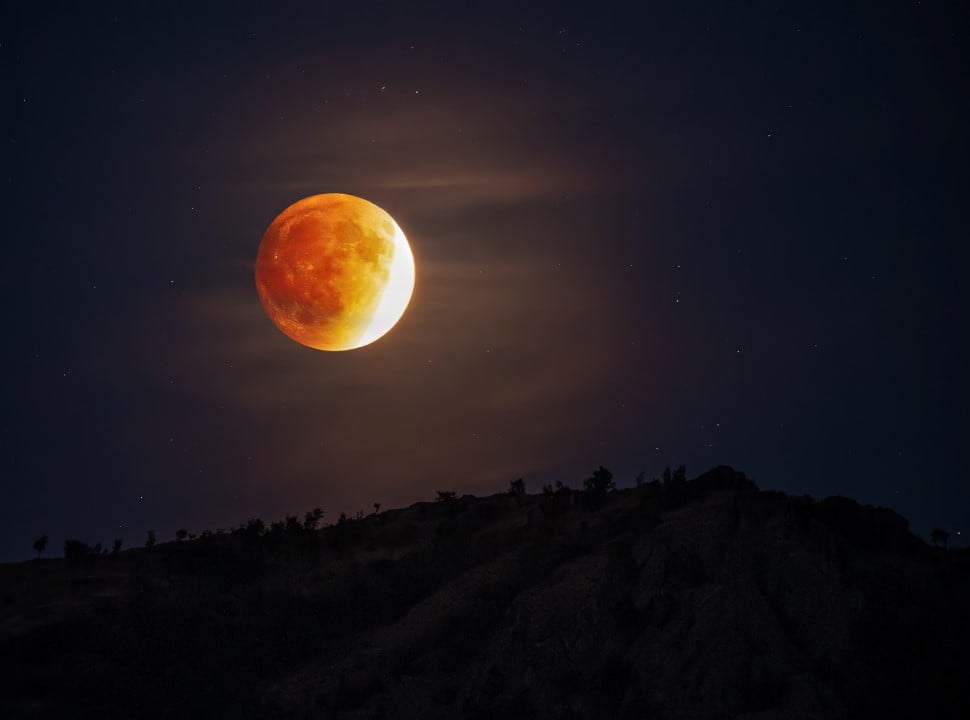
Weather permitting, observers in the continental United States will have the best viewing opportunities. The phenomenon can also be seen in other areas of North America, South America, parts of Europe and Africa.
During the eclipse, the Earth’s shadow takes on a red-orange hue on the lunar surface, a result of the way the Earth’s atmosphere scatters sunlight. It is for this reason that a total lunar eclipse is also called a “blood moon.”
The eclipse will begin at 9:23 pm ET, when the Moon begins to enter the outer part of Earth’s shadow. The most active phase, however, begins at 10:33 pm (Eastern Time), when the Earth’s shadow begins to cover the lunar surface, creating the impression that a piece of the lunar disk is being “bitten off”.
The peak of the eclipse will be at 12:12 am (Eastern Time), at which time more than 96% of the lunar surface will be covered. The event will end at 3:01 a.m. ET, when the Moon completely leaves the outer edge of Earth’s shadow.
Most observers in North and South America, with the exception of Alaska and the northernmost regions of Canada, will have the opportunity to observe all phases of the lunar eclipse. However, for those in Europe and Africa, the eclipse will begin in the early hours of August 27, 2026, and the Moon may set before the phenomenon ends.
Unlike solar eclipses, lunar eclipses can be safely observed with the naked eye. For those wanting more detailed views, binoculars and telescopes are recommended.
This lunar eclipse follows a total solar eclipse — an alignment in which the Moon passes between the Sun and Earth, blocking sunlight — which darkened the skies of Spain, a small part of Portugal, Greenland, Iceland and northern Russia.
Solar and lunar eclipses often occur in pairs due to the particular interaction between the Moon, Earth, and Sun. These three celestial bodies appear to align from our Earthly perspective because the Sun is 400 times further from Earth than the Moon, and also 400 times larger. This coincidence makes both appear the same size in the sky.
Solar eclipses happen during the New Moon phase. About two weeks later, when the Moon is on the opposite side of the Earth from the Sun, lunar eclipses occur during the Full Moon phase.
The next solar eclipse, on February 6, will be visible in parts of South America and Africa. The next lunar eclipse is scheduled for the night of February 20th to 21st, with visibility expected in North and South America, Europe, Africa, Asia, Australia and Antarctica, according to data from NASA.





