
Near-total lunar eclipse will bring blood moon to the skies of the Americas in 2026

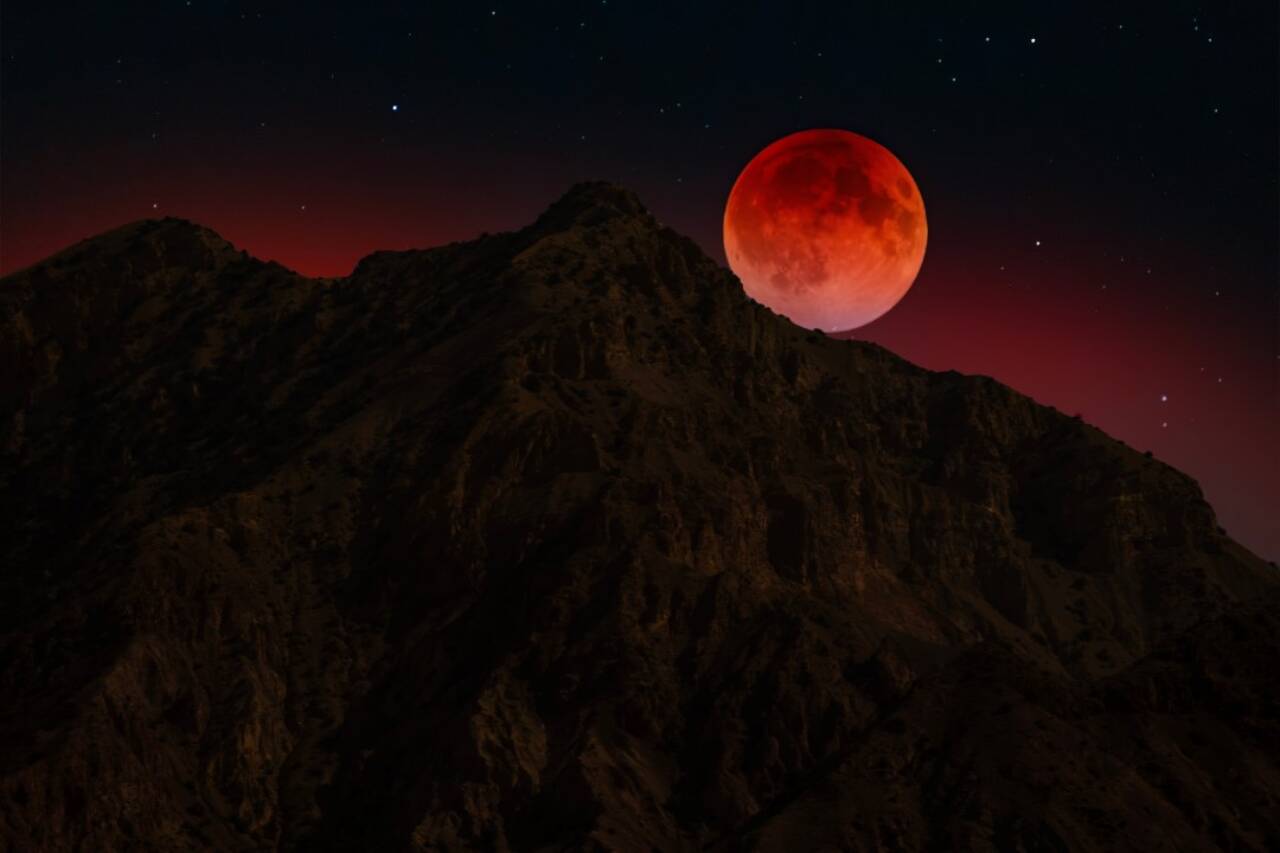
The skies of the American continent are preparing to host one of the most anticipated astronomical events of the decade, promising a true visual spectacle for millions of people. On the night of August 26, 2026, our planet’s shadow will cover almost the entire lunar disk, reaching an impressive 96.2% obscuration mark at the peak of the phenomenon. This cosmic alignment will transform the natural color of the satellite, bathing it in reddish tones and creating the famous optical effect popularly known by observers as the blood moon. Residents of Brazil, as well as other nations in South and North America, will have a privileged seat to watch the majestic transition in the night firmament.
Understand the celestial mechanics behind satellite dimming
For a spectacle of this magnitude to occur, the universe requires an extremely precise geometric choreography between three distinct celestial bodies. The lunar eclipse materializes exclusively during the full moon phase, at the exact moment when planet Earth is positioned in a perfect straight line between the Sun and the Moon. This colossal physical barrier blocks the direct sunlight that would normally illuminate the arid lunar surface, projecting an immense cone of shadow into outer space that ends up swallowing the neighboring star.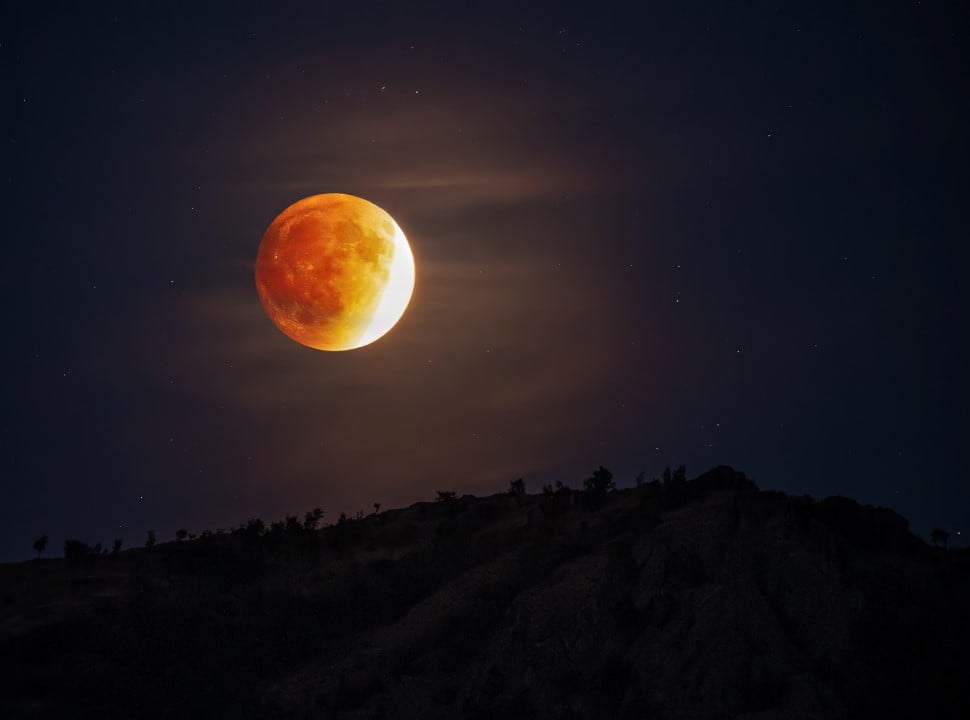
The cosmic coincidence that allows this stunning visual interaction is closely linked to the mathematical proportions of our system. The central star of our planetary system is approximately four hundred times larger than the Moon, but, by a quirk of orbital physics, it is also four hundred times farther from Earth. This relationship of distance and size makes both stars appear to have the same diameter in the Earth’s sky, allowing the projected shadows to create almost perfect blocking during seasonal alignments.
Many wonder why we don’t have eclipses every month, since the full moon is a constant cycle. The answer lies in the inclination of the lunar orbit, which presents a deviation of about five degrees in relation to the Earth’s orbital plane. Light blocks only occur when the stars cross each other at the so-called lunar nodes, specific points of intersection that allow the perfect three-dimensional alignment necessary for the formation of the shadow.
The scientific reason that turns the lunar surface into shades of red
The reddish color that names the phenomenon is not the result of mysticism, but rather a fascinating optical process that is well documented by science called Rayleigh scattering. When Earth blocks direct sunlight, light rays must pass through our planet’s dense atmosphere before reaching the satellite. During this crossing, atmospheric gases filter and scatter shorter light waves, such as blue and violet, allowing only the longer waves, corresponding to red and orange, to escape and travel to the lunar surface.
It’s exactly the same physical principle that colors our sunsets and sunrises every day, projected onto an interplanetary scale. Astronomers usually classify the intensity of this hue using the Danjon Scale, which helps measure the darkness of the eclipse. Depending on the amount of volcanic dust, pollution, wildfire smoke and clouds present in the Earth’s atmosphere on August 26, 2026, the moon could range from a bright copper to a deep, dark brick red, almost invisible to the naked eye.
Complete schedule and times to follow the transition in the sky
The cosmic ballet has a scheduled start time and requires patience from astronomy enthusiasts, lasting several hours throughout the night and early morning. For observers located in the Brasília time zone, the first subtle changes in luminosity can be noticed from 10:23 pm, when the outer, lighter edge of the Earth’s shadow, called the penumbra, touches the silver disc. At this initial moment, the change in brightness is quite discreet and difficult to notice without extra attention.
The most dramatic and noticeable phase of the event will gain strength at 11:33 pm, when the darkest and densest shadow, known as the umbra, will begin to cover the celestial sphere, creating the illusion that a piece of the star is being slowly devoured. The peak of the darkening, when more than 96% of the visible area will be immersed in red darkness, will occur at exactly 1:12 am on August 27th. The show will end definitively at 4:01 am, when the satellite is completely freed from the influence of the Earth’s shadow.
Geography will dictate who will have the best view of the phenomenon. While most of the Americas will enjoy the full event, residents of Alaska and the northernmost regions of Canada will miss out on some of the spectacle. In Europe and the African continent, the clock will work against observers: the eclipse will begin in the early morning hours of August 27th, and the natural satellite will set on the horizon before the transition comes to an end.
Practical tips and recommended equipment for the best viewing
One of the great advantages of observing lunar eclipses is the total safety for human vision, eliminating the need for expensive or complex protective equipment. Unlike sunblocks, which require strict filters with international certification to avoid permanent and irreversible damage to the retina, the blood moon can be admired with the naked eye by people of all ages, without any type of medical restrictions. Just find a comfortable spot, look up, and enjoy the gradual change of colors.
However, the use of optical instruments can elevate the experience to a much more immersive and detailed level, revealing incredible nuances of extraterrestrial geography. Astronomy experts strongly recommend the use of binoculars or amateur telescopes for anyone who wants to explore the lunar craters, mountains and vast seas bathed in red light. To ensure the best possible clarity, the main recommendation is to look for locations away from large urban centers, avoiding light pollution that obscures the natural brightness of the stars and reduces the contrast of the night sky.
The dance of eclipses and the astronomical calendar for the coming months
The event of August 2026 does not arrive in isolation on the universe’s calendar, being part of a continuous cycle of alignments. Eclipses usually travel in pairs, separated by approximately two weeks, setting up what scientists call eclipse season. This almost total darkening of the natural satellite comes shortly after an impressive total solar eclipse that turned day into night in regions of Spain, Portugal, Greenland, Iceland and northern Russia, fascinating crowds in the northern hemisphere.
Orbital dynamics ensure that, while solar blocks occur exclusively during the new moon phase, lunar blocks reign supreme on full moon nights. The North American space agency, NASA, maintains rigorous monitoring of these orbits and has already mapped upcoming celestial encounters to keep observers and researchers alert to opportunities for study and contemplation.
For those who want to plan in advance and prepare their photographic equipment, the schedule of future events is already defined by the scientists’ mathematical calculations:
- On February 6th of the following year, a new solar eclipse will cross the skies, being visible mainly in areas of South America and the African continent.
- Between the 20th and 21st of February, the natural satellite will once again be overshadowed by the Earth’s shadow in an event of global proportions and long duration.
- The visibility of this second lunar lockout will cover a vast territory, including the Americas, Europe, Africa, Asia, Australia and even research bases in remote Antarctica.
The mathematical regularity of these phenomena reinforces the precision of the laws of physics that have governed our solar system since its formation. Watching the transition of a blood moon is not only a rare opportunity to capture stunning photographs of nature, but also a profound moment of direct connection with the grand mechanics of the cosmos that silently orbit above our heads, dictating the rhythm of time and space.





