
Dynamics of the Earth’s mantle explains why Antarctica froze before the Arctic

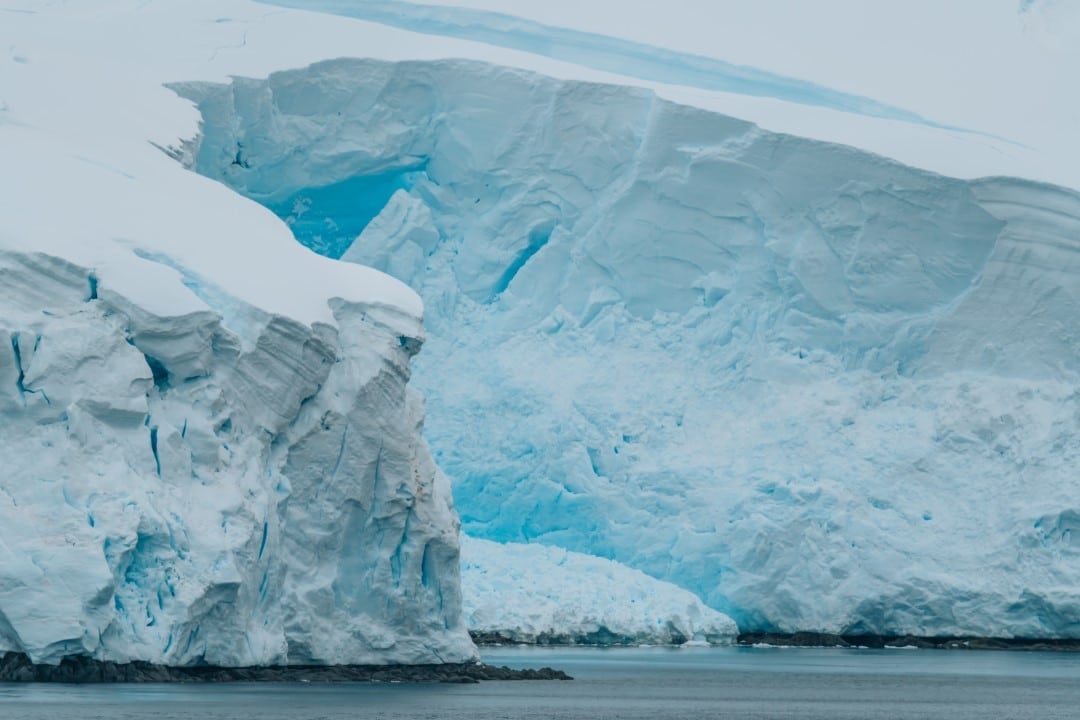
Recent academic investigations have revealed why the Antarctic continent established its permanent glacial cover long before the northern region of the planet. While the ice mass in the south began to consolidate around 34 million years ago — during the transition between the Eocene and Oligocene geological epochs — the North Pole only formed its ice caps a mere 5 million years ago. This temporal hiatus, which has intrigued experts for decades, finally finds answers in the deep movement of the inner layers of our planet.
Experts indicate that the fragmentation of supercontinents in the geological past initiated a chain of drastic transformations in the southern environment. Although continental drift is famous for redrawing the world map, the real protagonist in creating the icy desert was the energy generated by ripples in the Earth’s mantle, the thick layer of mushy rock that rests just beneath the crust.

How Earth’s internal activity pushed the continent upward
The premature cooling of the southern region was directly driven by the constant and imperceptible action of underground thermal currents. These convective flows transport rocky material at very high temperatures, functioning as the engine that drags tectonic plates across the surface. The enormous force released by this internal dynamic definitively altered the relief of that portion of the globe.
According to geologists, this profound disturbance began in the Jurassic period, exactly when the Antarctic mass began to break away from the territory that today forms Africa. The result was a progressive elevation of the eastern portion of the continent, lifting the soil over countless millennia. Even though this rise in level is invisible to human perception, it dictated the climatic direction of the entire territorial extension.
The two thousand meter altitude mark that guaranteed eternal snow
The constant pushing from the depths has pushed East Antarctica past the critical two-kilometer mark above sea level. Reaching this elevation was the necessary trigger for glaciation to become irreversible. In the higher parts of the troposphere, cold air ensures that precipitation occurs in the form of snow and, more importantly, prevents melting during the less severe seasons.
By breaking this topographic barrier, the environment became the perfect setting for the infinite accumulation of ice. The flakes that fell in winter resisted the summer, allowing new storms to superimpose fresh layers, which ended up crushing and compacting the base until forming the immense glacial walls of today. In modern meteorology, this relationship between high mountains and the creation of glaciers is a widely documented concept.
Why did the North Pole take so long to freeze compared to the south
The chronology of the freezing in the extreme south is completely different from what occurred on the opposite end of the planet. While the Antarctic base already sported its white armor 34 million years ago, the Arctic only began to record the presence of polar ice caps around 5 million years ago. Understanding what caused this temporal abyss of almost three tens of millions of years was the main focus of recent geological investigations.
The central reason for this historical discrepancy is that the northern hemisphere has never suffered a magmatic push capable of lifting its bed in a similar way. The arrangement of the oceans and landmasses around the Arctic followed a distinct evolutionary path, keeping the region at lower levels. Furthermore, while the south was relentlessly isolated by the Antarctic Circumpolar Current, northern waters continued to exchange heat with the tropics, severely delaying the thermal regulation necessary for glaciation.
The mirror effect of ice and the drastic reduction in global humidity
The consolidation of the ice shield in the south generated chain reactions that accelerated the drop in temperature across the globe. The most notable phenomenon is the increase in albedo, which measures the ability of an area to reflect sunlight. Pristinely white surfaces act like giant mirrors, bouncing radiation back into outer space, while dark oceans and bare-earth continents absorb this thermal energy.
With its vast expanse painted white, the southern continent began to massively reject solar heat, forcing cooling on a planetary scale. Simultaneously, the imprisonment of billions of liters of water in a solid state caused true dehydration of the atmosphere. As water vapor is one of the main natural greenhouse gases, its absence in the air weakened heat retention, further tipping global thermometers.
What the geological past teaches about the climate crisis of the present
Deciphering the way deep magma and plate tectonics orchestrated climate in past eras provides valuable tools for today’s meteorologists. By analyzing these very long-term events, experts are able to calibrate virtual simulators with greater precision, predicting how the biosphere reacts to pressures from both the Earth’s core and external factors.
This historical recovery goes beyond filling gaps in science books, serving as a basis for evaluating the alarming speed of contemporary warming. The web that connects the depths of the planet, the shape of the continents, the winds and the tides is extremely intricate. Mapping these ancient forces is the only way to measure how fragile or resilient our ecosystem really is in the face of ongoing disruption.
Impact of new discoveries on predictions for the future of the planet
Newly published data on the early glaciation of the South Pole are key to improving estimates of our climate tomorrow. By isolating the triggers that froze the planet in the past, academics are able to fine-tune current algorithms, which rely heavily on understanding how land, water and air talk to each other. The planetary gear, which connects the incandescent magma to the habitable surface, requires uninterrupted dedication from the laboratories.
In the current scenario, where the Arctic melts at a frightening rate due to human action, Antarctica still maintains itself as the largest freshwater vault in the world, operating under very complex melting rules. Knowing the geological biography of each end of the globe provides a critical overview of how different biomes withstand natural or industrial aggression. The proof that subterranean heat dictated surface cold perfectly illustrates the magnitude of the forces that govern the Earth.
Next steps for science in exploring glacial mysteries
The conclusions of this survey inaugurate a new strand of research focused on the clash between internal volcanic activity and ancient meteorological trends. From now on, the academic community must direct its equipment to track whether these same magmatic ripples have altered the relief and climate of other continents. Mastering this mechanic is mandatory to complete the vast puzzle of the evolution of our world.
There remain many unanswered questions about the exact sequence of events that turned the South into a white, impenetrable desert. The detailed analysis of sediments, fossil remains and tectonic faults will continue to be researchers’ main weapon to prove these hypotheses. With the constant improvement of satellites and supercomputers, new fragments of this story are expected to emerge soon, consolidating our view of Earth’s turbulent climate journey.





