
China boosts humanoid robot manufacturing with focus on data and EV strategies

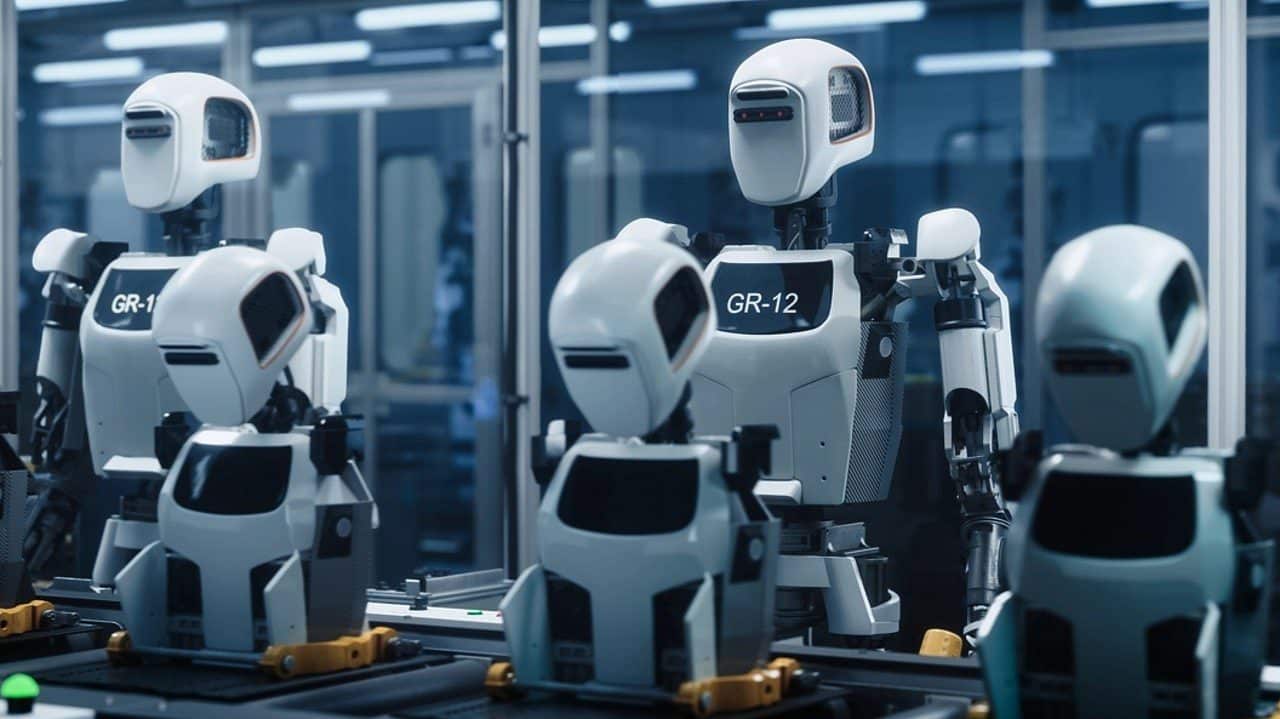
China is directing intense investment into the development of humanoid robots, replicating the industrial approach adopted with electric vehicles (EVs), although these machines are still far from replacing the workforce on a large scale.
At a training center located in Liuzhou, more than a hundred humanoid robots perform activities such as organizing boxes, packaging food and preparing coffee, always under human supervision.
The challenge in programming these movements remains considerable: a novice instructor may need up to 300 attempts to teach a useful movement, while more experienced professionals achieve effectiveness in about one in every 50 attempts.
The company UBTech was victorious in October in a public tender worth US$18 million (equivalent to R$92.9 million), receiving a contract from the Guangxi regional government to supply the necessary equipment and machinery to the center.
The main objective is to collect data to feed embedded artificial intelligence systems, allowing robots to interpret their surroundings, make autonomous decisions and perform actions in the physical world.
Despite the significant financial contribution, three project collaborators report that the enterprise, which receives subsidies, still lacks a clear plan to become profitable, due to the high costs and low values associated with the data generated.
Tang Wenbin, co-founder and CEO of Yuanli Lingji, describes the current limitation by stating that the “IQ of robots is too low” for them to be able to perform truly diverse and complex tasks.
An analysis by BofA Global Research indicates that Chinese companies accounted for 95% of the approximately 20,000 humanoids distributed globally last year.
Gan Xiaobin, representative of the Ministry of Industry and Information Technology, reported that China plans to manufacture more than 100,000 humanoid robots this year alone.
BofA projects that 1.2 million units will be produced annually globally by 2030, despite current barriers related to the dexterity, reliability, intelligence and cost of these equipment.
In the first half of the year, Chinese governments invested at least US$230 million (around R$1.2 billion) in the purchase of humanoids and equipment, a significant increase compared to the US$62 million (R$320 million) spent in the same period of the previous year.
This expansion, financed by the State, is notable when compared to the US$6 million (R$31 million) in public purchases recorded in 2024, highlighting the rapid acceleration of the sector.
State Grid announced in April plans to invest US$1 billion (equivalent to R$5.2 billion) in humanoid robots, robots with two arms and robotic dogs.
According to government data, each of these robots could generate annual labor cost savings of between US$74,000 (R$381,800) and US$119,000 (R$614,000).
Shenzhen, in turn, intends to establish a technology hub by the following year, with an investment of US$15 billion (R$77.4 billion), which will house more than 1,200 companies.
Currently, China has more than 150 companies dedicated to humanoids, a number that, according to the National Development and Reform Commission, exceeds the number of Chinese brands of electric vehicles.
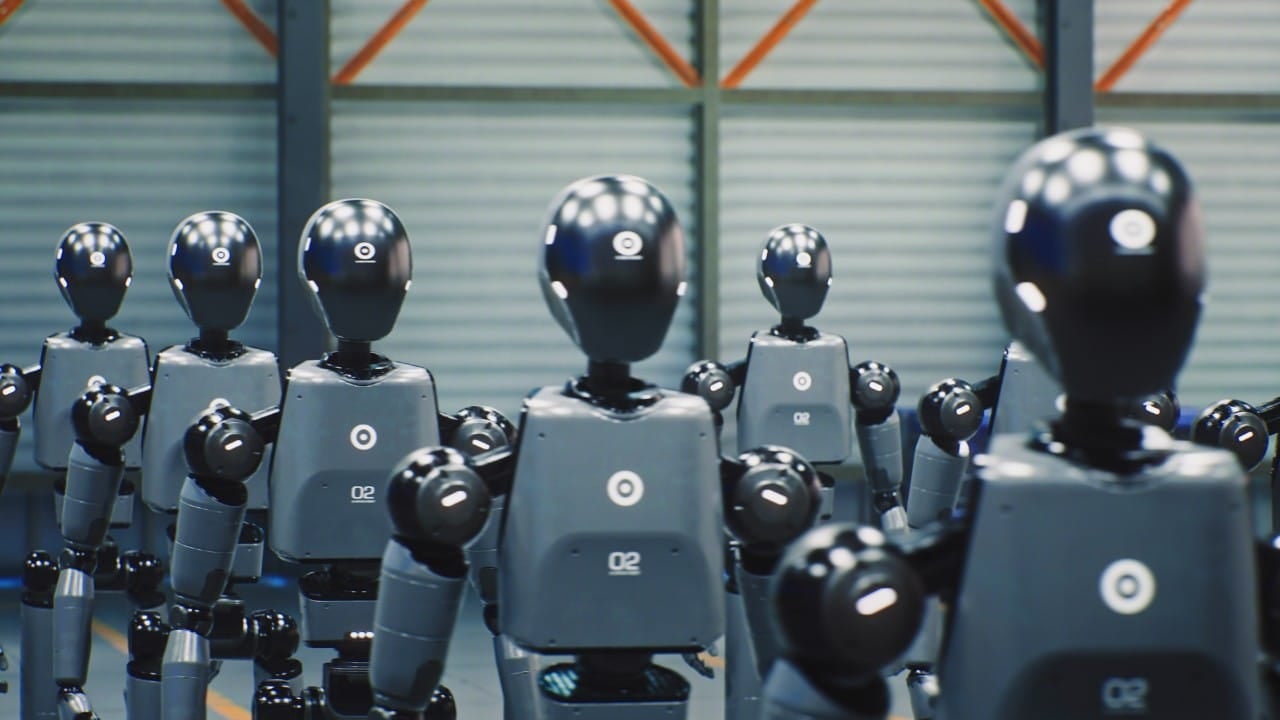
Kevin Xu, of Interconnected Capital, noted that several founders have already described the sector as a bubble and considers that consolidation is inevitable, whether in the short or long term.
Lingyi iTech opened a factory in Yizhuang in May, with an initial target of producing 10,000 robots per year, planning to expand this capacity to 500,000 units by 2030.
At Deep Robotics, subsidies represented approximately 42% of the net profit of US$4.2 million (R$21.7 million) achieved in the previous year.
In the fourth quarter, UBTech received public contracts totaling more than US$123 million (R$634.7 million), exceeding its annual revenue from humanoids, which was US$122 million (R$629.5 million).
The company delivered 1,079 life-size humanoids during this period, while Morgan Stanley projects an average reduction of 15% in the prices of these robots for this year.
The Kuavo model, from Leju Robotics, had its price reduced by 26% in 2025, being sold for approximately US$46,000 (R$237,400) per unit.
On the Sharebot platform, the daily cost for using humanoids in events fell to a range of US$440 (R$2,270) to US$600 (R$3,096), previously it was around US$1,500 (R$7,700).
Still, conventional robotic arms maintain their superiority in many manufacturing operations, and Xiaomi reports that 91% of the assembly of its electric vehicles is already carried out automated.
Xiaomi’s factory in Beijing employs more than 700 industrial robots, and Geely ensures that automated arms and autonomous vehicles carry out key assembly phases.
Humanoids are beginning to be used in specific sectors, such as Galbot models in pharmacies, where they can select products in around a minute with a success rate of over 95%.
The biggest obstacle remains training: the industry has approximately 500,000 hours of high-quality data, but estimates indicate a need for 100 million hours for full development.
In practice, employees at the Liuzhou center confirm that humanoid robots perform simple tasks with just 20% of the speed or productivity of a human being.
Still, the Chinese strategy focuses on the mass production of robots to generate data quickly, accepting the occurrence of waste and the unviability of some companies as part of a race for global technological leadership.
This strategic advantage is already observed internationally, as in the RoboCup event, held in South Korea in July, where almost all participating teams used robots manufactured in China.
Even Tesla faces this cost disparity: Elon Musk aims for a price of approximately US$20,000 (R$103,200) for the Optimus when large-scale production is achieved.
However, Morgan Stanley had previously estimated that the components alone for a low-volume Optimus Gen 2 would cost between US$50,000 (R$258,000) and US$60,000 (R$309,600).





