
Intense solar storm brings northern lights to German cities

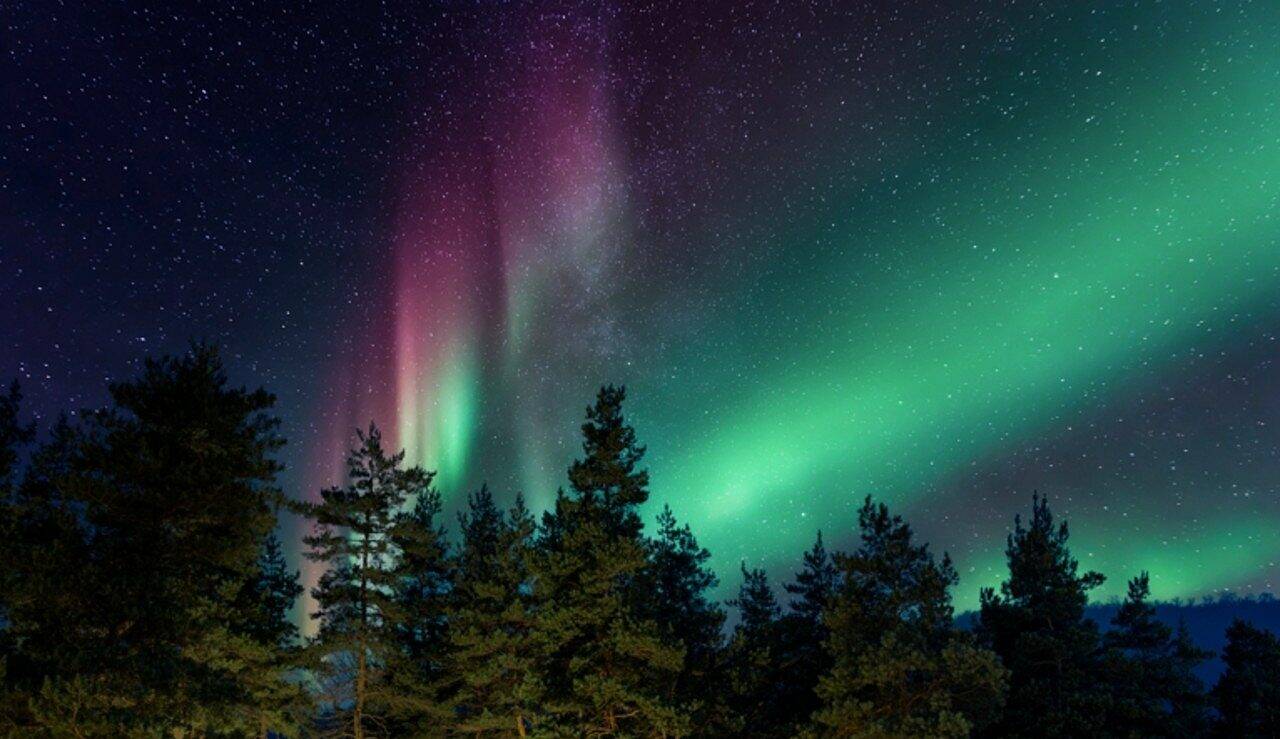
The end of August 2026 holds an astronomical event of great magnitude for observers in the northern hemisphere, with direct repercussions on the European continent. An intense geomagnetic storm, driven by our Sun’s phase of maximum activity, hits Earth’s magnetic field and creates exceptional conditions for the formation of aurora borealis at lower latitudes than usual. Meteorologist Dominik Jung, who follows the evolution of space weather, mapped the windows of opportunity and the most suitable regions for those who want to follow the colorful sky during the last weekend of the month.
The origin of this visual spectacle is linked to the current solar cycle, which has reached a peak of explosions on the star’s surface, ejecting a huge amount of coronal mass and charged particles towards our planet. When this solar material collides with the Earth’s magnetosphere, the gases in our atmosphere react by emitting lights in shades of green, pink and violet. Experts’ predictions indicate that the peak of the magnetic interaction will take place on the night of Saturday, August 29th, but the initial effects can already be noticed in the sky from Friday, the 28th.

Residents of large urban centers, such as the city of Munich, are already preparing to try to visualize the phenomenon, organizing observation groups in areas further away from the commercial center. However, naked-eye viewing at mid-latitudes requires a combination of favorable factors, making the hunt for the northern lights an activity that requires planning and a considerable dose of luck on the part of astronomy enthusiasts.
The science behind the geomagnetic storm hitting Earth
The Sun operates in cycles of approximately eleven years, alternating between periods of calm and extreme magnetic turbulence. Currently, the star is going through the so-called solar maximum, a time when sunspots multiply and eruptions become frequent and violent. This dynamic explains why the year 2026 has seen an above-average number of solar storm warnings, allowing auroras, normally restricted to the Arctic Circle, to descend towards the center of Europe.
For the glow to become noticeable in German territory, the storm needs to reach a high Kp index, a scale that measures the disturbance of the Earth’s magnetic field. Cities located in the central and northern portion of the country, such as Braunschweig, Wolfsburg and Salzgitter, are at the limit of this visibility zone. In these places, the phenomenon rarely dances in the sky as explicitly as in Scandinavia, manifesting itself more often as a diffuse glow on the northern horizon, which often only reveals its true colors through the lenses of photographic equipment.
An important geographic advantage is altitude. The Harz Mountains, for example, are emerging as a strategic refuge for aurora hunters. By climbing to higher areas, observers are able to escape some of the fog and pollution that usually accumulate in valleys, ensuring a much cleaner and unobstructed line of sight towards the northern horizon, a crucial factor in capturing the weaker lights.
North German coastline offers ideal setting for birders
Germany’s geography dictates the rules about who will have the best experience during the solar storm. The coastal strips bathed by the North Sea and the Baltic Sea emerge as the most promising destinations for night observation. In these regions, the vastness of the dark ocean almost completely eliminates the interference of artificial lights on the horizon, while the coastal plain provides a wide field of vision without natural or architectural obstacles.
In diametric opposition to the ideal coastal conditions, the Ruhr region represents the biggest challenge for those interested in the astronomical event. It is one of the largest urban and industrial conglomerates in Europe, where population density generates a vault of permanent light pollution. In city centers like Dortmund, Essen and Bochum, the artificial glow completely obscures the subtle lights of the aurora, reducing the chances of viewing to practically zero for those trying to observe from apartment windows or lit streets.
The solution for the inhabitants of these densely populated metropolises is tactical deployment. Moving a few kilometers away towards the outskirts, looking for open agricultural fields, forest parks or isolated hills, drastically changes the quality of observation. The basic rule of amateur astronomy applies strictly in this case: every meter of distance from street lamps and commercial signs multiplies the human eye’s ability to adapt to darkness and perceive light anomalies in the sky.
Climate challenges and the impact of urban lighting on the experience
In addition to the geographical location, the meteorology plays an absolute veto role over the show. An extreme class solar storm loses all of its visual impact if a thick layer of clouds covers the region. Weather forecast models indicate the formation of areas of instability and isolated thunderstorms during the night of Friday, August 28, which will require observers to constantly monitor weather radars to find holes in the cloud cover.
Another natural factor that competes directly with the aurora borealis is the lunar cycle. At the end of this month of August, the moon is in a phase of high luminosity. The intense brightness of Earth’s natural satellite works like a huge reflector in the night sky, capable of blotting out lesser-intensity auroras. This means that only the strongest, most vibrant bands of light will be able to stand out against the background of the moonlit sky.
Patience therefore becomes the observer’s main tool. The behavior of solar particles as they reach the atmosphere is highly unpredictable, resulting in peaks of activity that can last just a few minutes, followed by long hours of calm. Frustration is common among those expecting a continuous show, but persistence in staying in dark places and monitoring the northern horizon often rewards the most dedicated.
Strategic camera settings and times to capture the moment
The biology of the human eye has severe limitations in seeing colors in low-light environments, activating cells that only perceive shades of gray. Therefore, technology becomes indispensable. Sensors in modern digital cameras and smartphones can accumulate light over several seconds, revealing greenish and reddish tones that go unnoticed by the naked eye. The period of greatest capture probability occurs in the window between 10pm and 2am, with peaks in magnetic intensity often recorded around midnight locally.
To ensure success in documenting the event, some technical practices need to be strictly adopted when capturing images. The stability of the equipment and the control of light input define the difference between a clear photo and a dark blur.
- Use a firm tripod or support the equipment on a solid surface to avoid any shaking during image capture.
- Activate your smartphone’s night mode or set your professional camera to an exposure time of between 10 and 15 seconds.
- Adjust the sensor sensitivity (ISO) to values between 800 and 1600, depending on the darkness of the location, avoiding excessive graininess.
- Disable the flash completely as it will only illuminate nearby dust particles and ruin the sky photo.
- Wear appropriate clothing for the cold at night, as waiting in open, open areas tends to drop your body temperature quickly.
The search for northern lights outside traditional polar zones always carries an element of uncertainty, transforming the attempt into a true amateur scientific expedition. Regardless of the photographic result, the exercise of moving away from the urban routine, understanding the dynamics of space weather and observing the vastness of the night sky provides a direct connection with the invisible forces that govern our solar system.





