

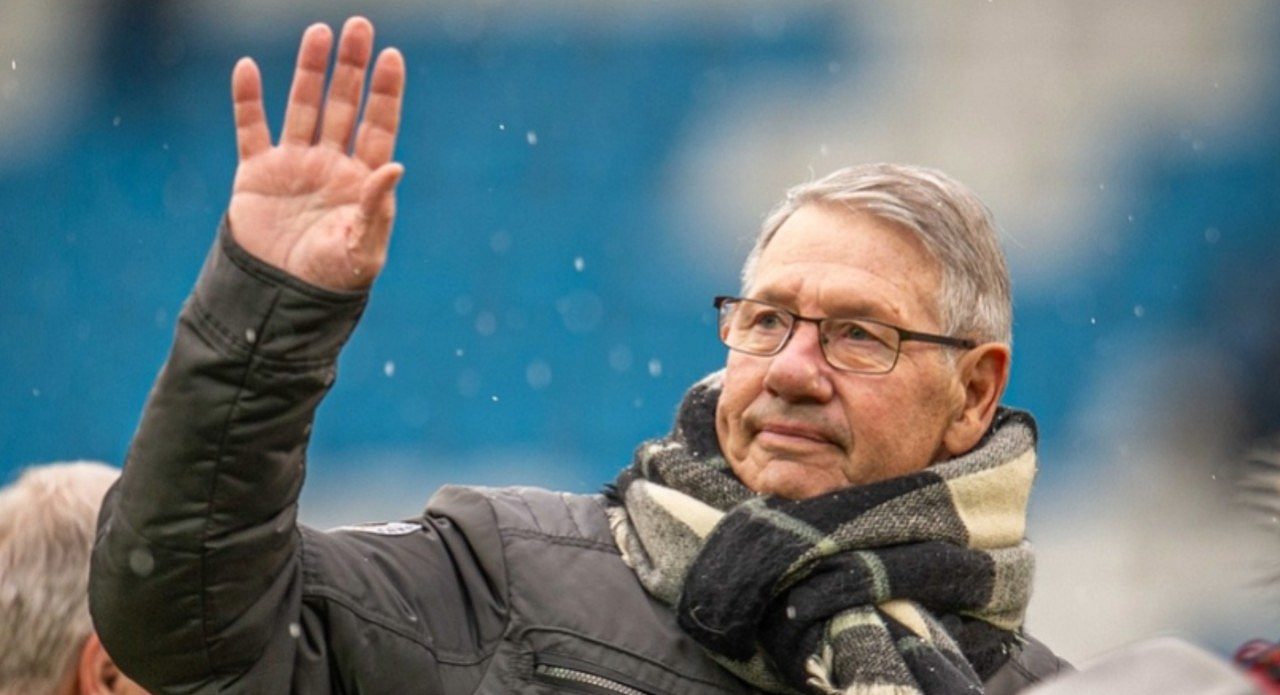
German football is mourning the death of Eberhard Vogel, one of the greatest icons in the history of the former East Germany. The former player passed away at the age of 83 in Jena, on September 2, 2026, after facing a long illness. Vogel, known by the nickname “Matz”, was an exemplary athlete who marked his time with appearances in major competitions, including the Cup Winners’ Cup final in 1981 and winning two Olympic bronze medals, in Tokyo 1964 and Munich 1972. He holds the record for most games played in the DDR Oberliga, with 440 appearances for FC Karl-Marx-Stadt and FC Carl Zeiss Jena, an unparalleled feat in the elite of eastern football. Despite his discretion, his genius on the field was unquestionable.
Eberhard Vogel’s journey: from champion in Karl-Marx-Stadt to idol in Jena
Born on April 8, 1943, in Altenhain, near Karl-Marx-Stadt, Vogel began his journey with SC Motor Karl-Marx-Stadt, which would later become FC Karl-Marx-Stadt. It was there that the quick and skilled striker transformed into a world-class player. In 1967, he celebrated the title of DDR champion with the Karl-Marx-Stadt team, standing out as an exceptional footballer who combined speed, technique and a remarkable instinct for goal.
One of the most significant decisions of his career came in 1970. After FC Karl-Marx-Stadt’s relegation, Vogel chose to transfer to FC Carl Zeiss Jena. This change definitively established him as a legend of the sport. He played for the Thuringian club for twelve years, winning several FDGB Cup titles (the equivalent of the East German Cup). With his goals and his keen vision of the game, he became the central figure of a golden generation in Jena.
Still at the age of 38, “Matz, the evergreen”, as he was poetically described by writer Christoph Diekmann, participated in the 1981 Cup Winners’ Cup final. In that historic season, Carl Zeiss eliminated strong opponents such as AS Rom, Valencia (then title holders), Newport County and Benfica Lisbon. The Thuringian team was only surpassed in the decisive game against Dynamo Tiflis.
Eberhard Vogel wins two Olympic bronze medals for East Germany
Vogel’s presence was also essential in the East German national team. Between 1962 and 1976, he wore the DDR shirt in 74 games and scored 25 goals, being one of the country’s most important players for more than a decade. He wrote special chapters on his career at the Olympic Games, where he shone on two occasions. At Tokyo 1964, he was part of the German Olympic team, which was predominantly made up of athletes from East Germany, and won the bronze medal.
Eight years later, Eberhard Vogel repeated the feat at the 1972 Munich Games, securing his second Olympic bronze medal. These two achievements represented great moments for an extraordinary footballer. In East German football, Vogel also stood out as one of his country’s most prolific Olympians, with ten goals scored in editions of the Games.
Vogel’s success in his coaching career after the pitch
Even after ending his brilliant career as a player, Eberhard Vogel remained active in the world of football. Initially, he served as a coach in the East German football federation. With German reunification, he faced the new challenges of football’s modern era, working with amateur teams Borussia Mönchengladbach and 1. FC Köln, before taking over as manager of Hannover 96.
Vogel later returned to his favorite club, FC Carl Zeiss Jena, where he gained access to the 2. Bundesliga in the 1994/95 season. His experience also led him to work as a coach for the Togo national team. During his career, he also played for other clubs, such as 1. FC Magdeburg and Dresdner SC.
Whether in Karl-Marx-Stadt, in Jena or with the national team shirt, Eberhard Vogel has always been synonymous with dedication, consistency and excellence. He did not seek the spotlight, but rather excellence within the four lines, being an inspiration to generations of football admirers.





