
Elon Musk bets on driverless future with launch of new autonomous vehicle in Texas

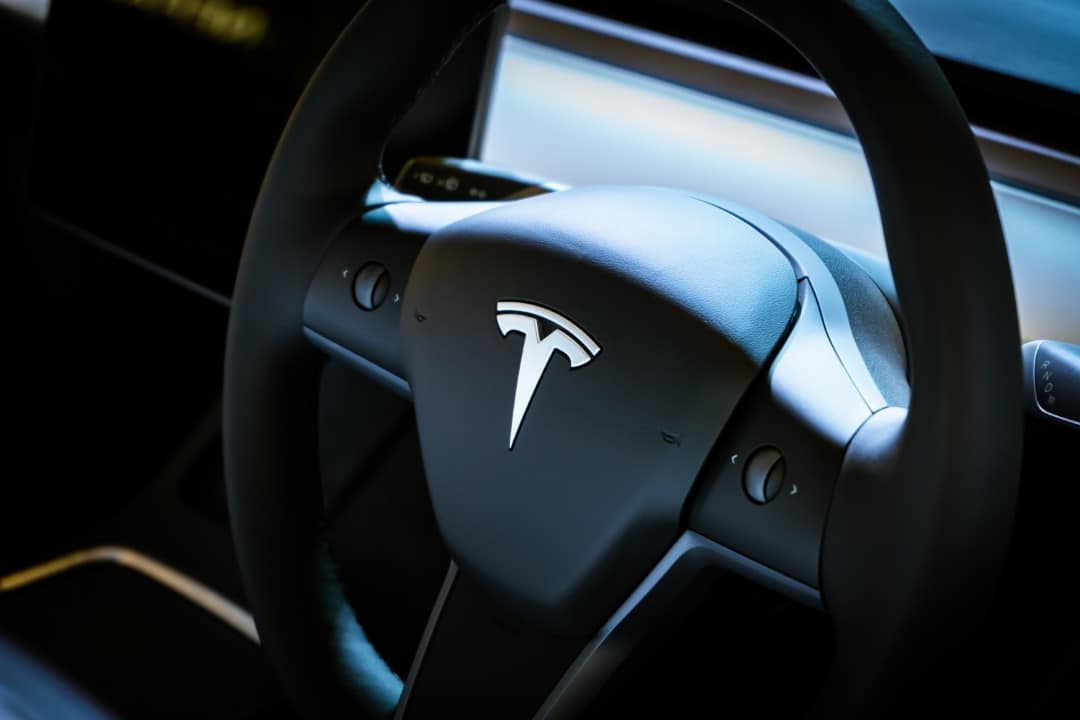
The automaker led by Elon Musk organizes a major presentation in the city of Austin, Texas, surrounded by enormous anticipation about its newest urban mobility project. Through posts on the social network X, the company instigated the public by highlighting that the car does not have manual steering controls, reinforcing the proposal for total automation. In addition, residents of the region received virtual invitations to test the new product on the streets of Texas before the formal launch, scheduled for September 3, 2026.
Details of the innovative design and initial tests of the new smart car
Initially revealed at the end of 2024, the model was designed to transport two passengers in a cabin that completely eliminates the use of a steering wheel or brake and acceleration pedals. The bold aesthetic draws attention to the doors that open upwards, creating a completely new boarding dynamic for users. To ensure the viability of the project, the American manufacturer has been conducting practical evaluations with adapted prototypes, which still have traditional controls and human supervision, on several public roads in the United States.
The climate of optimism infected the financial market hours before the revelation, boosting the automaker’s shares by around 7% on the stock exchange. This enthusiasm was fueled by video footage that went viral on the internet, where experts and enthusiasts recorded units of the vehicle circulating independently through Austin traffic. Such images served as a catalyst for speculation about the technological capabilities that the company would detail during the conference.
The billionaire’s old promises and the technical obstacles of independent driving
For almost a decade, the brand’s executive director has guaranteed that the company’s fleet will be able to navigate any route alone, dispensing with the attention of those on board. However, the delivery of this absolute functionality has suffered successive delays over the years. What consumers have access to today is the Full Self-Driving package in supervised format, an advanced assistance software that forces the driver to keep their hands close to the steering wheel and pay attention to the road to intervene in the event of an emergency.
The path to taking the driver out of the equation requires an extremely complex technological evolution, migrating from current assistance systems to the so-called Level 5 of the Society of Mobility Engineers (SAE), where the machine takes over 100% of the decisions in any scenario. Creating a commercially viable robot taxi means mastering neural networks and real-time image processing, a giant leap for the industry. Unveiling this new automobile signals that the company believes it is closer to solving this urban puzzle, although large-scale practical validation remains a formidable barrier.
How the company positions itself against rivals that already dominate the autonomous transport sector
The Texan automaker’s definitive entry into this niche occurs at a time when major opponents have already consolidated profitable commercial operations. Waymo, which belongs to the same conglomerate as Google, leads the race with around four thousand units running daily and charging for rides in fourteen American metropolises, in addition to expanding its open-air laboratories. Running on the sidelines, Zoox also accelerates its territorial expansion plans, showing that the competition for leadership in the mobility of the future is increasingly fierce.
On the other hand, the current numbers of Elon Musk’s company in the unsupervised segment are still modest, totaling just over two hundred licensed units in the United States. These specific cars have government permission to travel without the presence of a human in the driver’s seat, but are restricted to previously mapped and approved urban perimeters.
Main American municipalities that already receive the brand’s driverless tests
- Streets mapped in the Texas capital of Austin
- Dallas County Urban Roads
- Houston metropolitan area
- Commercial areas of the city of Miami
- Tourist areas in Orlando
- Urban perimeter of Tampa, in the state of Florida
In parallel with these independent operations, the manufacturer maintains a corporate carpooling program focused on the San Francisco Bay Area. Using Model Y sports utility vehicles, the service is conducted by the company’s own workers who test experimental versions of the autonomous driving software, inaccessible to ordinary customers. All travel and route request logistics are managed by an exclusive application, serving as a practical laboratory for improving the source code.
Pressure from Wall Street investors and scrutiny from federal transit agencies
The financial market has treated the manufacturer with caution, reflecting a 21% devaluation in shares throughout the year until the day before the big presentation. Experts from the bank Morgan Stanley pointed out that only an irrefutable demonstration of technology without supervision would be able to reverse this downward trend and increase the value of the brand. If the display is not surprising, the projection is for stagnation or decline in shares, maintaining the recommendation to retain assets with a ceiling set at US$400.
In addition to financial pressures, the automaker’s legal department deals with rigorous investigations conducted by the United States Federal Highway Safety Agency (NHTSA). The agency investigates critical flaws in driver assistance packages, questioning the effectiveness of the alerts issued by the system before collisions. The company’s stance also generates constant criticism, as it tends to hide technical details in its accident reports, a practice that clashes with the transparency adopted by other automotive technology giants.
Official documentation reveals the size of the fleet and local bureaucratic obstacles
Documents issued by the Texas traffic department shortly before the event brought to light the brand’s real operational capacity in the region. Official data confirms the existence of 420 company cars legal to drive autonomously in the state. Within this amount, only 45 units of the new model without a steering wheel received state approval to operate completely empty, showing that the transition from a prototype to mass service depends heavily on government approvals.
American legislation on artificial intelligence in traffic is fragmented, requiring automakers to negotiate specific rules with each state government. Obtaining the definitive license to remove the human driver requires thousands of hours of simulation and statistical proof that the machine makes fewer mistakes than a person. The gradual release of this fleet data reinforces that the commercial success of the initiative will depend not only on cutting-edge engineering, but on a transparent relationship with authorities to guarantee the integrity of pedestrians and passengers.





