
Supreme Court Chief Justice lauds Smithsonian leader retiring amidst Trump administration’s scrutiny
The head of the Smithsonian Institution, Lonnie Bunch, is stepping down from his role, a departure that follows more than a year of public and internal friction with the administration of then-President Donald Trump. Chief Justice John Roberts, who holds the position of chancellor for the Smithsonian, offered strong praise for Bunch’s leadership and vision during his tenure.
Bunch, 73, announced his retirement this week, concluding a period marked by significant pressure from the White House regarding the presentation of U.S. history within the institution’s museums. The controversy centered on allegations that the Smithsonian had adopted an ideologically driven narrative that deviated from a traditional portrayal of American heritage.
Chief Justice Roberts’ commendation for Bunch
Chief Justice John Roberts, a key figure in the governance of the Smithsonian as its chancellor, publicly lauded Lonnie Bunch upon the announcement of his retirement. Roberts emphasized Bunch’s unwavering commitment to historical accuracy and educational excellence, highlighting the profound impact of his leadership during a challenging period for the institution.
In his statement, Roberts affirmed that Bunch “pursued excellence in the telling of our nation’s story,” underscoring the vital role the Smithsonian plays in shaping public understanding of American identity. He further remarked that the institution had “benefited greatly from his wisdom, vision and leadership,” signaling a clear endorsement of Bunch’s direction despite the external criticisms he faced.
Full coverage: Latest News (EN)
White House accusations of ideological bias
The Trump administration had been a vocal critic of the Smithsonian’s approach to American history, particularly targeting the National Museum of American History. These criticisms culminated in a comprehensive report released in July of the previous year, which accused the institution of straying from its core mission.
The report articulated a series of concerns, alleging that the Smithsonian had become susceptible to what it termed “institutional capture by a radical, activist ideology.” This ideology, according to the administration, was “fundamentally opposed to telling the noble, honest story of the great country we know and love.” Specific criticisms outlined in the report included:
- A perceived departure from traditional historical narratives.
- An overemphasis on certain aspects of American history at the expense of others.
- The promotion of what the administration viewed as a biased or “woke” perspective on national events.
These accusations underscored a broader ideological battle over how American history should be interpreted and presented to the public, especially within federally funded institutions.
Bunch’s defense of the institution’s mission
In response to the White House’s critiques, Lonnie Bunch internally defended the Smithsonian’s mission and the integrity of its scholarly work. He addressed staff members via an internal email, acknowledging that while “room for improvement” always exists, the administration’s report did not offer an equitable assessment of the National Museum of American History’s efforts.
Follow: all about cultural policy
Bunch articulated the core principles guiding the Smithsonian’s historical interpretations, stressing that its work is “driven by scholarship, accuracy and an uncompromising commitment to tell the fullness of America’s story.” He asserted the institution’s role as public servants tasked with assisting the nation in achieving “understanding, hope and clarity,” emphasizing a dedication to excellence, reflection, and continuous growth in its historical presentations. This defense highlighted the professional standards and academic rigor that he believed characterized the institution’s operations.
Escalating pressure and warnings from the administration
The tension between the Smithsonian and the White House intensified significantly in the months leading up to Bunch’s retirement announcement. The administration escalated its pressure through direct warnings, suggesting potential repercussions for the institution if its leadership and historical narratives remained unchanged. This marked a critical turning point in the prolonged dispute.
Interior Secretary Doug Burgum and White House Domestic Policy Council Director Vince Haley sent a letter to Congress, outlining severe concerns about what they described as “ideological capture” and potential “misconduct” within the Smithsonian’s leadership. The letter alleged that the administration had uncovered evidence indicating that the institution’s culture might have led to serious violations of federal antidiscrimination law. This included claims of fostering a hostile work environment and engaging in practices that categorized individuals and allocated opportunities, funding, and other benefits based on race, ethnicity, and other protected characteristics. The implied threat was that the Smithsonian could face the loss of crucial federal grants and access to artifacts if it did not address these issues, ultimately contributing to the decision for Bunch to step down.
More news in Latest News (EN)
See more → New Modern Warfare 4 arrives on consoles in October 2026Modern Warfare 4 arrives October 23 across modern systems
 Police charge Doctor Who star Noel Clarke with sex offenses
 John Ternus leads Apple event revealing first foldable phoneNew Apple chief John Ternus prepares September 9 showcase
 Two women get life in prison for motel murder of trans man
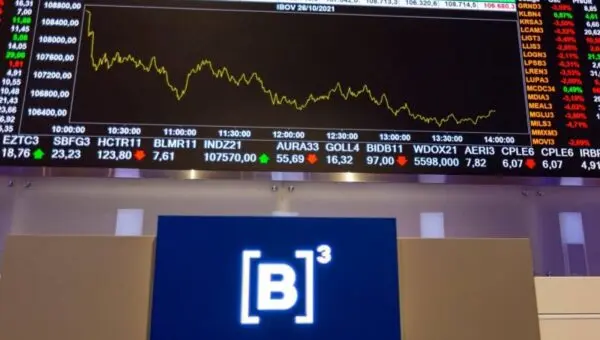 Surging oil and political race drag Brazilian equities lower
 Tether breaks at 3,500 volts in NASA orbital experiment
 Robot submarine finds medieval wooden boat in Lake MjøsaRising sea levels threaten Australian coastal properties with billions in damages by 2100
More news on Mix Vale
- 1PlayStation Store cuts Assassin’s Creed Shadows to $54.99
- 2Torajan families keep deceased relatives at home for years
- 3Royal Family: Prince Harry paternity faces renewed scrutiny after royal letter
- 4Millions gain early access to GTA 6 under digital release plans
- 5Halloween: The Game officially launches on PlayStation 5 and PC
- 6Here is the schedule for the 2026 Spanish Grand Prix at the new Madring circuit
- 7Webb telescope captures 70 infant stars in Carina Nebula
- 8Jellyfish protein powers miniature solar cells in Sweden
- 9Hell Is Us prepares expansion with ten new enemies on PS Plus
- 10Sony reveals Mycopunk for PlayStation Plus Extra in October 2026