
NASA and IBM deploy open lunar AI model for space exploration

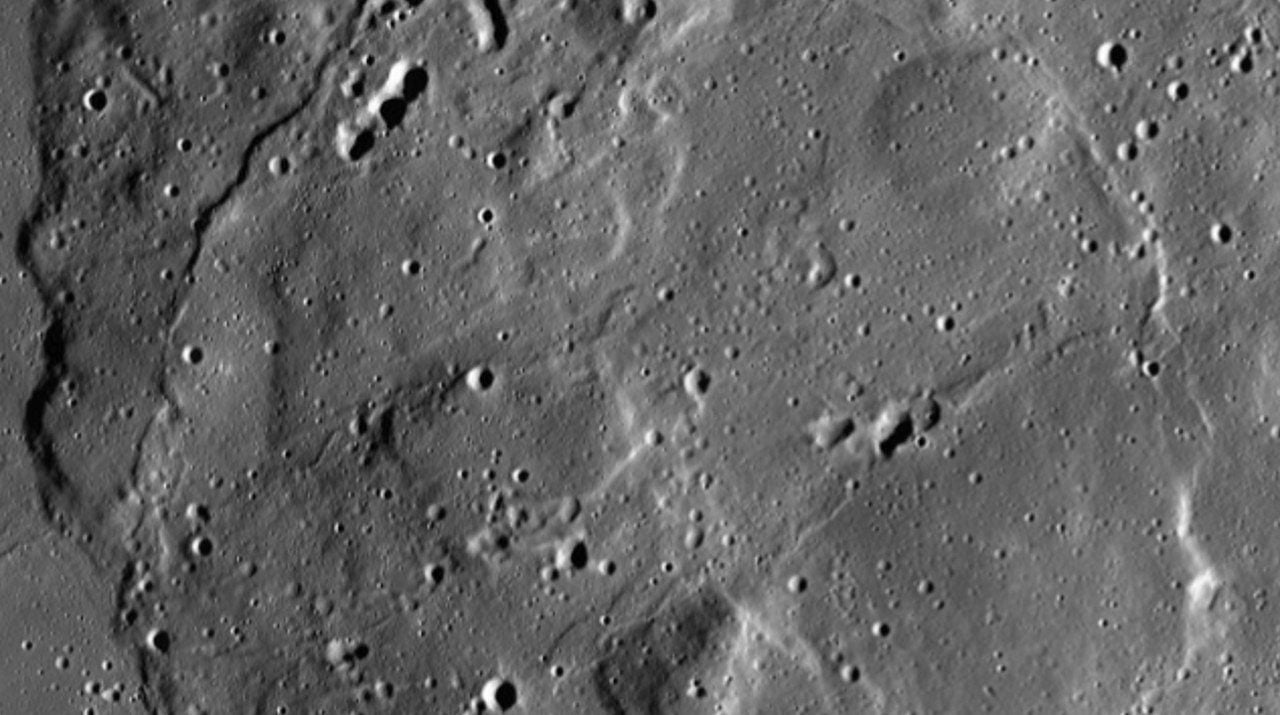
IBM and NASA released the open-source NASA-IBM Lunar Foundation Model on September 10, 2026, in Yorktown Heights to consolidate decades of lunar observations into an analytical framework capable of discovering hidden patterns across disparate space instruments. The system exposes correlations across wide sensor networks.
The architecture outperforms conventional detection techniques by up to 23% when locating surface craters, prospective ice deposits and ancient volcanic structures across the Moon.
Scientists trained the model using an extensive repository of lunar observations curated by teams from IBM and NASA. The code represents one of the initial public foundation models designed for planetary science. These computational tools aim to support the establishment of a sustained human presence on the lunar surface.
Continuous sensor observations over several decades produced petabytes of lunar measurements, yet researchers previously depended on manual image inspection or specialized, low-resolution algorithms that demanded intensive computational resources without delivering sufficient precision. The new framework connects disparate data formats and varied image resolutions to speed up geographical feature analysis.
Investigators can apply the system to examine several distinct lunar phenomena across the surface.
Permanently dark polar craters may hide subterranean ice deposits, which represent essential reserves of water and oxygen to sustain permanent human installations and supply propellant for eventual flights toward Mars. The system merges multimodal observations across varying resolutions to pinpoint these hidden reservoirs. A technical study authored by IBM and NASA confirmed that the model cut root mean square error by up to 22% when identifying high-potential ice fields compared to the SwinV2-B architecture.
Researchers examine structures known as Irregular Mare Patches to trace the thermal evolution and volcanic activity of the Moon, which aids operational planning on the surface. When tested against imperfect training labels, the model mapped the boundaries of these volcanic areas 3% more effectively than SwinV2-B while reducing fine-tuning expenses.
Crater evaluations clarify the geologic timeline of lunar terrain and assist NASA flight planners in selecting safe landing zones away from steep slopes and boulder fields. The software identifies, classifies and contextualizes these structures down to meter-scale precision. At context-scale resolutions near 100 meters, the model exceeded SwinV2-B performance by nearly 19% while utilizing half the training data. Mapping prevents hazardous spacecraft landings.
“NASA has spent decades building an extraordinary scientific record of the Moon, but collecting data is only part of the job,” said Kevin Murphy, chief science data officer and acting chief data and AI officer at NASA Headquarters in Washington. “We also have to make data easier for scientists to explore and use. The NASA-IBM Lunar Foundation Model shows what’s possible when we bring AI to NASA’s petabytes of scientific data. That’s a real opportunity we see with AI: turning large-scale data into new discoveries.”
“Uncovering the mysteries of the Moon requires an ability to learn from an extraordinary volume of scientific data,” said Juan Bernabe-Moreno, Director of IBM Research Europe, UK and Ireland.
Prior to this initiative, the scientific sector lacked a unified public dataset capable of standardizing multi-resolution sensor records for machine learning applications. Alongside the new model, researchers from IBM and NASA constructed an open-source dataset compiling more than 30 spatially aligned data layers gathered by nine separate scientific instruments across four distinct space exploration missions, incorporating measurements from the Lunar Reconnaissance Orbiter, the GRAIL mission and the Japanese Aerospace Exploration Agency SELENE Kaguya spacecraft. The compiled archive integrates tens of thousands of maps and images depicting geophysical surface traits.
The release expands the Prithvi collection of open foundation architectures, which already covers terrestrial weather, geospatial analysis and heliophysics. Researchers can adapt the common foundational code to distinct tasks across scientific domains without constructing independent algorithms for each mission inquiry.



