
Apple unveils iPhone 18 Pro to replace aging iPhone 15 Pro
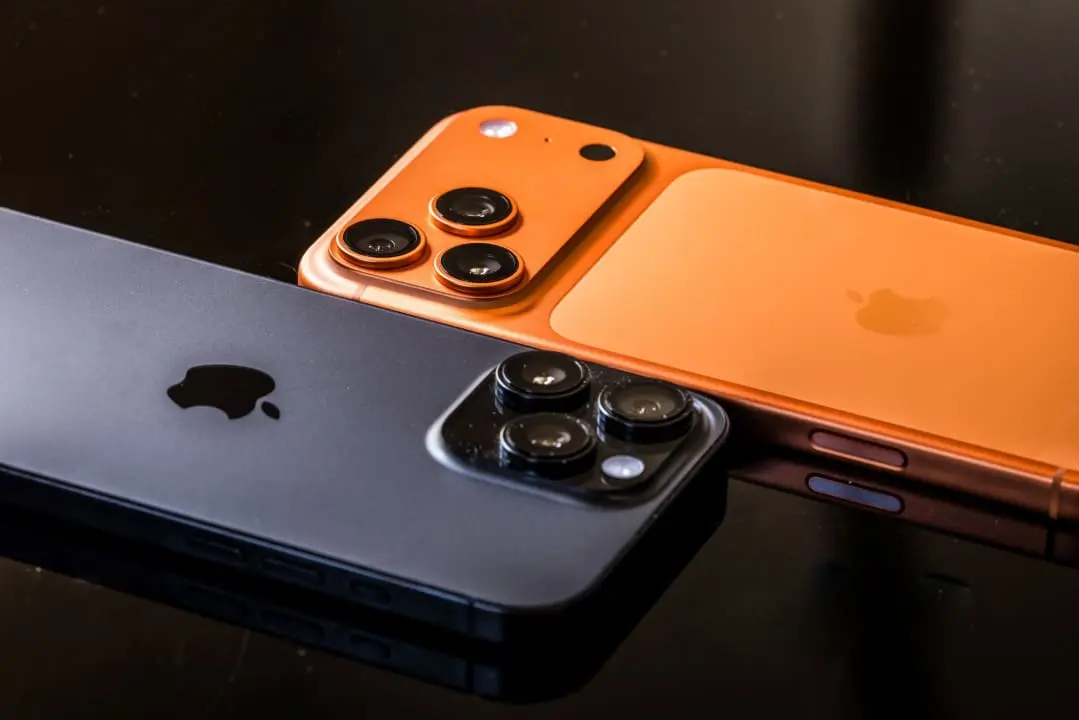
Apple launched the iPhone 18 Pro on September 11, 2026, targeting consumers who hold hardware purchased three years earlier. The release establishes a direct comparison point for owners of the iPhone 15 Pro evaluating a mobile replacement.
The company introduced the iPhone 15 Pro during its September product event in 2023 to anchor the premium tier.
Three annual product cycles altered internal mobile components substantially across the lineup. Consumers maintaining that older smartphone now examine whether newer capabilities warrant retiring their existing hardware.
The technical differences outline what changed between the iPhone 15 Pro and the iPhone 18 Pro.
Differences in physical dimensions and chassis materials between both generations
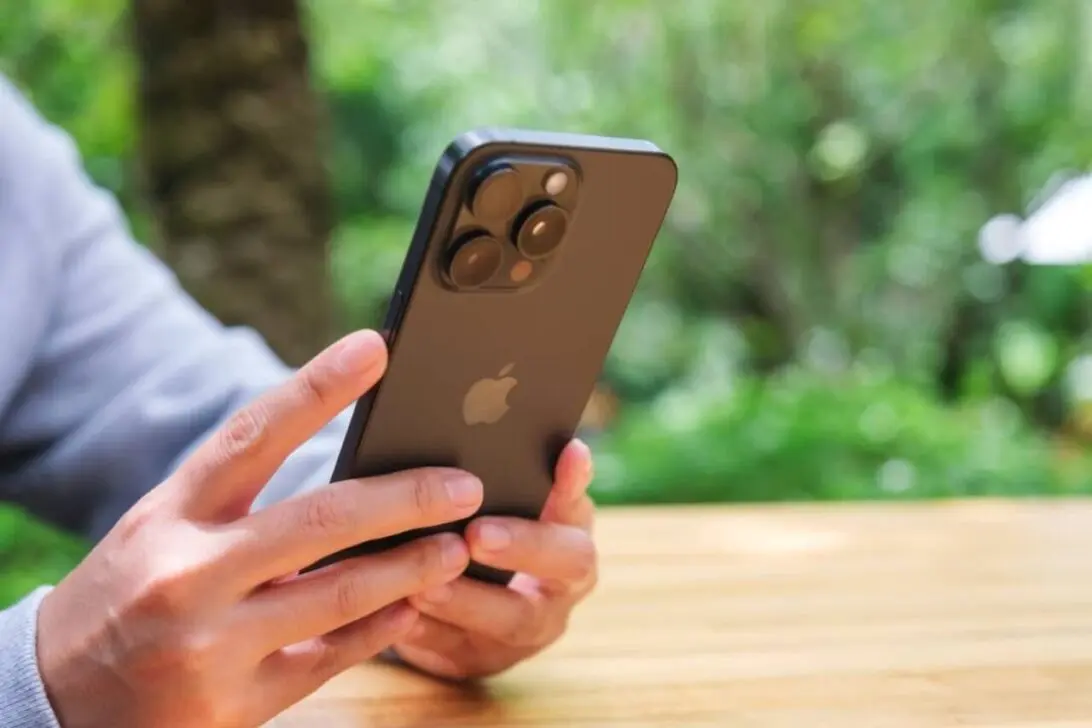
The iPhone 15 Pro introduced a titanium exterior structure to reduce mass while maintaining rigidity against drop damage. Its frame measured 5.77 inches in height alongside a width of 2.78 inches.
Apple shifted manufacturing for the iPhone 18 Pro to an aluminum unibody enclosure first seen on the iPhone 17 Pro, expanding the chassis footprint to 5.91 inches tall and 2.83 inches wide.
Thickness also increased across the generational gap. The older phone measured 8.25 millimeters deep, whereas the newer handset measures 8.75 millimeters.
Weight increased noticeably.
The iPhone 18 Pro weighs 7.44 ounces on official scales. That figure adds nearly an entire ounce compared to the titanium frame used on the iPhone 15 Pro.
External styling incorporates a wider camera plateau on the iPhone 18 Pro rear glass, replacing the corner camera square found on the iPhone 15 Pro.
Control inputs on the iPhone 15 Pro included volume toggles, a right-side power button, and a configurable Action button that replaced the legacy mute switch. That configuration remained standard for one generation.
The iPhone 18 Pro incorporates an additional Camera Control sensor on the lower perimeter to manage photography settings without opening on-screen menus.
Both generations maintain an IP68 ingress protection rating against moisture and particles. Each chassis survives submersion up to six meters deep for thirty minutes under standard testing.
Physical alterations across the three-year period show incremental structural changes rather than radical form factor overhauls.
Screen specifications and maximum brightness capabilities on the Super Retina panels
The iPhone 15 Pro features a 6.1-inch Super Retina XDR OLED panel running at 2,556 by 1,179 pixels. That resolution produces an image density of 460 pixels per inch.
Apple included ProMotion refresh rates up to 120Hz alongside an always-on feature, while panel luminance hit 1,000 nits in typical conditions, 1,600 nits with HDR files, and 2,000 nits outdoors.
More on this story: T-Mobile sets $5 monthly fee for one number on two iPhones
The pill-shaped Dynamic Island cutout sat centered at the top of the iPhone 15 Pro display to disguise sensor modules.
The iPhone 18 Pro houses a larger 6.3-inch Super Retina XDR screen with a resolution of 2,622 by 1,206 pixels. Image density remains identical at 460 pixels per inch.
Display features such as variable ProMotion, wide P3 color coverage, True Tone balancing, and a 2,000,000:1 contrast ratio continue on the iPhone 18 Pro panel.
Peak illumination out in bright sunlight reaches 3,000 nits on the iPhone 18 Pro, beating the earlier 2,000-nit threshold.
Engineers reduced the surface footprint of the Dynamic Island cutout on the iPhone 18 Pro. The revised cutout now presents up to three simultaneous Live Activities across the interface.
Camera hardware shifts from fixed optics to variable aperture systems
Photographic hardware marks the widest divide between the two mobile generations. Three consecutive iterations changed sensor configurations and processing algorithms.
The iPhone 15 Pro carried a 48-megapixel primary camera, a 12-megapixel ultra-wide sensor, and a 12-megapixel telephoto camera with 3x optical magnification at 77 millimeters.
Apple reserved its longer 5x tetraprism zoom lens strictly for the iPhone 15 Pro Max model during that release cycle.
The iPhone 18 Pro equips three 48-megapixel sensors across the back, labeling all rear focal lengths under Fusion branding.
Apple implemented an eight-times optical quality reach through sensor-cropping techniques on the iPhone 18 Pro alongside an expanded four-times native optical zoom, directly transforming the single three-times fixed magnification system that defined telephoto capture on the older iPhone 15 Pro hardware.
The primary lens on the iPhone 18 Pro integrates a physical variable aperture that toggles between f/1.48 and f/4.0 stops.
Mechanical aperture changes grant direct optical depth of field adjustments on the iPhone 18 Pro. The iPhone 15 Pro relied strictly on computational depth maps to simulate background blur.
Manual photography tools inside the iPhone 18 Pro interface let operators adjust shutter timing, white point values, and lens openings beside a live histogram.
The updated imaging system features smart subject tracking alongside Apple Reference Image metadata. This embedded cryptographic profile certifies that raw frames originated directly from camera sensors without synthetic modifications.
Video recording on both devices captures 4K Dolby Vision, but the iPhone 18 Pro reaches 120 frames per second compared to 60 frames on the iPhone 15 Pro.
Cinematic Mode reaches 60 frames per second at 4K resolution on the iPhone 18 Pro, doubling the 30-frame limit present on the iPhone 15 Pro.
Action Mode maintains 2.8K resolution at 60 frames per second on both phones, and Spatial Video remains capped at 1080p at 30 frames per second.
Slow-motion video on the older iPhone 15 Pro reached 1080p at 240 frames per second, whereas the newer handset delivers slow-motion capture in 4K Dolby Vision at 120 frames per second.
Time-lapse capture on the iPhone 18 Pro records in 4K Dolby Vision with hardware stabilization active.
The iPhone 15 Pro supported ProRes capture at 4K at 60 frames per second onto external drives, incorporating ACES workflows and flat Apple Log profiles.
The iPhone 18 Pro adds ProRes RAW recording, hardware Genlock synchronization, Dual Capture modes, and professional video calibration.
Microphone hardware changed from the stereo receiver on the iPhone 15 Pro to a studio array of four microphones on the iPhone 18 Pro. The newer array introduces targeted wind cancellation and Audio Mix software controls.
Selfie hardware jumped to an 18-megapixel Center Stage camera on the iPhone 18 Pro from the 12-megapixel TrueDepth sensor found on the iPhone 15 Pro.
The front-facing camera on the iPhone 18 Pro tracks subject movement across portrait and landscape orientations while adding 4K Dolby Vision time-lapse capture.
The multi-lens camera array constitutes the primary technical justification for replacing an iPhone 15 Pro.
Silicon processing power and graphics architecture gains with the A20 Pro
The iPhone 15 Pro debuted the A17 Pro system-on-chip manufactured on a 3-nanometer semiconductor process. Its silicon housed a six-core CPU and a six-core GPU with hardware-accelerated ray tracing.
That processor functions as the minimum hardware baseline to run Apple Intelligence features across iOS.
The iPhone 18 Pro runs the A20 Pro chip fabricated on a 2-nanometer manufacturing node. Its six-core central processor pairs two super cores with four efficiency cores to outpace the older layout.
Apple added internal vapor chamber cooling to the iPhone 18 Pro to maintain sustained thermal dissipation under load.
Graphics rendering on the iPhone 18 Pro relies on an updated seven-core GPU architecture.
Local artificial intelligence processing drives architectural changes throughout the newer chip layout.
The 16-core Neural Engine in the iPhone 15 Pro handled machine learning workloads, while the iPhone 18 Pro doubles that allocation with a 32-core dual-engine array.
Engineers integrated dedicated Neural Accelerators inside each individual GPU core on the A20 Pro.
Preliminary benchmark entries for the iPhone 18 Pro began surfacing in early Geekbench software listings. Those scores require verification as newer testing suites finalize.
Apple released performance claims comparing the two processor generations.
Technical documentation states the A20 Pro central processor runs 50 percent faster than the A17 Pro in the iPhone 15 Pro. The measurement groups single-core and multi-core executions together.
Company documentation also claims the GPU delivers up to 40 percent higher performance than the A19 Pro generation.
The A19 Pro GPU registered 42,444 points on Geekbench 7 Metal benchmarks, projecting the iPhone 18 Pro near 59,400 points.
The iPhone 15 Pro recorded a Metal test score of 22,967 points on that benchmark index.
That numerical spread indicates the iPhone 18 Pro generates more than 2.5 times the graphic output of the iPhone 15 Pro. Independent laboratory evaluations will verify those figures as retail units circulate.
Wireless standard updates and cellular modem changes across three years
Networking protocols modernized over the three-year window separating both releases.
The iPhone 15 Pro integrated Wi-Fi 6E connectivity, Bluetooth 5.3 standards, a second-generation Ultra Wideband chip, and Thread home automation radios.
The iPhone 18 Pro advances to Wi-Fi 7 and Bluetooth 6 protocols powered through a proprietary Apple N1 wireless controller.
A C2 baseband modem in the iPhone 18 Pro manages cellular connections across sub-6GHz and mmWave 5G frequencies.
Near-field communication hardware remains operational on both phones to authorize Apple Pay transactions at payment terminals.
The iPhone 15 Pro introduced USB-C hardware operating at USB 3 data transfer rates up to 10Gb/s. The iPhone 18 Pro keeps those identical 10Gb/s wired transmission limits.
Safety tools match across both phones through built-in Crash Detection and satellite protocols for Emergency SOS messaging.
Battery endurance metrics and wired charging speeds on both handsets
The iPhone 15 Pro supplied up to 23 hours of offline video viewing and 20 hours when streaming media over networks.
The iPhone 18 Pro increases those operational windows to 36 hours of local video and 33 hours of streaming playback. That battery expansion provides 13 additional hours of operation over the 2023 baseline.
Wired charging on the iPhone 18 Pro replenishes 50 percent of battery reserves in 15 minutes via a 60W power adapter, whereas the iPhone 15 Pro required 30 minutes using a 20W charger.
Wireless inductive charging on the iPhone 18 Pro accepts 25W through MagSafe and Qi2 pads, outperforming the 15W ceiling on the iPhone 15 Pro.
Storage configurations, launch pricing and finish selections offered by Apple
The iPhone 15 Pro launched at $999 for the 128GB baseline option in 2023, offering capacities up to 1TB.
Apple manufactured that 2023 model in Black Titanium, White Titanium, Blue Titanium, and Natural Titanium finishes.
The iPhone 18 Pro starts at $1,199 with a minimum capacity of 256GB, scaling through storage tiers up to a new 2TB option.
Full coverage: Latest News (EN)
External color offerings for the iPhone 18 Pro consist of Black, Silver, Glacier, and Burgundy.
Hardware factors determining the value of upgrading from the older phone
Owners of the iPhone 15 Pro encounter measurable technical changes across the iPhone 18 Pro hardware. Three generation cycles introduced substantial divergence across primary components.
Rear optical systems show the clearest contrast through triple 48-megapixel sensors, mechanical aperture adjustments, and extended telephoto crops.
Thirteen additional hours of video playback alter daily operating habits without requiring mid-day recharges.
Display output hits 3,000 nits outdoors while the Dynamic Island cutout occupies less screen real estate.
Processor enhancements double neural processing throughput for on-device machine learning models across iOS.
The combined processing gains speed up standard non-AI software routines alongside intensive visual rendering.
Consumers who routinely cycle hardware every three years reach a designated upgrade point with this model. Camera changes alone represent a distinct hardware evolution.
Apple maintains an incremental development path across its annual handset hardware portfolio.
The accumulated modifications across battery life, processing speed, and photographic controls establish the technical case for replacing an iPhone 15 Pro.
Preorder schedule and secondary market pricing for the two smartphones
Customer preorders for the iPhone 18 Pro open on September 12, 2026, alongside wireless carrier trade-in programs.
Refurbished units of the older iPhone 15 Pro trade between $500 and $600 across secondary electronics marketplaces.
More news in Latest News (EN)
See more →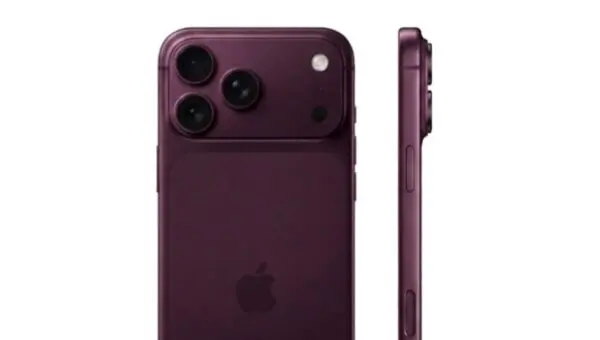 T-Mobile sets $5 monthly fee for one number on two iPhones
 Moacir Rosa defends 20-hour fasting method for weight loss
 Daniel Magnoni warns shoyu packs 900 mg of sodium in one spoon
 Inca projects 17,000 new cervical cancer cases across Brazil
 Bromidrosis signals diabetes and renal failure in patients
 7 daily habits slow aging and cut Alzheimer risk in adults
 USP links 500 ml of daily orange juice to lower blood sugar
 Lucas Jaques de Oliveira lists 6 illnesses linked to pigeonsRyan Reynolds’ ‘brutal’ 1980s view sparks debate with Dr. Drew Pinsky on era’s true natureT-Mobile unleashes unprecedented iPhone 18 Pro and Pro Max deals for new and loyal customers starting September 12thEl-Sayed advocates for youth gender-affirming care amid scrutiny of his medical licensing
 SBEM fixes daily water intake at 35 ml per kilogram in 2026
More news on Mix Vale
- 1Katie Holmes dates contemporary artist Jason Bard Yarmosky
- 2Brazil records 87,518 stroke deaths as doctors urge fast care
- 3Covitel records a 90% surge in obesity among youth in Brazil
- 4Max Planck Institute tracks dopamine shifts from fatty food in March
- 5T-Mobile charges $5 monthly fee for Apple iPhone Handoff
- 6Instagram blocks application alerts for 12 hours in quiet mode
- 7Apple iPhone exposes 7 signs of clandestine WhatsApp usage
- 8WhatsApp users remove mobile spyware via factory reset in 2026
- 9Hong Kong hits US$ 3.21 a liter to top fuel prices in 2026
- 10Gary Myers dies at 76 after scoring 38 Bowman Gray victories