

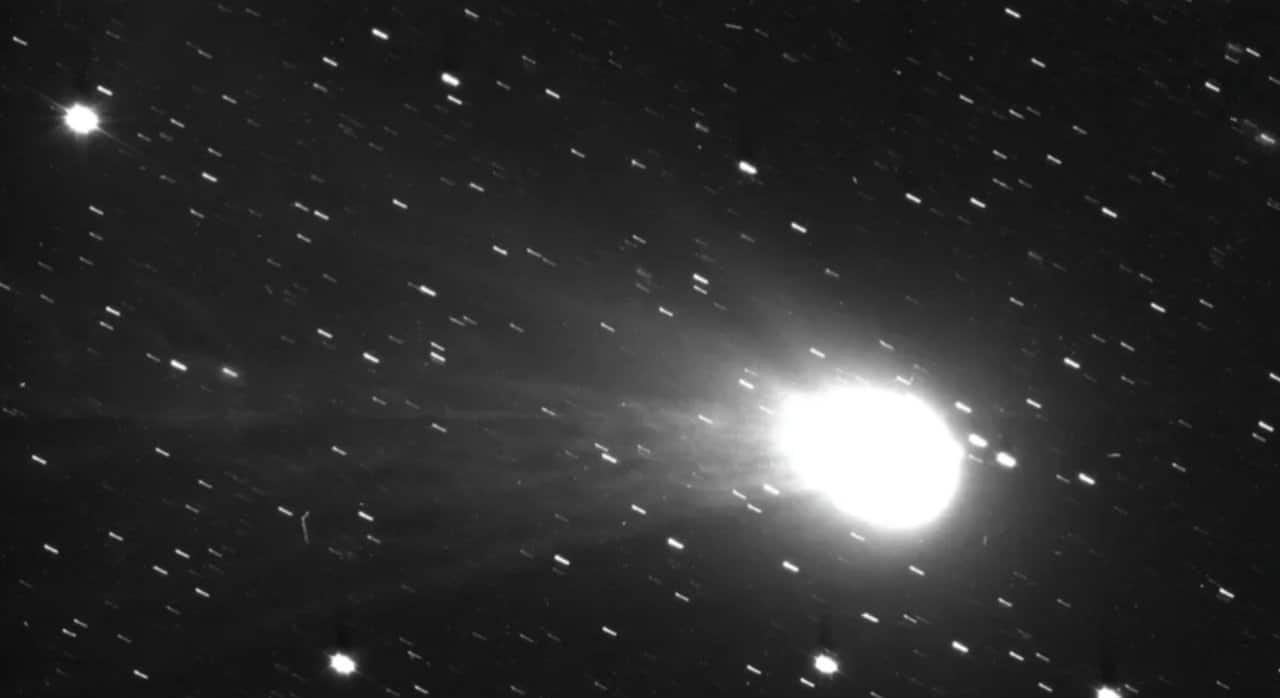
Astronomers examined new trajectory coordinates for interstellar comet 3I/ATLAS on September 11, 2026, to locate its original launch point beyond the Solar System. Ground teams concentrated their directional measurements on the approach vector of the celestial body.
Deep space velocity marks unusual flight path
Telescopes captured an unusual displacement speed as 3I/ATLAS traveled across the planetary boundary. Gravitational forces from neighboring worlds continually alter the transit heading of the fast object. The celestial visitor moves rapidly.
Distinct physical traits identify interstellar traveler
The interstellar designation places 3I/ATLAS into a rare category of foreign visitors crossing interplanetary space. Its physical core preserves primal chemical compounds from the native stellar system that ejected the mass.
Telemetry logs confirmed during space tracking
- Hyperbolic trajectory verified for interstellar comet 3I/ATLAS
- Orbital coordinates cataloged on September 11, 2026
- Native cosmic composition documented during approach
Ground stations mobilize tracking systems for hyperbolic bolides that penetrate the inner planetary orbits at extreme velocities incompatible with the gravitational pull of the Sun while analyzing each incoming telemetry record along the hyperbolic passage corridor. Terrestrial observatories monitor the incoming coordinates. Astronomers direct sensors toward the inbound target.
Optical detection limits future observations
Optical telescopes continue recording the angular coordinates of interstellar object 3I/ATLAS across deep space. Tracking will cease once the body moves beyond the maximum detection threshold of terrestrial sensors.