Apple Watch Series 12 audio tools spark global privacy debate
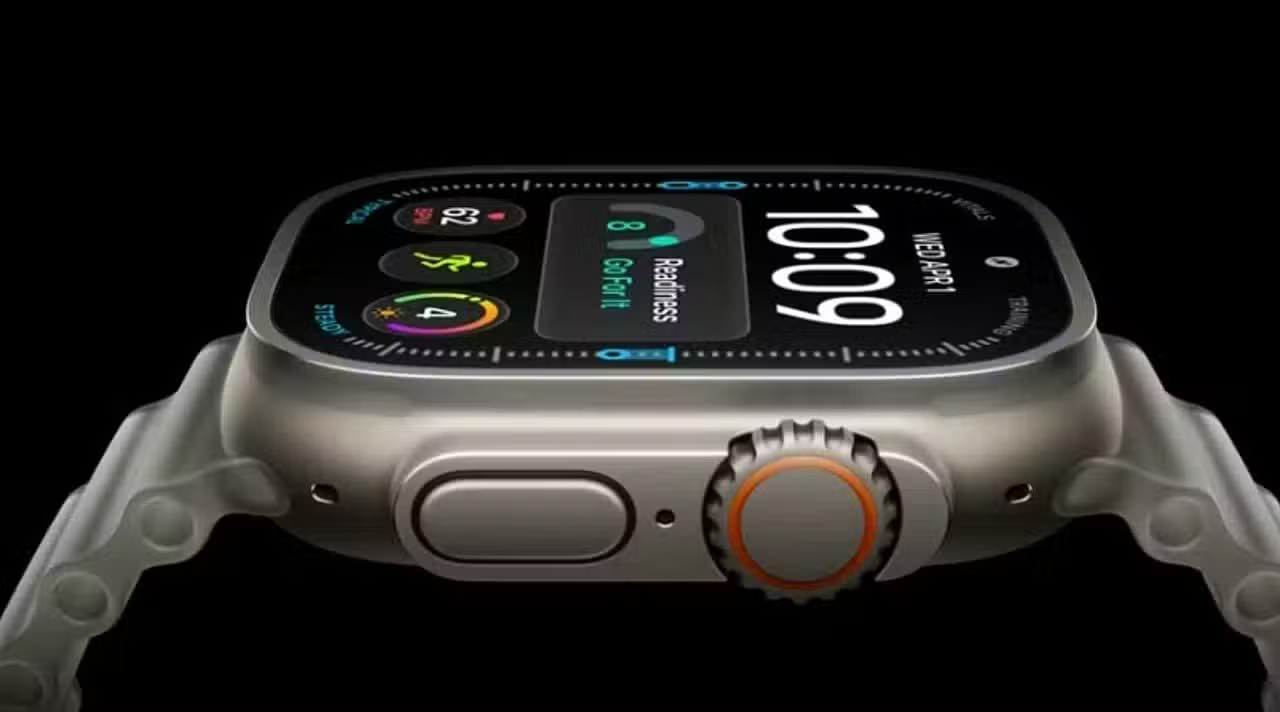
Apple introduced the Apple Watch Series 12 and the Apple Watch Ultra 4 to international buyers on September 20, 2026, incorporating an Audio Intelligence mechanism that continuously registers background noise and personal interactions directly through the built-in microphone. Hardware sensors capture surrounding sounds to transcribe spoken dialogues and recognize ambient songs without manual prompts. Technical specialists quickly raised questions regarding long-term personal data retention on consumer devices.
Kaspersky lead security researcher Fabio Marenghi examined the operational footprint of this passive monitoring alongside ESET Latinoamérica security specialist Mario Micucci. Both evaluators assessed how ambient audio processing influences daily digital safety routines.
Sound detection tools expand tasks on updated Apple hardware
Engineers integrated an updated S11 processor into the Apple Watch Series 12 and Apple Watch Ultra 4 chassis. That specialized silicon manages core functions including Sound Recognition, Shazam track identification, Live Rewind, and Siri Recap. Computational tasks run locally across dedicated hardware partitions.
Sound Recognition warns individuals about critical environmental events, detecting smoke detectors, car horns, door chimes, and infant cries for users with hearing impairments. Meanwhile, the integrated Shazam utility catalogs songs independently without requiring an active connection to an iPhone.
Consumer discussions focus heavily on the Live Rewind and Siri Recap utilities. Live Rewind pulls past dialogue from the preceding 15 seconds whenever a wearer inputs a manual screen prompt. This immediate buffer refreshes continuously throughout the day.
The Siri Recap service analyzes acoustic input using proprietary machine learning models developed by Apple. The platform organizes daily discussions into concise thematic notes to help owners remember routine appointments and verbal commitments.
Automated summaries organize conversations and support custom schedules
Operating in tandem with the primary virtual assistant, Siri Recap generates recurring briefings derived from voices intercepted by the microphone array. Algorithms emphasize compact summaries rather than full verbatim transcriptions of entire social encounters. The system filters ambient background banter to highlight scheduled events.
Device owners configure functional recording intervals through system settings and can suspend monitoring entirely overnight. Users toggle sensor permissions directly on the display.
On-device encryption and offline hardware protect stored audio records
Apple declared that comprehensive cryptography, internal hardware isolation, and vocal anonymization safeguard private data streams. Corporate spokespersons confirmed that raw acoustic recordings never reach external remote servers. The company maintains that encryption keys stay bound to local hardware components.
The S11 silicon isolates machine learning tasks inside a secure enclave separated from general watchOS operating routines. Temporary audio registers undergo permanent deletion once the transcription engine outputs written summaries.
Live Rewind sounds an audible chime and flashes a distinct graphic icon across the screen whenever active audio capture begins. That warning broadcasts even in silent mode to alert bystanders nearby. This physical feedback aims to deter covert surveillance.
Cybersecurity evaluators express persistent caution regarding uninterrupted passive listening architectures. Independent testing teams continue to inspect device memory allocation during active listening sessions.

Fabio Marenghi stated that the manufacturer must strictly restrict execution boundaries to internal silicon to prevent cloud transmission vulnerabilities. The Kaspersky researcher stressed that consumers must secure connected Apple accounts against unauthorized third-party logins. Neglecting secondary credential safeguards undermines hardware defenses.
Spyware threats and voice impersonation schemes raise security warnings
Continuous room recording creates vectors for sophisticated spyware campaigns seeking direct access to verbal exchanges. Local caches of generated briefings also present exposure risks if an attacker gains physical custody of an unlocked watch.
Apple settled an earlier voice assistant class-action lawsuit in the United States for $95 million in 2025 following 2019 disclosures about contractors grading Siri audio files. The company denied any wrongdoing. Regulatory authorities subsequently tightened audio inspection mandates worldwide.
Security engineers now examine whether current software boundaries consistently repel extraction attempts targeting the S11 processor.
Mario Micucci noted that written synopsis logs expose highly personal facts whenever an unauthorized individual accesses an unlocked watch screen. The ESET analyst remarked that exporting synopsis records into auxiliary applications creates additional points of exploitation across mobile ecosystems.
Leaked transcripts enable malicious operators to target victims through extortion attempts or comprehensive pattern tracking. Digital syndicates exploit structured routine summaries to pinpoint domestic locations and business travel windows. Automated parsing utilities help criminals process stolen behavioral profiles rapidly.
Fabio Marenghi noted that bad actors harvest captured voice snippets to assemble synthetic voice clones for monetary fraud. Scammers target close family members with deceitful banking transfers using automated phone calls and deceptive WhatsApp audio messages.
Continuous background processing captures statements from non-users standing near the hardware. In Brazil, the Lei Geral de Proteção de Dados requires explicit legal justification before organizations harvest data from third parties without prior notice. Regulatory authorities enforce institutional compliance regardless of consumer hardware defaults.
Mario Micucci explained that LGPD protections apply to any individual recognizable within captured audio transcripts. The analyst concluded that permission granted by the watch purchaser does not authorize the extraction of bystander conversations.
Competing gadgets and third-party software record environmental audio
Multiple consumer brands now market pocket recording equipment powered by generative language frameworks. Wearable microphones increasingly appear across consumer electronics categories. Hardware manufacturers position these recorders as executive productivity assistants.
The Notepin device developed by Plaud captures spoken dialogue and converts acoustic input into organized text summaries via a miniature pendant form factor. Users clip the accessory onto clothing to record public interactions discreetly.
Digital retail platforms like Amazon.com distribute varied spy pens outfitted with continuous sound sensors. Independent merchants promote these tools directly to corporate professionals. Buyers often deploy the devices during unannounced meetings.
Smartphone software packages deliver similar capabilities on standard mobile phones. The Wave application captures phone interactions and automatically generates summarized meeting overviews using artificial intelligence models.

