
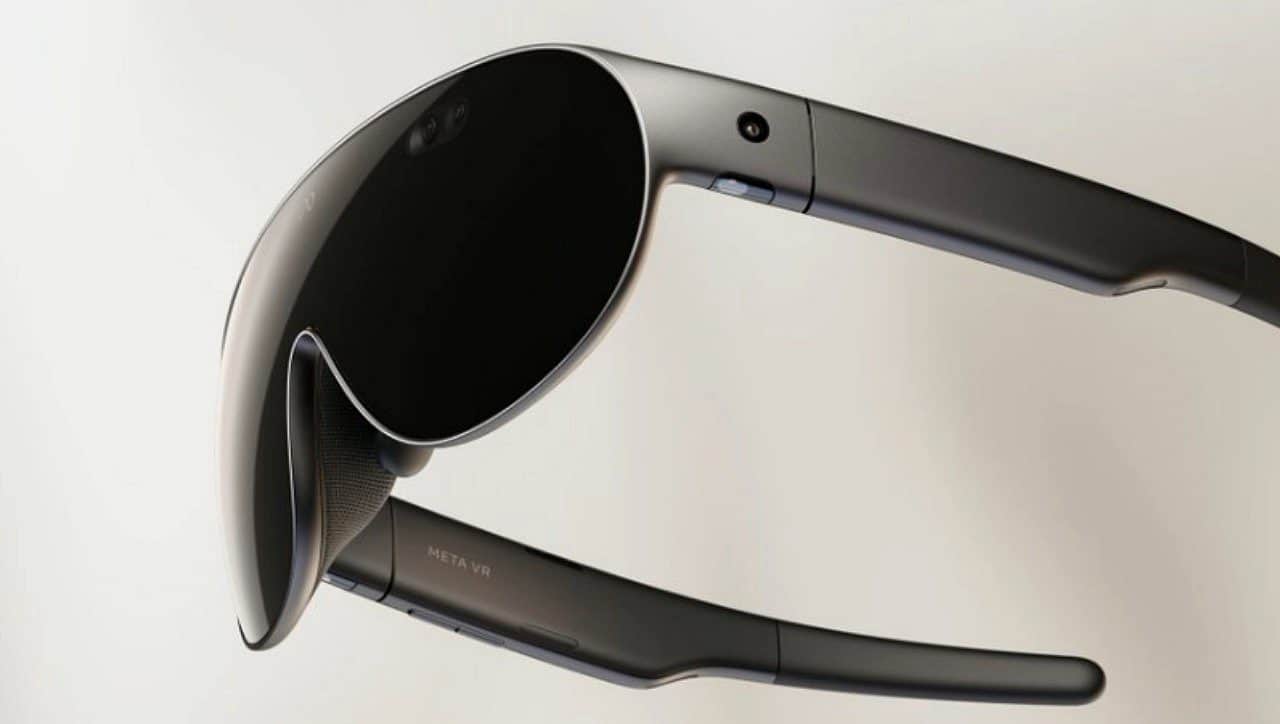
Meta Platforms chief executive officer Mark Zuckerberg unveiled the new Meta VR Glasses with a retail price of $1,299 during the opening keynote of the Meta Connect 2026 conference in Menlo Park, California, on Wednesday, September 23. The corporate presentation marked a transition toward lightweight head-mounted displays designed for spatial computing and immersive virtual reality environments. Alongside the flagship eyewear, the executive introduced the Muse Charm, an independent pocket-sized hardware accessory built around a digital keychain form factor to facilitate immediate vocal interaction with the company’s proprietary artificial intelligence assistant. Both hardware announcements represent the central focus of the annual technical assembly hosted at corporate headquarters.
Presented as an unannounced reveal toward the conclusion of the executive address, the Muse Charm handheld unit is scheduled to begin consumer deliveries on December 1, 2026, to capture fourth-quarter holiday spending demand. “We put a lot of technology into this little guy, so if you’re not wearing glasses, this is going to be by far the fastest way to talk to your Muse and show it what’s going on around you,” Zuckerberg stated on stage.
External computing module brings frame weight down to 100 grams
The newly designed Meta VR Glasses depart from traditional closed-visor designs by reducing facial load to approximately 100 grams. Engineers achieved this reduction by offloading the heaviest hardware components to an external processing puck connected through an optical tether, which integrates a three-hour battery pack, forty-five-watt fast charging support, and one hundred twenty-eight gigabytes of base onboard storage. This physical redistribution allows users to wear the device through extended productivity sessions without experiencing the standard pressure associated with front-heavy virtual reality hardware.
This aggressive hardware cadence reflects corporate determination to accelerate consumer artificial intelligence deployment despite broader tech sector deliberations regarding market timing. Industry executives continue to track capital expenditure across Silicon Valley as hardware platforms become the primary gateway for personal assistant ecosystems.
Inside the external puck, the system runs on the Qualcomm Snapdragon Reality Elite processing platform, which powers advanced optical sensors dedicated to real-time hand tracking and eye movement detection. Dual 5K micro-OLED Infinite Display panels deliver visual output alongside Dolby Vision high dynamic range certification and integrated Dolby Atmos spatial audio components. The interface removes reliance on physical handheld controllers for navigation, basic application interactions, and everyday operating system functions. “We built a new type of virtual reality device that delivers that same magical sense of presence and immersion, high-res displays, and seeing the world around you in a form factor that is a pair of glasses for the first time,” Zuckerberg explained.
Corporate leadership reiterated its long-term commitment to direct significant capital reserves toward specialized personal artificial intelligence agents. These digital assistants require low-latency hardware entry points to deliver real-time environmental processing and continuous user assistance.
Standalone pocket accessory runs digital assistant without smartphone tethering
Featuring a dedicated touch-sensitive display surface and an integrated biometric fingerprint reader, the Muse Charm functions independently to process incoming audio directives. The miniature gadget aims to help individuals perform digital queries and automated tasks without pulling out a smartphone, disabling lock screens, or launching external software applications. “We packed the entire Muse experience, including the full real-time voice stack and avatars, into something that fits on a keychain,” the Meta chief executive told attendees.
Hardware development continues against financial headwinds within the Meta Reality Labs division, where operational losses connected to smart wearable hardware mounted to $4.6 billion. The substantial expenditure underscores the capital intensity required to develop specialized optical microdisplays and customized silicon.
Core hardware specifications announced during annual developer conference
- Meta VR Glasses: retail price established at $1,299 with commercial availability slated for the spring of 2027 across the northern hemisphere.
- Headset technical specifications: 100-gram chassis paired with an external puck running the Qualcomm Snapdragon Reality Elite processor, 128 GB storage capacity, and three hours of continuous battery runtime.
- Muse Charm companion device: wearable biometric keychain unit with retail shipments scheduled to initiate on December 1, 2026.
- Launch presentation: official debut held during the Meta Connect 2026 convention in Menlo Park, California, commencing at 20:00 Brasília time.
Premium design philosophy shifts focus away from entry-level hardware
The newly revealed pricing and structural framework signal an intentional shift away from budget-tier consumer hardware releases. Hardware priorities changed. In 2024, Meta launched the Quest 3S headset at $299, keeping heavy lithium-ion batteries and thermal dissipation architecture directly inside the primary head unit. Internally developed under the codename Project Phoenix, the new $1,299 model repositions the division toward ultra-slim computing eyewear by migrating heat generation and physical bulk to external auxiliary modules.
The ambitious product reveals arrive as Zuckerberg navigates public attention concerning maritime operations involving his personal luxury megayacht off the coast of Alaska. Corporate communication teams maintained focus strictly on technical benchmarks and developer integration schedules throughout the keynote.
Pending retail parameters and technical details remain unannounced
Meta Platforms withheld retail pricing details for the Muse Charm and declined to state whether the pocket hardware relies on cellular 5G networks for untethered outdoor mobile connectivity. Total unit weight, operational standby times, and exact internal battery cell capacity for the keychain device also remain unconfirmed. For the Meta VR Glasses, company spokespersons designated a launch window beginning March 20, 2027, without establishing a calendar date for global retail shelf availability.