
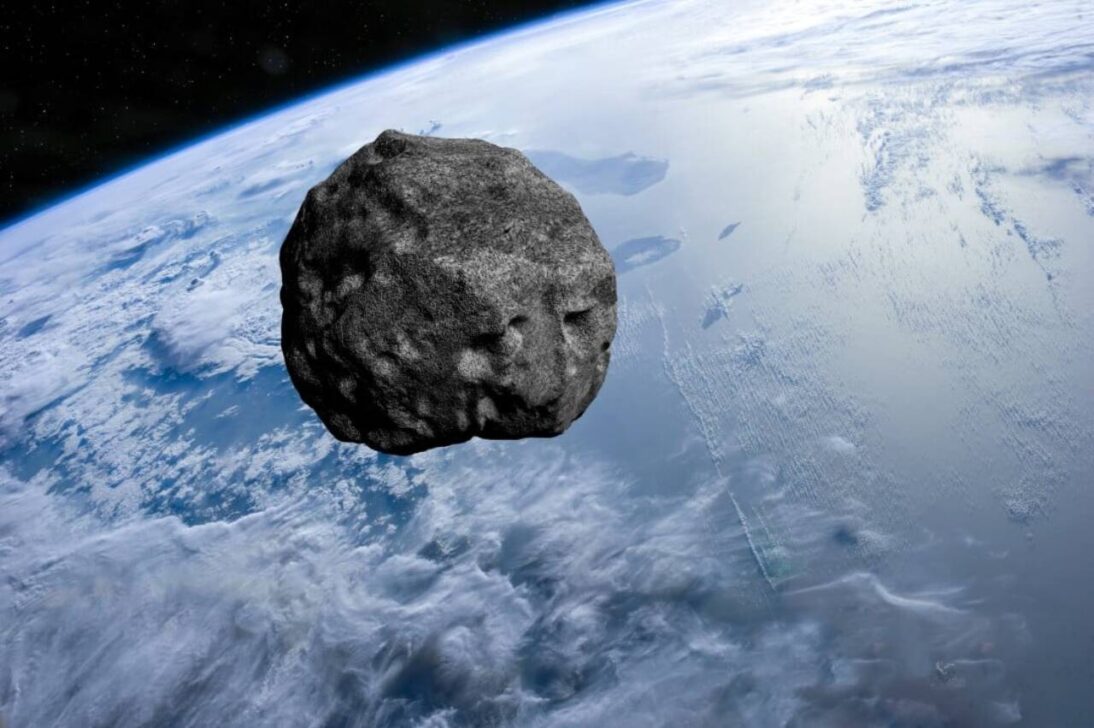
Laboratories at ETH Zurich confirmed that asteroid Bennu formed 4.5 billion years ago in a transition zone near the water-ice condensation line rather than at the frozen outer fringe of the solar system. The discovery, based on precise isotopic analyses of returned dust grains and published on Wednesday (23) in the journal Science Advances, demonstrates that the gravitational reach of a young Jupiter shaped where the primitive object assembled its chemical building blocks.
The findings upend the long-standing scientific hypothesis that Bennu originated in the distant outskirts where comets were born. “Bennu is a hybrid: the material does not clearly match either the inner or the outer Solar System,” said Maria Schönbächler, professor of Isotope Geochemistry at ETH Zurich and principal author of the study.
Homogeneous isotopes match Ryugu and rare CI meteorites

Geochemists detected uniform isotopic ratios of iron and titanium throughout the microscopic fragments of Bennu delivered to Switzerland. These signatures do not match the standard compositions of typical inner solar system meteorites, nor do they mirror isolated outer reservoirs. Instead, the chemical fingerprint exactly mirrors samples returned from asteroid Ryugu by the Japanese Space Agency and matches rare CI carbonaceous chondrites, an uncommon category of stony meteorites recovered on Earth that retain elemental proportions closest to the surface chemistry of the Sun.
The shared isotopic fingerprint suggests that Bennu, Ryugu, and the CI meteorite group originated from a common pool of ancestral solar dust. According to the team, which included researcher and co-author Mattias Ek, the early solar disk was not a static boundary between isolated zones. Streams of material moved across regional divides before coagulating into the first solid bodies of the developing system.
Jupiter acted as a cosmic filter for primordial dust
The computer model proposed in the study explains how early orbital physics allowed disparate materials to aggregate in a single location. Jupiter formed rapidly during the initial 1 million years following the birth of the Sun, growing into an immense gravitational barrier within the circumstellar disk. This colossal newborn planet physically blocked larger rocky pebbles from crossing between the outer and inner sections of the disk, but its presence still allowed lighter, microscopic dust particles to drift across the threshold.
In this dynamic environment, fine grains drifting inward from the cold periphery encountered dust blowing outward from the warm inner system. The collision of these two particle streams occurred directly at the water-ice condensation boundary, where temperatures were low enough for gaseous water vapor to freeze into solid crystals. This freshly condensed ice acted as an adhesive glue, catching the circulating fine grains and compacting them into stable aggregates that eventually produced the parent bodies of Bennu and Ryugu.
Key measurements of the mission and orbital parameters
The laboratory conclusions rely on high-precision analytical equipment applied to samples collected directly in space, supported by concrete mission metrics and orbital dimensions recorded across years of spaceflight.
- 0.5 gram — exact mass of Bennu dust allocated to and examined by the isotope laboratory at ETH Zurich
- 120 grams — total approximate weight of pristine surface regolith retrieved by the OSIRIS-REx capsule and landed on Earth
- 4.5 billion years — estimated age of the primordial materials and original parent bodies of Bennu, Ryugu, and CI meteorites
- 300,000 kilometers — average closest orbital approach distance between Bennu and Earth during passes occurring every six years
- 1.2 year — duration required for asteroid Bennu to complete a single orbital circuit around the Sun
- 2031 — target year for the return to Earth of robotic surface samples from Mars’ moon Phobos
Sample return missions clarify early planetary chemistry
NASA’s OSIRIS-REx spacecraft reached Bennu and gathered pebbles and dust from its surface in 2020. The collection capsule returned through the atmosphere and touched down on Saturday, 23 September 2023, in the desert of Utah, delivering roughly 120 grams of space rock uncorrupted by atmospheric interaction. That milestone followed the Japanese Hayabusa2 mission, which brought grains from asteroid Ryugu to Earth in 2020 and established the first direct link between near-Earth carbon-rich asteroids and CI chondrites.
Because Bennu never underwent the intense internal heating and melting that formed core and mantle layers on terrestrial planets, its volatile organics and clay minerals remain frozen in time. “Bennu may offer our best glimpse of the original mix of chemical elements from which the terrestrial planets were ultimately built,” Schönbächler said. This unadulterated state allows geochemists to observe how water and essential precursor compounds were transported to early rocky worlds like Earth.
Unresolved mechanisms in early planetary migration
Scientists have not yet determined with certainty whether Jupiter operated entirely on its own as the physical barrier filtering early dust grains, or if other protoplanetary embryos in the disk exerted a combined gravitational influence on the mixing zone. Further comparisons with untouched asteroid bodies are necessary to determine whether the isotopic signature shared by Bennu and Ryugu represents a rare localized phenomenon or the standard composition of widespread early matter.
Future exploration prepares to sample Martian moon Phobos
Researchers are preparing to evaluate additional extraterrestrial materials to verify the reach of Jupiter’s filtering mechanism. “We are now wondering whether other asteroids have the same isotopic signature as Bennu and Ryugu,” said Schönbächler.
The next opportunity to test ancient dust from another sector of the solar system will occur with the Japanese Aerospace Exploration Agency’s Martian Moons eXploration mission, known as MMX. The spacecraft has an estimated launch scheduled for Saturday, 31 October 2026, targeting the Martian moon Phobos to extract surface material and fly it back to terrestrial laboratories in 2031.