Total solar eclipse on August 2 2027 crosses ten countries with record six minutes of darkness
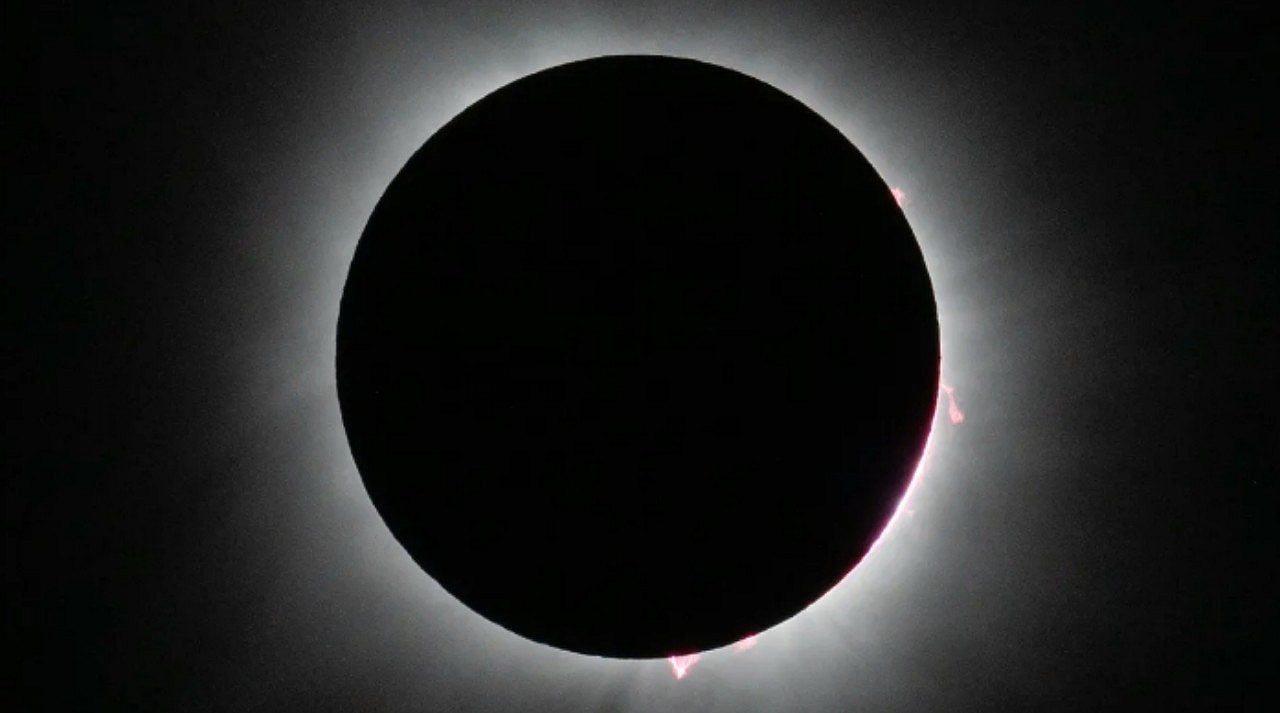
Astronomers are charting the path of the longest total solar eclipse of the 21st century, scheduled to unfold on August 2, 2027. During the event, the Moon will fully cover the solar disk for more than six minutes across parts of Europe, Africa, and the Middle East.
This orbital alignment will generate the longest continuous spell of daytime darkness documented worldwide between 1991 and 2114. At its climax, totality will exceed six minutes, creating a rare twilight effect across the populated areas directly underneath the shadow path.
Total darkness duration eclipses recent global benchmarks
The duration of the upcoming obscuration easily surpasses the totality periods recorded in modern observations. Scientists note that such extensive coverage provides an exceptional window to inspect the behavior of the solar corona without atmospheric glare.
North America hosted the most recent major event of comparable scale in April 2024. That passage produced a maximum phase of complete darkness lasting four minutes and twenty-eight seconds along its central trajectory.
The 2027 event will maintain populated corridors under total shadow for a span significantly longer than that North American benchmark. Ground teams will gain nearly two additional minutes of full coverage compared to that earlier occurrence.
Calculations indicate that the lunar shadow will mobilize international scientific teams across an unbroken corridor encompassing Mediterranean nations and African deserts. The shadow will sweep through these territories throughout the morning of August 2, 2027, drawing thousands of visiting researchers.
This extensive geographical path gives researchers an extended timeline to conduct precise experiments on the outer solar atmosphere. Observatories plan to capture detailed thermal and magnetic readings that are impossible to obtain under direct sunlight.
Read also: Total solar eclipse brings 6 minutes of darkness in 2027
Path of totality stretches across territories in ten countries
The core corridor of complete totality will cut directly through land controlled by ten sovereign states. The tracking line establishes viewing locations across several distinct geographical zones:
- Spain
- Morocco, Algeria, Tunisia, Libya, and Egypt
- Sudan and Somalia
- Saudi Arabia and Yemen
Residents and traveling spectators stationed inside this primary track will see the Sun vanish completely against the morning sky. The transition brings a noticeable drop in local temperatures alongside abrupt changes in environmental light.
Astronomical authorities have not confirmed any visibility of the total phase from South American vantage points, including Brazilian territory. The geographic alignment positions the umbral shadow entirely outside the Western Hemisphere.
National observatories across the region remain engaged with the upcoming alignment despite the lack of local totality. Brazilian researchers plan to monitor real-time feeds and collaborate with foreign stations to process data gathered during the transit.
Projected timetable for the alignment according to standard coordinates
Preliminary calculations place the official start of the eclipse sequence at 04:30 Brasília time. The opening partial stages will unfold over the Atlantic Ocean before the shadow makes landfall on continental landmasses.
Keep reading: Moon collision forms 222-meter McGetchin crater seen by Nasa
The peak period of maximum obscuration is slated to begin at 05:23 Brasília time as the lunar disk reaches full alignment. The final dispersion of the shadow across the surface will conclude at 08:49.
Historic alignment ranks among the longest in modern record keeping
The duration benchmark set during the 2027 alignment will remain unmatched globally until 2114. No other celestial passage in the intervening decades will cast daytime shadow across Earth for a longer consecutive interval.
The previous solar alignment to achieve a comparable duration occurred in 1991, when a massive shadow crossed terrestrial skies. That event provided scientists with baseline datasets that remain essential for tracking orbital cycles.
Archived measurements from that late-twentieth-century event continue to anchor the mathematical models projecting the geometry of the 2027 transit. Modern ephemeris calculations build directly upon those historical observations to pinpoint every second of the upcoming path.