
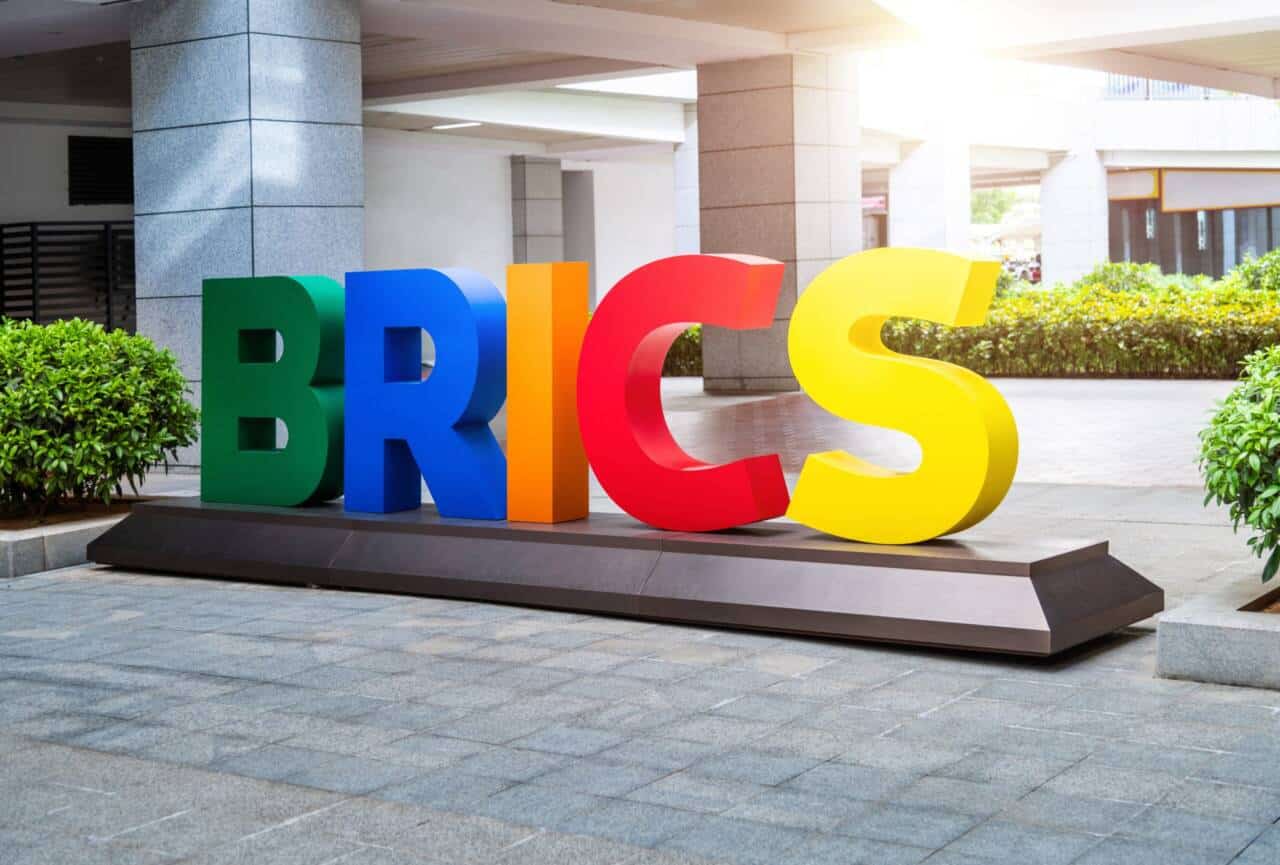
Ghana’s Cabinet approved a formal application to join the BRICS group of emerging economies, initiating a strategic shift to expand the nation’s international economic partnerships. The decision authorizes the government in Accra to take preliminary steps toward seeking full admission into the intergovernmental bloc, which originally brought together Brazil, Russia, India, China, and South Africa.
The announcement came from Ghanaian Minister of Foreign Affairs Samuel Okudzeto Ablakwa during a joint press briefing with visiting Indian External Affairs Minister Subrahmanyam Jaishankar on Tuesday, October 6, 2026. “The Cabinet of President John Dramani Mahama has decided that Ghana should put in a formal application to join BRICS,” Ablakwa stated, underscoring that the move aligns with the administration’s broader economic agenda.
Ghana pursues BRICS entry to anchor domestic economic reforms
The application to join the multilateral alliance forms a central pillar of President John Dramani Mahama’s economic strategy, known as the New Economy. The domestic program consists of seven policy pillars designed to transition the West African nation away from basic economic stabilization and into a long-term phase of industrialization, sustainable job creation, and domestic value addition.
Learn more: OPPO brings K14 Lite to India with 7000mAh battery for ₹15,999

Government officials emphasized that joining the bloc would open alternative financing pathways while supporting the national ambition for resource sovereignty. The administration aims to stop exporting unprocessed raw materials by building processing capacity at home, collaborating with international partners that share similar developmental trajectories across the Global South without abandoning existing commitments to Western institutions.
“We believe that joining India in BRICS will give us economic options, will diversify our base and our partnerships, and will also allow us to have more cooperation within the Global South framework, as far as South-South engagements are concerned,” Ablakwa said. He added that the country wants to avoid conditional restrictions imposed by traditional lenders while asserting its right to chart an autonomous development model.
Key figures behind Ghana’s diplomatic initiative in Accra
- Official announcement date: Tuesday, October 6, 2026, at 15:17 GMT in Accra, Ghana.
- Bilateral trade expansion: Volume between Ghana and India rose from 3 billion dollars in 2024 to approximately 7 billion dollars.
- Crisis support record: Afreximbank provided 700 million dollars in financial assistance during Ghana’s 2023-2024 economic crisis.
- Development framework: 7 core pillars approved under the New Economy initiative led by President John Dramani Mahama.
- Bilateral agreements signed: 2 memorandums of understanding sealed between Ghana and India covering agriculture alongside science and technology.
India evaluates Ghana’s bid amid growing bilateral trade
During the official talks in Accra, the Ghanaian government formally requested the diplomatic backing of New Delhi to facilitate its accession process into the BRICS alliance. Bilateral economic ties between the two countries have strengthened rapidly, with trade expanding from 3 billion dollars recorded in 2024 to an estimated 7 billion dollars, establishing India alongside China as one of the country’s most vital commercial partners.
Jaishankar responded positively to the announcement, confirming that India views Ghana’s geopolitical and developmental aspirations with goodwill, while noting that admissions require unanimity among existing members. “We have always been very sympathetic and supportive of Ghana’s aspirations and goals. Obviously, this is an issue of collective consideration. So we have to see how that goes forward,” Jaishankar said during the joint conference.
The stop in Accra is part of an official diplomatic tour by Jaishankar across three African nations, which includes scheduled engagements in Côte d’Ivoire and Ethiopia. In addition to high-level discussions regarding multilateral cooperation, delegations from both nations signed two memorandums of understanding aimed at expanding joint initiatives across agriculture, science, and technological innovation.
BRICS enlargement reshapes diplomatic ties across the Global South
Ghana’s bid follows a period of rapid growth for the BRICS bloc, which began as a four-nation forum comprising Brazil, Russia, India, and China before incorporating South Africa in 2010. The group undertook a historic expansion in 2024 by integrating Egypt, Ethiopia, Iran, the United Arab Emirates, and Saudi Arabia, later followed by Indonesia. In 2025, the organization added ten partner nations to its network, including Belarus, Cuba, Malaysia, and Vietnam.
Diplomatic leadership in Accra reiterated that engaging with the BRICS platform does not signal a retreat from historical alliances in North America or Europe. Ghana remains an active participant in Bretton Woods institutions, maintaining extensive financial relationships with multilateral agencies even as it pursues closer integration with emerging powers. “We want to have options. We are not going to walk away from our traditional partners. We value that relationship, but we must have new friends,” Ablakwa said.
See also: US legislative action jeopardizes India’s discounted Russian oil supply with tariff threats
The formal accession procedure requires a comprehensive evaluation and consensus among all full member states, necessitating consultations with fellow African members such as South Africa, Egypt, and Ethiopia. The exact date for the formal transmission of Ghana’s official letter of application to the coordinating authorities of BRICS has not yet been detailed by the foreign ministry.





