
United States military planners have drafted operational options for potential new strikes against Iran that include deploying the GBU-43/B Massive Ordnance Air Blast (MOAB), commonly referred to as the “mother of all bombs”. The addition of the largest non-nuclear munition in the American arsenal to military contingency plans comes as authorities in Tehran state they will continue combining armed operations with diplomatic talks to enforce their demands on Washington.
The strike packages prepared by American defense officials target energy infrastructure and facilities linked to the Iranian nuclear program. Among the potential targets is the Pickaxe Mountain underground complex near Natanz, a heavily fortified installation where the governments of the United States and Israel suspect Tehran stores nuclear components. The existence of these operational plans emerged on Thursday, October 15, 2026, through American officials familiar with the internal discussions, though the United States Department of Defense (the Pentagon) in Washington has not officially confirmed the specific targeting proposals.
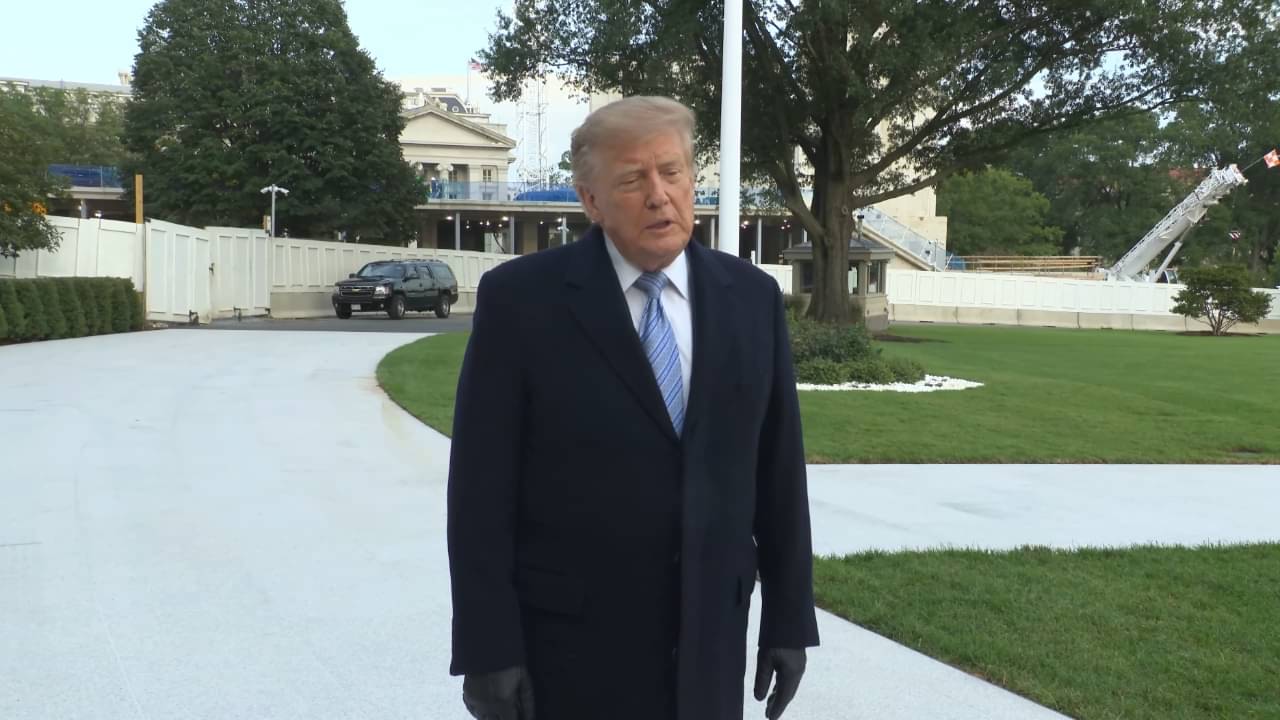
Despite the inclusion of the weapon in planning documents, officials within the United States government have expressed skepticism regarding the actual effectiveness of the GBU-43/B against deeply buried nuclear structures protected by thick layers of granite. Defense sources also noted the risk of civilian casualties resulting from the wide blast radius of the munition if deployed near populated areas. “The MOAB is a massive information-operation-type weapon that is great for clearing large areas, but not much more than that. It was definitely not designed as a deep-penetration warhead,” a source familiar with the United States military plans said.
According to the reported contingency frameworks, a renewed military offensive could take place either before or after the United States legislative midterm elections scheduled for November 3, 2026. Any potential strike would also be timed to occur prior to a planned drawdown and redeployment of American forces operating under the United States Central Command (CENTCOM), the military combatant command responsible for American operations across the Middle East.
Technical specifications of the GBU-43/B munition and US casualty figures
Developed by the United States Air Force in 2003 ahead of the Iraq war, the GPS-guided GBU-43/B relies on a delivery mechanism that differs from standard bunker-busting munitions. Because the bomb measures more than nine meters in length, it cannot fit inside the bomb bays or on the wing pylons of conventional fighter jets or strategic bombers. Instead, the United States Armed Forces deploy the munition from the cargo hold of MC-130 Hercules special operations transport aircraft, using an extraction parachute to pull the cradle-mounted weapon out the rear ramp before it glides to its designated coordinates.
- Evaluated munition: GBU-43/B Massive Ordnance Air Blast (MOAB), a conventional weapon programmed to detonate in mid-air above the ground to generate a lateral shockwave across broad surface targets.
- Total weight and payload: 21,600 pounds (approximately 9.7 metric tons, or 9,800 kilograms), containing an 18,000-pound H-6 explosive charge equivalent to 11 tons of TNT.
- Designated planning targets: Iranian oil and energy infrastructure alongside nuclear complexes, including the subterranean Pickaxe Mountain facility.
- United States military casualties: 21 service members killed and 865 wounded in the war with Iran, according to figures released by the United States Department of War.
Statements by Donald Trump in Arizona and Mohammad Bagher Ghalibaf in Tehran
President of the United States Donald Trump criticized the unauthorized disclosure of the military planning discussions during a speech in Bullhead City, Arizona, on Wednesday (14). Addressing supporters ahead of the November legislative vote, Trump condemned the officials who spoke about the potential Iran strike options. “In the old days, we used to shoot leakers,” Trump said at the rally. One week earlier, on Thursday (8), the president had stated that he would not resume military strikes against Iranian territory prior to the midterm elections, as the White House faces domestic pressure over rising energy costs for American consumers.
In the Iranian capital of Tehran, Speaker of the Parliament of Iran Mohammad Bagher Ghalibaf, who serves as the head of the country’s legislative branch, addressed the conflict in a televised broadcast on Wednesday (14). Ghalibaf stated that the Iranian government will maintain its dual strategy of fighting and negotiating simultaneously, combining military capability, diplomatic engagement, and regional influence to compel Washington to yield. “When we say that we both fight and negotiate, we do not mean an endless war or perpetual talks; on the contrary, we fight to drive the enemy to despair so that it accepts our demands or accepts defeat,” Ghalibaf said.
During the same broadcast, the parliamentary speaker accused the United States government of breaking previous commitments made during diplomatic discussions. “America must be penalized and forced to alter its conduct, so that it understands it has to accept the just demands of the Iranian nation,” Ghalibaf added. As political leaders exchange warnings, Iranian military forces have reinforced air defenses and physical fortifications around nuclear sites and energy installations in anticipation of a potential resumption of aerial bombardment.
Commercial shipping losses in the Strait of Hormuz and attacks in Saudi Arabia
The prolonged military confrontation continues to disrupt commercial maritime navigation through the Strait of Hormuz, a vital waterway through which roughly a fifth of global oil and gas supplies transit. On Wednesday (14), the price of international benchmark Brent crude oil reached approximately $105 per barrel, up from the $98 per barrel recorded at the end of September 2026. Since the war began in February 2026, at least 24 seafarers have died across 106 confirmed maritime security incidents in the region, and crude export volumes through the strait have only partially recovered to roughly 80% of pre-war levels following the collapse of a preliminary June ceasefire.
Follow: US president issues stark warning on Iran at global assembly, sparking diplomatic concern
In the latest wave of maritime strikes, the Singapore-flagged container ship GFS Pride, built in 2008 with a capacity of 2,824 TEUs (twenty-foot equivalent units, a standard maritime cargo measure corresponding to more than 2,500 containers), sank in the Strait of Hormuz on Wednesday (14). The vessel, operated by the United Arab Emirates-based company Global Feeder Shipping, had been struck approximately one nautical mile east of Ras Makhbuq, Oman, on Tuesday (13), sparking a severe onboard fire. All 21 crew members were evacuated without injuries, according to the Maritime and Port Authority of Singapore (MPA).
The exact cause of the GFS Pride sinking remains the subject of conflicting official accounts. The Islamic Revolutionary Guard Corps (IRGC) Navy of Iran stated that the container ship struck a naval mine after attempting to transit an unauthorized and dangerous route south of the strait, whereas international maritime security monitors reported the vessel was hit by unknown projectiles. On Wednesday (14), a second Singapore-flagged vessel from the same fleet, the 4,350-TEU GFS Giselle, sustained hull damage after being struck during its transit in the same area, but managed to travel under its own propulsion to a safe anchorage with all 22 crew members unharmed.
Two additional commercial vessels, the container ship Al Saadiyat and the tanker Alfonso, were also targeted in separate projectile incidents in the waterway on Tuesday (13), bringing the United Kingdom Maritime Trade Operations (UKMTO) tally to 24 warnings for the month of October. Beyond the maritime chokepoint, Houthi rebels in Yemen, an armed group backed by Iran, have escalated missile and drone launches against infrastructure inside Saudi Arabia. Recent strikes hit the headquarters of the state oil company Saudi Aramco in the eastern city of Dhahran and King Khalid International Airport in the capital, Riyadh. To halt regional hostilities, the government in Tehran is demanding the termination of the American naval blockade, the lifting of economic sanctions imposed by Washington, and the complete withdrawal of United States military personnel from the Middle East.
Previous combat deployment of the GBU-43/B in 2017 and origins of the 2026 war
Although the GBU-43/B features in current Pentagon planning documents, the munition has never been dropped on Iranian territory. The sole combat deployment of the weapon by United States forces took place in April 2017, during the first presidential term of Donald Trump. In that operation, American military aircraft dropped the bomb in Afghanistan against a network of tunnels and bunkers used by the extremist group Islamic State Khorasan Province (ISIS-K), killing more than 90 militants.
The current armed conflict involving the United States, Israel, and Iran began on February 28, 2026, when American and Israeli forces launched coordinated military strikes against Iranian targets under Operation Epic Fury. While major American combat operations were subsequently scaled back, diplomatic negotiations aimed at reaching a permanent settlement have remained deadlocked since mid-2026, leaving military strike options active on the White House agenda.
Timeline of the 2026 Middle East conflict and upcoming US political dates
The trajectory of the confrontation between Washington and Tehran spans eight months of military engagements, maritime disruptions, and political deadlines in the United States:
- February 28, 2026: The war between the United States, Israel, and Iran begins with joint American and Israeli military strikes against targets inside Iranian territory under Operation Epic Fury.
- September 23, 2026: The bulk carrier Cape Dao, sailing under the flag of Antigua and Barbuda, is struck by a projectile near the Strait of Hormuz in an attack that kills one crew member and eventually causes the vessel to sink.
- October 8, 2026: President Donald Trump publicly states that the United States will not resume military strikes against Iran before the American midterm elections.
- October 10, 2026: An attack launched by Yemen’s Houthi rebels against King Khalid International Airport in Riyadh, Saudi Arabia, leaves 13 people dead.
- October 13, 2026: The Singapore-flagged container ship GFS Pride is hit while transiting the Strait of Hormuz and catches fire, alongside separate projectile incidents involving the vessels Al Saadiyat and Alfonso.
- October 14, 2026: The GFS Pride sinks in the Strait of Hormuz, the container vessel GFS Giselle suffers hull damage, Brent crude oil reaches approximately $105 per barrel, Donald Trump speaks in Arizona, and Mohammad Bagher Ghalibaf addresses the Iranian parliament on television.
- November 3, 2026: Scheduled date for the United States legislative midterm elections.