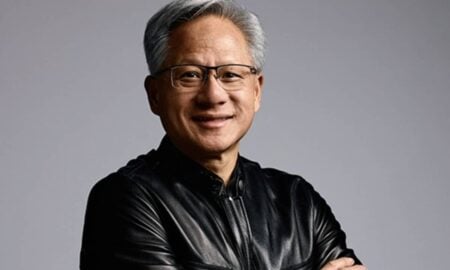
Jensen Huang resigns as Nvidia CEO, Colette Kress named interim


Nvidia’s board announced on Thursday, November 12, 2026, that Jensen Huang has resigned as president, chief executive and board member, effective immediately. His exit ends a 33-year run at the chipmaker he co-founded, after an extramarital relationship with a Chinese businesswoman pulled the company’s leader into an espionage investigation.
The company named Colette Kress, its chief financial officer since September 2013, as interim CEO. She will keep the CFO job while she leads the company. The board said it will look for a permanent successor and will weigh candidates from inside and outside Nvidia.

The scandal surfaced in late October, when a U.S. newspaper reported that U.S. intelligence officials believed Alice Huang had been recruited by Beijing to gather information about the Nvidia chief. Alice Huang shares the surname but has no family ties to Jensen Huang. On Sunday, November 8, 2026, Huang admitted in a message to staff that he had been unfaithful to his wife, and the board opened an independent investigation.
Chip leader sits at the center of the US-China dispute
Nvidia designs graphics processing units, known as GPUs, and the CUDA software platform that runs them. Companies, research centers and governments use these systems to train large language models, run data centers, develop self-driving vehicles and control robots. Washington bans exports of the company’s most advanced processors to China, which makes Nvidia’s technical and commercial data strategically valuable to Beijing.
The board said it had no reason to believe national security or company secrets had been compromised. On Monday, November 9, 2026, a spokesman for the Chinese foreign ministry called the espionage claim groundless. “It is nothing but a smear against China,” he said, according to his remarks at a regular briefing.
Check out: Dow jumps 1,104 points as tech stocks rebound on Wall Street
What Beijing is reportedly seeking from the Nvidia leadership
Intelligence assessments cited in the U.S. press, which China denies, say an operation against Nvidia’s leadership would serve three main goals:
- Get around trade sanctions through intermediary companies in Southeast Asia to buy billions of dollars in restricted processors and send them to the Chinese market.
- Gain access to data on future chip generations and supply chain plans before commercial launch.
- Monitor backroom dealings in Washington and use Nvidia’s closeness to the White House to try to ease export barriers.
Megaspeed, the Singapore-based Nvidia customer where Alice Huang works, has been under U.S. investigation since 2024 over suspicions that it helped China obtain advanced Nvidia chips. The company has not disclosed details of internal audits or possible legal action arising from the episode. The board is expected to name a permanent CEO after its search, with Kress serving in the interim.