Orionid meteor shower peaks on October 21 as Comet Halley debris crosses Earth

The Orionid meteor shower reaches its highest activity during the predawn hours of October 21, 2026, as Earth plows through the densest stream of cosmic debris discarded by Comet Halley. This annual astronomical display highlights a busy October sky calendar, which also features close visual conjunctions between the Moon, Mars, and Jupiter in the eastern morning sky alongside a complete four-stage lunar cycle.
Our planet intersects the broad corridor of cometary dust and rocky remnants between October 2 and November 7, 2026. High-speed friction between the upper atmosphere and tiny fragments shed during the periodic passes of Comet 1P/Halley vaporizes the material, producing bright streaks of light across the night.
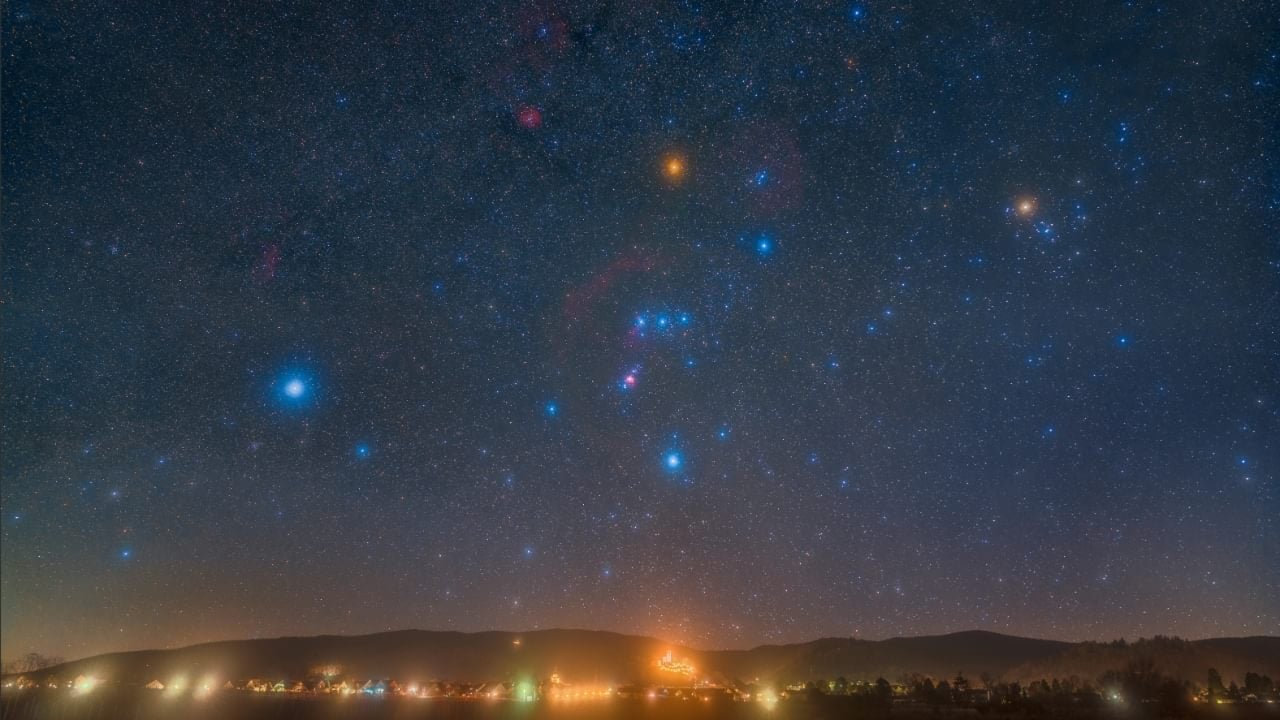
Observers monitoring the maximum meteor rates on October 21 will encounter substantial optical interference from natural moonlight. The Moon reaches an advanced waxing gibbous stage with roughly 70 percent surface illumination, generating enough glare to wash out dimmer streaks and lower overall hourly counts for ground-based viewers.
Optimal viewing strategies for predawn skywatchers
Catching glimpses of the Orionids does not require binoculars, telescopes, or complex optical equipment, though clear predawn skies remain essential. Stargazers should head out toward open rural landscapes or dark locations well removed from municipal streetlights, allowing human eyes at least twenty minutes to adjust fully to nighttime darkness.
Viewing attention should center around the constellation Orion, where the radiant point of the shower appears to project incoming meteors outward across the celestial sphere. Even with the Moon shining at 70 percent brightness, prominent fireballs and luminous vapor trains will remain discernible across darker expanses of the firmament.
Planetary conjunctions linking the Moon with Mars and Jupiter
Prior to the peak of the cometary debris trail, the shifting position of the Moon creates distinct optical pairings with two major planets from October 4 through October 6, 2026. Before sunrise on Monday, October 5, the lunar crescent rests directly beside Mars along the eastern horizon.
Follow: GJ 3090 b orbits backward around red dwarf with 136-degree tilt 73 light-years away
By Tuesday, October 6, the Moon glides further east as a slender waning crescent with only 20 percent illumination, drawing into close visual alignment with Jupiter. Jupiter dominates the early morning twilight as the brightest planetary object in that sector of the sky.
These apparent close encounters represent line-of-sight perspectives seen strictly from Earth rather than genuine physical groupings. Hundreds of millions of kilometers of empty space separate the Moon from Mars and Jupiter, leaving their independent orbital motions and mutual gravitational fields undisturbed.
Timetable of primary lunar phases throughout October 2026
The progression of visible lunar illumination follows precise geometric relationships between the Sun, Earth, and Moon across the month:
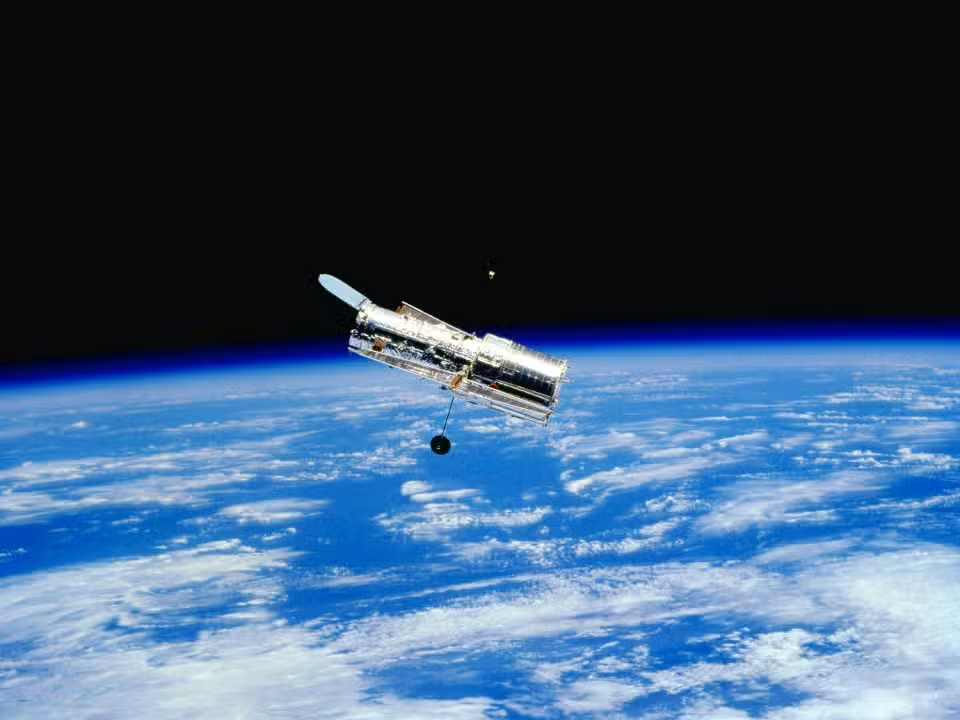
Read also: Hubble Space Telescope marks 200,000 Earth orbits while studying cosmic expansion
- Third quarter: Saturday, October 3, 2026, at 10:25
- New moon: Saturday, October 10, 2026, at 12:50
- First quarter: Sunday, October 18, 2026, at 13:13
- Full moon: Monday, October 26, 2026, at 01:12
Peak illumination for the full lunar disk occurs precisely at 01:12 on Monday, October 26, 2026. For observers watching the eastern horizon on the evening of Sunday, October 25, the lunar surface will already appear completely illuminated to the naked eye.
Orbital distance measurements rule out supermoon designation
Astronomers do not classify the late-October full moon as a supermoon. A true supermoon classification requires the full phase to coincide closely with lunar perigee, the exact segment of the elliptical orbit where the satellite reaches its closest distance to Earth.
- 356,000 to 363,000 kilometers: orbital distance bracket defining perigee alignment for supermoons
- 369,000 kilometers: estimated Earth-Moon separation measured during the full moon of October 26, 2026
The distance of approximately 369,000 kilometers recorded during the full phase on October 26 sits well beyond the necessary proximity threshold. Lunar perigee for the month occurs two days later on Wednesday, October 28, keeping the events separated in time. Official astronomical ephemeris charts pinpoint the next confirmed supermoon for Tuesday, November 24, 2026.