BepiColombo orbits Mercury as the planet’s gravity captures the probe on November 21, 2026

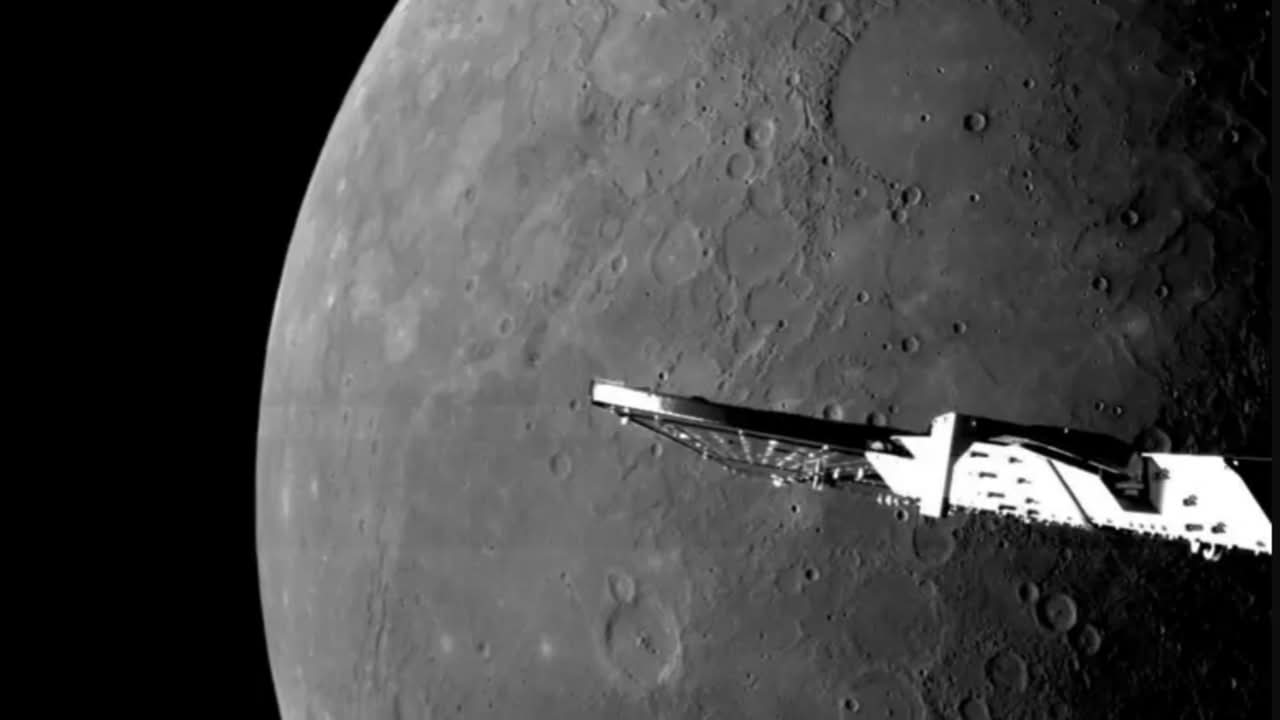
The BepiColombo spacecraft entered orbit around Mercury on Saturday, November 21, 2026, closing a journey of eight years and almost 10 billion kilometers through the inner Solar System. The joint mission of the European Space Agency (ESA) and the Japan Aerospace Exploration Agency (JAXA) completed the gravity capture maneuver that day. The spacecraft became only the second in history to orbit the planet closest to the Sun.
Capture required a braking burn with the chemical thrusters of the European module, which slowed the craft enough for Mercury’s gravity to hold it. Without that braking, the stack would have flown past the planet at high speed. The ESA flight dynamics team confirmed the orbit entry, and the mission now moves toward separating its two science probes in December 2026.
Mercury is a harsh place for equipment. Its surface swings from 430°C in direct sunlight to -180°C in shaded areas, under constant and intense solar radiation.
Power problem pushed arrival back a year after the 2018 launch
BepiColombo lifted off on October 20, 2018, from the Guiana Space Centre in Kourou, French Guiana, aboard an Ariane 5 rocket, with a total mass of 4,100 kilograms. To overcome the Sun’s pull and slow down toward Mercury, it followed a winding route with nine gravity assists, flybys that use a planet’s gravity to change a spacecraft’s speed. Those included one at Earth in April 2020, two at Venus from October 2020, and six at Mercury between October 2021 and January 2025.
The original plan called for seven years of travel and arrival in December 2025. In April 2024, however, ESA detected unexpected electric currents between the solar panels and the power unit, which cut the energy available for the ion thrusters. In September 2024, the agency announced a new trajectory that added one year and pushed arrival to November 2026.
The approach phase officially began on September 3, 2026, when the Mercury Transfer Module (MTM) separated from the rest of the stack and stayed in orbit around the Sun. The module carried four electric thrusters used during the cruise, and its last electric propulsion burn had ended on June 15, 2026. The separation left the two science probes to continue the final approach on their own.
On September 15, 2026, the team switched on all of the European probe’s instruments at the same time for the first time since the MTM separation. The BELA laser altimeter fired more than 700,000 pulses in open space over 21.5 hours. The MERTIS thermal spectrometer ran for 22 hours and produced about 1 gigabit of data, while the SIMBIO-SYS camera activated its three optical channels to take its first image in space. The MIXS X-ray telescope also recorded its first cosmic data before arrival.
Read also: NASA's Webb says interstellar comet 3I/ATLAS formed 10 to 12 billion years ago
Scientists puzzled by ice in craters and Mercury’s oversized core
Slightly larger than the Moon, Mercury has a surface marked by ancient volcanoes, tall cliffs and large craters. Its days are long, because the planet completes one orbit around the Sun in 88 Earth days but spins so slowly that a single solar day lasts 59 Earth days.
Emma Bunce, professor at the University of Leicester, principal investigator of the MIXS instrument and director of the university’s space institute, said: “I think it is a somewhat underrated planet in the inner Solar System, but I believe that is one of the reasons it is so fascinating.” She added that scientists want to understand how Mercury formed, how it evolved, what it looks like today, and how it interacts with the Sun and with the extreme space weather it faces.
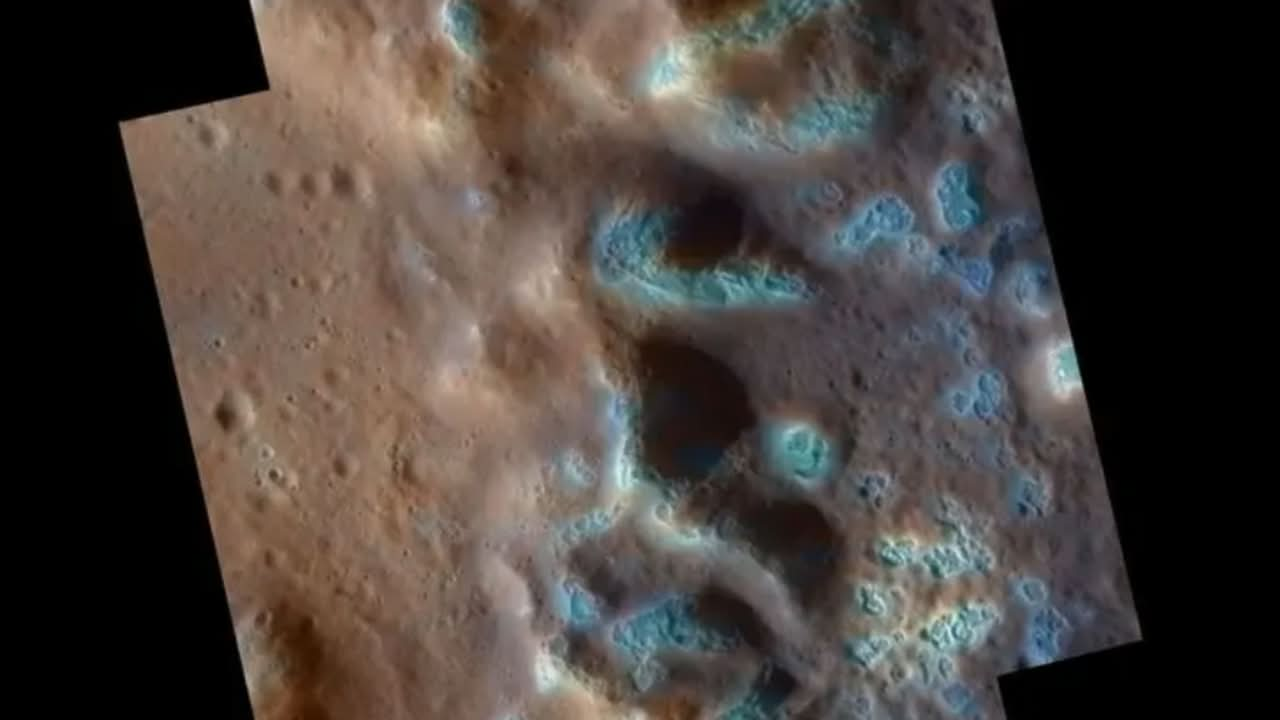
One of BepiColombo’s main targets is to explain why ice deposits exist in polar craters despite the planet’s proximity to the Sun. The mission will also investigate thousands of shallow, clustered depressions with steep edges spread across the surface. In planetary terms these cavities are young, about 100,000 years old, and scientists have already ruled out that they are impact craters caused by space rocks.
Mercury’s metallic core is disproportionately large for the planet’s size, which is another open question. Bunce explained that the planet may have been much bigger early in its history and suffered violent impacts. “One explanation is that the mantle was stripped away in a big collision,” the researcher said. “Or it is a combination of collisions over a longer period of time, which then removes its outer regions, its mantle and its crust, leading to the planet we see today.” Another hypothesis is that the planet formed directly in a metal-rich region of the early Solar System.
Two probes, one launch: MPO and Mio split in December
BepiColombo is the first mission designed to place two probes in orbit around Mercury at the same time. ESA’s Mercury Planetary Orbiter (MPO) weighs 1,150 kilograms, carries 11 scientific experiments and will map the planet’s surface, interior and composition. Its planned final orbit runs between 480 and 1,500 kilometers in altitude, with a period of 2.3 hours.
The second spacecraft is the Mercury Magnetospheric Orbiter (MMO), called Mio and operated by JAXA. With five instruments, Mio will study Mercury’s magnetic field and plasma environment in a stretched polar orbit between 590 and 11,640 kilometers, with a period of 9.3 hours and a spin of 15 revolutions per minute.
The separation of MPO and Mio is scheduled for December 9 and 10, 2026. On December 16, 2026, the thermal protection structure called MOSIF, which shielded the Japanese probe during the trip, will be released. Between June and October 29, 2026, teams from ESA, JAXA and the space industry ran simulations of every step of arrival and separation.
Keep reading: NASA sees no sign 1998 KY26 is anything other than an asteroid
Jessica Marshall, systems engineer at Airbus, the company that built the spacecraft, described the separation as a tense moment for the technical team, since the two vehicles had flown attached for eight years. “We developed a special mechanism that was carefully thought through,” Marshall said. “It was exposed to intense radiation in space and very different thermal temperatures, and after eight years, this is a spring mechanism that has to be released very gently… When it is released, it also spins to start the rotation of the spacecraft.”
NASA’s Mariner 10 and MESSENGER came before BepiColombo
Before BepiColombo, only two spacecraft had visited Mercury, both operated by NASA, the U.S. space agency. Mariner 10 made three flybys of the planet in the 1970s and sent the first detailed images of part of its surface.
More than three decades later, MESSENGER arrived at Mercury in 2011 and stayed in orbit for four years, revealing data on the planet’s chemical composition and magnetic field. The mission ended in 2015. BepiColombo marks the debut of ESA and JAXA in exploring Mercury and starts simultaneous observation from two different orbits.
Key dates and facts of the BepiColombo mission
- Orbit entry at Mercury: November 21, 2026
- Separation of MPO and Mio: December 9 and 10, 2026
- Release of the MOSIF thermal structure: December 16, 2026
- Final orbit of the MPO: March 10, 2027
- Start of the science phase: April 2027
Official ESA updates and a full-size replica in London
Readers can follow the probe separation and the start of the science phase on the BepiColombo mission page of the European Space Agency’s website. The agency keeps a running bulletin with the progress of maneuvers and the release of the first images and measurements.
Visitors to the United Kingdom can see a full-size replica of the BepiColombo spacecraft at the Science Museum in London. The model was used by engineers during testing and assembly before the launch.